The Revolutionary Politics of Angela Davis-Naima Omar.Bookmarks Publication-£3.00-2020

This pamphlet is based on a series of articles written by Naima Omar. It includes a speech by Angela Davis after her release from prison in 1972 and an interview from June 2020 on the Black Lives Matter uprising. From a political standpoint, the Socialist Workers Party member Omar largely whitewashes the reactionary Stalinist politics of Angela Davis.

Davis was a political activist and writer from an early age, joining the Communist Party USA when she was fifteen. Her writings ranged from the struggle against racism and for prison abolition, for women’s liberation to campaigning against imperialist war, and in support of Palestinian rights.

According to an article by Helen Halyard “ Davis has joined with other academics, such as Michelle Alexander, author of The New Jim Crow, to promote the theory that blacks in America remain the victims of a caste system epitomized by the disproportionate number of African Americans in the US prison system. Davis and a section of the pseudo-left have latched on to the massive growth of America’s prisons as a rationale for promoting racial politics to divert attention away from the more fundamental class issues. While referring to the capitalist economic system, Davis described the prisons largely in racial terms, at one point saying, “it was a way to manage black bodies in the aftermath of slavery.”[1]

Her most famous work was: Women, Race, and Class, published in 1981. While useful from the standpoint of a historical study of female oppression, its heavy concentration on race over class stemmed from her philosophical outlook. Davis’s central premise is that race, not class, is the fundamental division in American society.

From an early age, she was influenced by philosophers such as Herbert Marcuse and Michel Foucault. Herbert Marcuse (1898-1979) was a leading representative of the Frankfurt School. After fleeing the Nazis, Marcuse came to the United States, where he became a university professor and wrote several books, including One Dimensional Man, that influenced the 1960s student movement. Marcuse, as is well known, worked for the OSS, the predecessor of the CIA, during World War II.

Marcuse’s anti-working-class politics led him to believe a “proto-fascist syndrome in the working class” existed. He thought the “revolution” would not be made by the working class but by the young intelligentsia, small fringe groups or guerrilla movements. Its driving force was not the class contradictions of capitalist society but critical thinking and the actions of an enlightened elite. Davis’s promotion of racial politics has absolutely nothing to do with Marxism. Her racial politics are the product of a strain of anti-Marxist thought going back decades, including postmodernism and neo-anarchism.

Suffice it to say the SWP mentions nothing of her reactionary political evolution. The pamphlet presents her as a radical activist still on the side of the oppressed. While mistakenly still seen as a figure of the left, she smoothly transitioned from left icon to “left” academia, securing a position at the University of California, Santa Cruz. She has recently retired.


[1] At University of Michigan symposium Angela Davis offers political cover for Obama- https://www.wsws.org/en/articles/2013/01/31/adav-j31.html

Blue-eyed Child of Fortune: Civil War Letters of Colonel Robert Gould Shaw: Russell Duncan-Paperback – Illustrated, November 30 1999

“Any negro taken in arms against the Confederacy will immediately be returned to a state of slavery. Any negro taken in Federal uniform will be summarily put to death. Any white officer taken in command of negro troops shall be deemed as inciting servile insurrection and shall likewise be put to death.”

Proclamation by the Confederate President

“Fondly do we hope—and fervently do we pray—that this mighty scourge of war may speedily pass away. Yet, if God wills that it continue until all the wealth piled by the bondman’s two hundred and fifty years of unrequited toil shall be sunk and until every drop of blood drawn with the lash shall be paid by another drawn with the sword, as was said three thousand years ago, so still it must be said, ‘the judgments of the Lord, are true and righteous altogether.'”

Abraham Lincoln

“There they march, warm-blooded champions of a better day for man. On horseback among them, in the very habit as he lived, sits the blue-eyed child of fortune.”

William James

“We fight for men and women whose poetry is not yet written.”

Robert Gould Shaw

Like most people, I came to learn about the life of Robert Gould Shaw through the excellent film Glory.[1] The movie provides the viewer with a good introduction to the life of Robert Gould Shaw. It is the first feature film to show the role of black soldiers in the American Civil War. It has a degree of accuracy and historical worth that many other history-based films lack. It portrays black soldiers as courageous, along with their white officers.

Thanks to films like “Glory,” people are becoming far more aware of the role played by black soldiers in the American Civil War. Close to 180,000 black soldiers served in the Union Army, and black soldiers fought bravely and knew what they were fighting for. Blue-eyed Child of Fortune: Civil War Letters of Colonel Robert Gould Shaw is valuable in understanding why men fought and what ideals animated their actions.

In the introduction to the book, Duncan describes Shaw’s letters as showing “the change wrought by battlefield casualties, camp life, commitment, and homesickness upon the sensibilities of youth. His soldiering experience was as common as it was distinctive. His prose is often eloquent, always articulate, intensely informative, amusing, heart-wrenching, and provocative more than a century after he described himself in letters to his family and friends. As interlopers to words never meant for us to ponder, we can enjoy him and gain insight into his times and ours.”

During his military career, Shaw was a prolific letter writer. The letters in this book are intimate and give a deep insight into Shaw’s thinking. Writing to his mother, Shaw laments, “It is very hard to go off without bidding you goodbye, and the only thing that upsets me, in the least, is the thought of how you will feel when you find me so unexpectedly gone. But I know, dearest Mother, that you wouldn’t have me stay when it is so clearly my duty to go.… We all feel that if we can get into Washington before Virginia begins to make trouble, we shall not have much fighting…May God bless you all. When we are all at home together again, may peace & happiness be restored to the Country. The war has already done us good in making the North so united.”[2]

He wrote over two hundred letters, and they revealed a deeply divided and complex man. Despite being the pampered son of wealthy Boston abolitionists, Shaw was not a complete abolitionist at the beginning of the war. However, he later wrote, “We fight for men and women whose poetry is not yet written.” Despite this sentiment, Shaw never fully reconciled his prejudices about black inferiority. Still, he respected his soldiers’ spirit and fighting ability, and as the war proceeded, he stated, “There is not the least doubt that we shall leave the state, with as good a regiment, as any that has marched.”

As Duncan writes, “One of the great pleasures of reading a collection of letters such as this is to witness the writer’s development through a telescoping of time and events. The callow Rob Shaw who goes off to war is far different from the bloodied Colonel Robert Shaw, who prepares to lead his men into a desperate and doomed attack on Fort Wagner. The reader’s foreknowledge that all of Shaw’s choices and chances over three years will ultimately converge into this final massacre lends a true poignancy, but also a real irony, to the letters. For example, his life is saved in May 1862, when a bullet hits his pocket watch; later, he is hit in the neck by a bullet that already has passed through another soldier and fails to penetrate his own body.”[3]

In the same article, Duncan writes about the paradox of Shaw, saying, “ These letters challenge modern sensibility in a number of ways. Shaw was a true patriot, but he also was a victim of his—and his family’s—patriotism. He never totally shared their abolitionist beliefs, and his attitude toward the black race could be as condescending as his initial feelings toward Southerners. When Sarah Shaw first published his letters, she removed the more offensive of her son’s remarks on black people. Duncan, to his credit, has restored these lines and honestly examines Shaw’s sometimes contradictory thoughts on the question of race. When offered the command of the Massachusetts Fifty-fourth, Shaw, who was not the first choice, turned it down, preferring to stay with his friends and fellow soldiers in Second Massachusetts. He wrote his fiancée, Annie Haggerty, “If I had taken it, it would only have been from a sense of duty; for it would have been anything but an agreeable task.… I am afraid Mother will think I am shirking my duty, but I had some good practical reasons for it.” Within days, however, he had changed his mind.[4]

The war radicalised Shaw. His visit to the place where the radical preacher John Brown[5] fought his battles against slavery is significant. So too, was his meeting with Abraham Lincoln. He campaigned for his soldiers to have equal pay, as depicted in the film Glory. It is hard not to believe that Shaw would have been greatly inspired by Lincoln’s Emancipation Proclamation, correctly described as ‘the greatest social and political revolution of the age.’ The greatest authority on revolutions, Karl Marx, said ‘Never has such a gigantic transformation taken place so rapidly.'”

While books such as Duncan’s are important in the sense they reestablish the role of black soldiers in their emancipation but is also important to place the struggle against slavery in the wider social and political context. This was done in an essay by the distinguished historian James M Macpherson who wrote, “If we were to go out on the streets of almost any town in America and ask the question posed by the title of this essay, probably nine out of ten respondents would answer unhesitatingly, “Lincoln.” In recent years, though, this answer has been challenged as another example of elitist history, focusing only on the actions of great white males and ignoring the actions of the overwhelming majority of the people who also make history. If we were to ask our question of professional historians, the reply would be quite different. They would speak of ambivalence, ambiguity, nuances, paradox, and irony. They would point to Lincoln’s gradualism, his slow and apparently reluctant decision for emancipation, his revocation of emancipation orders by Generals John C. Frémont and David Hunter, his exemption of border states and parts of the Confederacy from the Emancipation Proclamation, his statements seemingly endorsing white supremacy. They would say that the whole issue is more complex than it appears—in other words, many historians, as is their wont, would not give a straight answer to the question”.[6]

The serious historian plays an objectively significant role in social life as the embodiment of historical memory. One has to congratulate the historian Russell Duncan for this impressive job of bringing together the letters of Robert Gould Shaw for the wider general public.


[1] https://en.wikipedia.org/wiki/Glory_(1989_film)

[2] North Shore S.I. [Staten Island]Thursday, April 18, 1861

[3] Blue-Eyed Child of Fortune- https://www.enotes.com/topics/blue-eyed-child-fortune

[4] Blue-Eyed Child of Fortune- https://www.enotes.com/topics/blue-eyed-child-fortune

[5] https://en.wikipedia.org/wiki/John_Brown_(abolitionist)

[6] James McPherson,

“Who Freed the Slaves?” (1997

CWU Bureaucrats attack the SEP’s Postal Workers Rank and File Committee

The formation of the postal workers’ rank and file committee marks a qualitative turning point in the relationship between the UK Socialist Equality Party(SEP) and rank-and-file postal workers.

This is publically recognised by even the most boneheaded and reactionary CWU bureaucrat. The right-wing attack on the World Socialist Website(see article Communication Workers Union attack on WSWS and UK Postal Workers Rank-and-File Committee backfires) is a backhanded compliment. It acknowledges that the CWU leadership has a viable and resolute opposition to its current betrayal of postal workers’ struggle.

Postal workers are fed up with the open betrayal of the CWU bureaucracy and are looking for alternatives, as a recent WSWS article pointed out. It quotes one worker: “Is it time we started looking at alternatives?”

This threw the CWU into a frenzy. Its media attacked the World Socialist Web Site and the newly formed Postal Workers Rank and File Committee. The CWU said, “That website is ran by absolute cranks that have zero interest in the welfare of postal workers (or any other workers). Stick with the union. It’s your voice. Solidarity.”

As Robert Stevens replied for the WSWS, “This piece of red-baiting would not have been out of place in right-wing Tory rags such as the Daily Mail or Daily Telegraph. The CWU is attacking not only socialist opposition to its betrayals but the many CWU members who have written to the WSWS over the last month. The WSWS’s interest in the welfare of postal workers” is clear over eight articles, from March 16-26, containing over 10,500 words directly from posties. In their comments, they explain in detail the atrocious situation they face, with many denouncing the CWU leadership for allowing such backbreaking conditions and the unachievable targets set by Royal Mail. The slander on the WSWS and Postal Workers Rank-and-File Committee backfired on the CWU, with tens of thousands of postal workers reading the Twitter threads, with most comments posted pulling no punches in denouncing the CWU apparatus.”[1]

The WSWS does not need to apologise over its stance, and its “interest in the welfare of postal workers” is clear over eight articles, from March 16-26, containing over 10,500 words directly from postal workers.

Postal workers, send a message to rmpw.rfc@gmail.com to contact and join the Postal Workers Rank-and-File Committee.

Postal Workers at UK’s Royal Mail establish a rank-and-file committee

The decision by postal workers, with the support of the Socialist Equality Party (SEP), to found a rank-and-file committee is, by any stretch of the imagination, a truly historical event.

It is a welcome development despite taking 36 years (the anniversary of my last set to with the CWU bureaucracy). It now offers postal workers a way to fight against the CWU Bureaucracy without one hand tied behind their backs.

I urge all postal workers to join it and prevent what will be a huge betrayal by the current CWU leadership. As was said in an article posted on the World Socialist Website, “The committee will aim to mobilise workers against Royal Mail’s attacks and lead a fight for an inflation-busting pay rise, a defence of terms and conditions, an end to all job cuts and the overturning of victimisations.”

The betrayal being organised by the CWU bureaucracy marks a new stage in its development into an arm of corporate management. How long before Messrs Furey and Ward become members of the board? Their betrayal is not down to being bad people or weak this is the nature of the trade union bureaucracy worldwide.

Workers are trapped inside “trade union” organisations, which have assumed the character of corporatist entities controlled by petty-bourgeois functionaries like (Ward and Furey) whose own interests are in no way connected to even a residual defence of the rank and file’s share of the national income. The union leadership and apparatus act as an industrial police force for Royal Mail management.

The article Growing support for UK Postal Workers Rank-and-File Committee, states “The formation of the Postal Workers Rank-and-File Committee shows that Royal Mail workers can break out of the confines of the CWU’s pro-company agenda and mount a direct challenge to the profits diktats of the company. It is an example others must follow. As the Committee’s founding resolution states, “Millions of workers in the UK are waging the same fight in a strike wave ongoing since last summer. This is part of an international struggle against global corporations and governments seeking to impose the immense cost of pandemic corporate bailouts and rampant inflation on the working class.”

Email rmpw.rfc@gmail.com to contact and join the Postal Workers Rank-and-File Committee.

Becoming Frida Kahlo March 10- BBC2 and BBC iPlayer

“Most of my friends grew up slowly. I grew up in an instant,”

Frida Kahlo

“A ribbon around a bomb.”

Andre Breton on Kahlo’s art

“I have suffered two big accidents in my life, one in which a streetcar ran over me. The other was Diego,”

Frida Kahlo

“Do you wish to see with your own eyes the hidden springs of the social revolution? Look at the frescoes of Rivera. Do you wish to know what revolutionary art is like? Look at the frescoes of Rivera. Come a little closer, and you will see clearly enough gashes and spots made by vandals: Catholics and other reactionaries, including, of course, Stalinists. These cuts and gashes give even greater life to the frescoes. You have before you not simply a ‘painting,’ an object of passive aesthetic contemplation, but a living part of the class struggle. And it is at the same time a masterpiece!”

Leon Trotsky

There is a lot to commend in this visually stunning and serious three-part series on the life and politics of Frida Kahlo. I say serious because previous documentaries or books about Kahlo have been pretentious and flippant. The complex nature of Kahlo’s life deserves a serious approach. But having said that, there are several serious political weaknesses in the programs.

The first of a three-part series on the legendary Mexican painter, The Making and Breaking, manages to squeeze so much information into one episode that it nearly ruins the next two parts. Despite much being known about Kahlo and her work selling for obscene amounts( (Her 1949 painting Diego Y Yo sold for almost $35m in 2021), the program still manages to inform and enlighten.

There is no single narrator. There are interviews with biographers, art historians from Mexico and the US, and miraculously surviving family members. Kahlo’s great-niece Cristina Kahlo and Diego Rivera’s grandson.

Like programs two and three, the first program is divided into mini-chapters, each with its heading. “Everything goes wrong” details graphically the bus crash that almost killed Kahlo, causing her terrible injuries and ending her plan of becoming a doctor. She turned to art instead. “Most of my friends grew up slowly. I grew up in an instant.” She was helped by her mother, who built her an adapted easel. Her first self-portrait and one of my favourite paintings was the stunning Self-Portrait in a Velvet Dress.

She was an exceptional child born in 1907. Kahlo contracted polio in 1912. She later told people she was born in 1910 to ally herself with the new, post-revolution Mexico. She was born at The Blue House in Coyoacán on the outskirts of Mexico City. Kahlo was a fervent socialist at an early age, and in 1927, she joined the Mexican Communist Party, where she met Diego Rivera.

Rivera supported the Mexican Revolution, the Russian Revolution and the Trotskyist Fourth International for some time. You would not have known the latter watching this program. Also, when historical figures such as Tina Modotti are mentioned, they are treated largely superficially. The Italian photographer Tina Modotti was a fellow radical along with Kahlo. Her lover was the notorious GPU assassin Vittorio Vidali, alias Carlos Contreras. Another lover was the Mexican painter David Siqueiros. Both had connections to Stalinism, and their murderous gangsterism was never mentioned. The BBC film ignores that Siqueiros played a central role in the unsuccessful attempt on Trotsky’s life in May 1940.

Jesse Olsen points out in his article, “Modotti is an example of how the Mexican and Russian revolutions inspired young artists. However, she is also a tragic example of the many artists who came under the sway of Stalinism and paid a terrible price. Modotti worked for Stalin’s KGB (the Soviet secret service) from the mid-1930s and was associated with the Italian Stalinist functionary Vittorio Vidali, who, as early as 1927, had been a Stalinist operative in the Mexican party. Together with the muralist Siqueiros, he tried to murder Trotsky in 1940. Siqueiros, the former communist, and artist—like the Communist Party of Mexico itself—had become part of Stalin’s apparatus.”[1]

While Kahlo is the program’s central figure, her long-time lover and fellow artist Diego Rivera looms large in the films(no pun intended). Their relationship was stormy, but they both understood the beauty and importance of their artistic work. Kahlo described Rivera as “an architect in his paintings, in his thinking process, and in his passionate desire to build a functional, solid and harmonious society… He fights at every moment to overcome mankind’s fear and stupidity.” Rivera spoke highly and perceptively of Kahlo, saying, “It is not tragedy that rules Frida’s work… The darkness of her pain is just a velvet background for the marvellous light of her physical strength, her delicate sensibility, her bright intelligence, and her invincible strength as she struggles to live and show her fellow humans how to resist hostile forces and come out triumphant.”

As mentioned in the film Rivera came under sustained attack(primarily from the Stalinists) for taking commissions from American capitalists. The Communist Party smeared Rivera as an “agent of North American imperialism and the millionaire, Morrow”.

Rivera was expelled from the Mexican Communist Party after receiving several commissions from the government and accepting an assignment from the US ambassador to Mexico, Dwight W. Morrow, to paint a mural in the former Cortéz Palace of Cuernavaca. In 1933 Rivera was commissioned to paint a mural entitled Man at the Crossroads by John D. Rockefeller. Rockefeller objected when Rivera added the great Russian revolutionary Vladimir Lenin to the mural, and Rockefeller had the mural destroyed.[2]

Rivera defended the mural saying the portrait of Lenin was “the only correct painting to be made in the building [as] an exact and concrete expression of the situation of society under capitalism at present, and an indication of the road that man must follow to liquidate hunger, oppression, disorder and war.”

Kahlo and Rivera came around the Trotskyist movement and briefly had a close relationship with Trotsky. In 1938, Rivera collaborated with Trotsky and Andre Breton in writing the Manifesto: Towards a Free Revolutionary Art[3] , which called  for “a complete and radical reconstruction of society.”

For a while Trotsky held Rivera in very high regard, saying, “Do you wish to see with your own eyes the hidden springs of the social revolution? Look at the frescoes of Rivera. Do you wish to know what revolutionary art is like? Look at the frescoes of Rivera. Come a little closer, and you will see clearly enough gashes and spots made by vandals: Catholics and other reactionaries, including, of course, Stalinists. These cuts and gashes give even greater life to the frescoes. You have before you not simply a ‘painting,’ an object of passive aesthetic contemplation, but a living part of the class struggle. And it is, at the same time, a masterpiece! In the field of painting, the October Revolution has found her greatest interpreter not in the USSR but in faraway Mexico… Nurtured in the artistic cultures of all peoples, all epochs, Diego Rivera has remained Mexican in the most profound fibres of his genius. But that which inspired him in these magnificent frescoes, which lifted him up above the artistic tradition, above contemporary art, in a certain sense, above himself, is the mighty blast of the proletarian revolution. Without October, his power of creative penetration into the epic of work, oppression and insurrection would never have attained such breadth and profundity.”[4]

Despite Trotsky’s glowing tribute, he was aware of the political inadequacies of both Kahlo and Rivera. As Joanne Laurier perceptively writes, “It seems safe to suggest that neither Rivera nor Kahlo—remarkable artists and not first and foremost political thinkers—ever understood the essence of Trotsky’s struggle with the Stalinist bureaucracy, including the theory of permanent revolution, and remained to one extent or another under the influence of Mexican nationalism and  that primarily accounts for both of them ending up, chastened and demoralized, in the camp of Stalinism.”[5]

While this three-part documentary has much to like and commend, there are some serious political flaws. For instance, trying to cram the last and most important fifteen years of Kahlo’s life into 15 minutes is madness and politically unforgivable. There is also a tendency to concentrate on Kahlo’s feelings without putting them in a wider political context. That context is the world-historical struggle between Stalinism and Trotskyism. The fact that this struggle was at the center of Kahlo’s and Rivera’s lives is deliberately missing from the film.

The film is too preoccupied with Rivera’s infidelities and Kahlo’s “bisexuality”, which is an adaptation to the current intellectual environment. The #MeToo movement has adopted Kahlo as one of their own. These layers of the so-called intelligentsia have become affluent and have moved far to the right. They ignore Kahlo’s revolutionary politics and are hostile to the working class. Despite this, the films are worth seeing.

Further reading

My Art, My Life: An Autobiography by Diego Rivera (Author)


[1] Frida Kahlo retrospective in Berlin—Part 2: Frida Kahlo and communism- https://www.wsws.org/en/articles/2010/09/kah2-s11.html

[2] https://en.wikipedia.org/wiki/Man_at_the_Crossroads

[3] https://www.marxists.org/archive/bland/x01/towards-progressive-art.pdf

[4] Art and Politics in Our Epoch-https://www.marxists.org/archive/trotsky/1938/06/artpol.htm

[5] What made Frida Kahlo remarkable?- https://www.wsws.org/en/articles/2002/11/kahl

The Tinder Swindler – Netflix- 2 February 2022

“I have the right to choose whatever name I want, I never presented myself as the son of anyone, but people use their imaginations. Maybe their hearts were broken during the process… I never took a dime from them; these women enjoyed themselves in my company. They traveled and got to see the world on my dime,”

Simon Leviev

“Any Swipe Can Change Your Life

Tinder Slogan

“How can you give trust to a man like that, who escaped from Israel twice? A man that deceived and swindled women in Europe for hundreds of thousands of euros. Where is the justice?”

Pernilla Sjöholm

The Netflix documentary The Tinder Swindler is a British true crime documentary film directed by Felicity Morris and was released on Netflix on 2 February 2022. It is about how convicted fraudster Simon Leviev (sentenced in Finland and Israel), an internet dating scammer, cheated hundreds of women out of 10 million dollars. Leviev ran a basic Ponzi scheme, using new women’s money to fund his fake billionaire lifestyle. It derives its name from the Italian Charles Ponzi, who ran a system in the early 1920s that extorted almost $200 million dollars (in 2022 currency). Ponzi schemes have only become more popular over the past century.

While it is a basic human trait to feel for the underdog or, in this case, the scammed women, I find it hard to muster sympathy for several women who fell for such an obvious confidence trick. It beggars belief that these women fell in “love” with this cold-blooded con artist with a reptilian worldview. The Tinder Swindler trod a fine line when it romanticised the exploits and fabrications of this con artist. The documentary does not condemn his criminal behaviour despite the devastating personal and financial harm he caused.  

The first woman we meet is Cecilie Fjellhoy, who talks about falling for a man she met on the Tinder dating app. He called himself Simon Leviev. Despite her friends warning her that this could be a scam, she boarded his private jet and was fed at a five-star hotel. It did not yet dawn on her that this lavish lifestyle was paid for by a long line of women that had been conned before her. Her scammer claimed to be the son of a billionaire diamond dealer but was a convicted conman named Shimon Hayut. Fjellhoy was fleeced to the tune of 250,000 dollars

The second woman interviewed was Pernilla Sjoholm. Like her friend Cecillie she does not exactly cover herself in glory in this documentary. She does not fall in love with Leviev but becomes his friend, and when she is invited to spend a summer travelling with him, she jumps at the chance. The only problem is that Simon’s then-girlfriend will accompany them. Her story ends the same way as Cecillie’s. However, she did not lose as much.

The story only gets really interesting when the story finally becomes public after an in-investigation by the Norwegian newspaper VG. While you must admire the bravery of the women involved to go public, they faced several rather accurate charges of being in love with money. The newspaper story went viral and showed the huge extent of his deception.

Netflix’s true-crime documentaries are usually strong on visuals and excitement and can be sensationalist but largely unsatisfying. At no stage did the Netflix documentary examine the personal psychology of a con artist like Leviev. While The Tinder Swindler is  fun and good to look at, as one reviewer said, “Despite the great yarn at its centre, [the film] sometimes lapses into the self-indulgence common to so many modern documentaries, with endless shadowy reconstructions and a heart-tugging soundtrack.” It leaves a lot of unanswered questions and barely scratches the surface of what is a billion-dollar business.

Why did it take Tinder so long to ban him, given they are not slow in banning the ordinary Joe public without recourse to an appeal? The writer of this article was also banned, and maybe they got wind of my writing this article. Currently 31 years old, Simon Leviev lives as a free man in Israel and is dating Israeli model Kate Konlin. He has an Instagram account.

The Tinder Swindler unwittingly exposes the connection between middle-class aspirations and the fake identities constructed on dating platforms such as Tinder. But as Christopher McMichael states, “this technology exists against the backdrop of neoliberalism, with its Darwinian ideology of competition and wealth accumulation at all costs. In this culture, dishonourable or dishonest practices are now called “hustling” or “grinding” – the ends of more money and power are seen to justify the means.”

Leviev’s Tinder profile shows an image of material wealth, and the women attracted to this wealth were hooked before Leviev even opened his mouth. As the journalist Christopher McMichael again explains, “Historically, con artists have also been known as grifters or snake oil salesmen, referring to the selling of fraudulent products. Capitalism has long produced criminal entrepreneurs prepared to tell lies for a quick buck. In the early 19th century, Scottish adventurer Gregor MacGregor convinced European investors that he had exclusive control of a territory in South America called Poyais. But instead of a bustling settlement, Poyias did not exist, and many of his victims who came to live in the promised utopia died in the jungle.”[1]

It is perhaps a little perverse that The Tinder Swindler’s portrayal of the con artist reveals the true nature of the capitalist system. The way to make millions is not through the American dream but “subterfuge, class power, and exploitation”.

To conclude, Leviev’s crimes are many and varied but are not the product of just a bad individual but are part of a broader process that has been going on for decades. Leviev’s criminality is not an aberration but shows the true face of capitalism in the 21st century. The accumulation of wealth and assets has completely detached itself from the real economy for a long time. The result is unprecedented social polarisation and the criminalization of all sectors of the capitalist economy. Levievs’s criminality is but one bizarre expression of the criminality of capitalism.


[1] https://www.newframe.com/fake-it-then-make-it-how-con-artists-capture-us/ 

Love, Janessa (BBC World Service) | BBC Sounds

 Love, Janessa is a BBC World Service and the CBC seven-part podcast investigating probably the biggest romance scam ever. At its height, over 100,000 people were being scammed out of millions of Pounds.

Journalist Hannah Ajala hosts the podcast. The podcast tells the story of a porn star, Janessa Brazil, whose photos have repeatedly been used to scam people. Ajala talks to numerous victims who have been conned out of hundreds of thousands of pounds/dollars. Many of these victims maintain they spoke to the real porn star

As the program states, there was not just a handful of scammers using Janessa’s picture but hundreds. Janessa’s images were readily available on the internet and on her private porn site. At no time did the people scammed out of large amounts of money do an image search that would have immediately told them they were being taken for a ride.

During the podcast, it becomes apparent that this is not a very sophisticated scam. There’s a bit of sweet talk, everyday flirtation followed by demands for money, mainly car repairs, to mend a broken phone or hospital costs. As the con develops, the amount of money demanded grows larger. To be fooled by this deception, you must be either stupid, gullible, or both. Unfortunately, thousands of men have been fooled by this low-brow scam.

Apart from the real Janessa, (see left) the show’s star is Roberto, an eco-entrepreneur from Sardinia who reportedly handed over $250,000 to various scammers in Ghana. He is treated with utmost sympathy by the show’s host. Not once was his staggering level of stupidity challenged. Not content with handing over large amounts of money to scammers, he traveled the world waiting at airports hoping to meet the real Janessa, who would never turn up. Again at no point was this high-level delusion challenged, let alone condemned. Roberto was not the only person scammed to hop on a plane to look for the love of his life. A Nova Scotian divorcee got on a plane to Ghana to meet the  man of her dreams,

Most scams connected to the porn star Janessa were based in either Nigeria or Ghana. The British journalist Hannah Ajala, currently based in Ghana, met and interviewed one of the many romance scammers, known locally as “Sakawa boys”.These scammers are professional criminals and are a major part of a billion-dollar industry. These Sakawa boys have multiple scams on the go at once, and they keep a spreadsheet to keep track of the lies he tells their victims. His wife and children know nothing of his work. Ajala treats these criminals with a courtesy they don’t deserve as if they were some kind of celebrity. The podcast’s conclusion is a bit of anti-climax as everybody lives happily ever after.  

Sweetheart Scams: Online Dating’s Billion-Dollar Swindle- by Clarence Jones Paperback – Oct. 15 2020

This is useful if a limited, guide to the massive growth of “romance scams”. They say love is blind, and scammers are cashing in on people’s stupidity and gullibility. According to data published by the Federal Bureau of Investigation in 2016, scammers stole more than a billion dollars in the United States alone, which is a conservative estimate.

Clarence Jones’s book is a step-by-step guide on how scammers work and how to avoid getting caught. Jones is an investigative reporter and seems to be a one-man publishing industry. Jones spent years investigating online dating services. Much of what Jones found is not new. Online dating websites, since their inception, have been a haven for scammers and a clever way for escorts or prostitutes to ply their trade without prosecution. Specialized websites are helping husbands and wives cheat on their spouses. These websites are an online version of a pimp who manages escorts and prostitutes.

Most hookup sites are nothing more than a license to print money, and most sites are interactive pornography. Most, if not all, profiles are fake, and in reality, you are probably talking to another computer in the form of  “bots”, which generates massive profits for its owners.

In 2020 I wrote a series of articles on one aspect of this nasty scam which has conned many people out of millions. After two years of research, certain things can be said to warn others. The first job of a scammer who proliferates the various online dating sites is to get their prey off the original dating website and onto sites such as Gmail and WhatsApp. Gmail is a favorite hunting ground for your African scammers, and it is a simple scam.

They send you a picture of a gorgeous voluptuous woman, usually lifted from a porn site. Most men think, yum, I am in here. They don’t ask why this beautiful 25-year-old woman would have anything to do with a balding middle-aged man. Unperturbed most men would want to see this hot girl on video chat. This is the first part of the scam. To see this beautiful woman, you need to purchase an Amazon card or other such items for them to get an internet connection for the video call.

When they finally agree to your demand to see them in the flesh, you do not see the beautiful young thing in the flesh, but a rather clumsy video these amateurs have somehow managed to upload onto Gmail. On one occasion, I could see the real person behind the scam as his hand slipped, revealing his real identity, and he was not a gorgeous blonde woman.

Jones looks into Facebook’s role in allowing scammers to operate with impunity. Facebook launched their dating app in 2019. This free dating app was a means by which Facebook sought to promote the launch of its digital currency Meta. Facebook is riddled with fake profiles. In the first quarter of 2022, Facebook removed 1.6 billion fake accounts, down from 1.7 billion in the previous quarter. In 2019, 2.2 billion counterfeit accounts were removed in one quarter alone.

These gorgeous-looking Asian women were not interested in dating. They used Facebook to lure punters into a Cryptocurrency scam. They would take your money, saying they will invest it in Cryptocurrency. The reality is that they take the money and run along with their uncles. It was amazing that all these girls had fantastic relatives willing to help others get rich. When yours truly threatened to report these scammers, he received some very nasty death threats and one ugly video threatening DECAPITATION. Facebook turned a blind eye to the whole scam. After all, many of these Asian scammers were promoting Facebook’s digital currency, Meta.

The levels of criminality surrounding dating websites, an industry worth billions of dollars, are not separate from the criminality of the capitalist system itself. Scammers are not just a collection of random criminals; as Jones points out, they are well-organized and systematic, and it is big business.

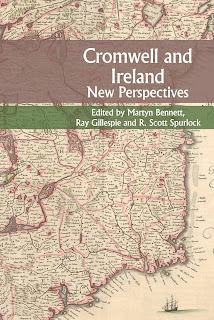
Insolent proceedings-Rethinking public politics in the English Revolution-Editors: Peter Lake and Jason Peacey-Manchester University Press-2022

“The third part of Gangræna. Or, A new and higher discovery of the errors, heresies, blasphemies, and insolent proceedings of the sectaries of these times; with some animadversions by way of confutation upon many of the errors and heresies named. … Briefe animadversions on many of the sectaries late pamphlets, as Lilburnes and Overtons books against the House of Peeres”.

“Study the historian before you begin to study the facts”.

E H Carr

“Cromwell built not merely an army but also a party — his army was to some extent an armed party and herein precisely lay its strength. In 1644 Cromwell’s “holy” squadrons won a brilliant victory over the King’s horsemen and won the nickname of “Ironsides.” It is always useful for a revolution to have iron sides. On this score, British workers can learn much from Cromwell.” 

Leon Trotsky

“I do not care so much what I am to others as I care what I am to myself.”

Michel de Montaigne

Insolent proceedings is a collection of interdisciplinary essays by scholars examining the last fifty years of the historiography of the English revolution. The essays honour the work of Ann Hughes, who is, in the opinion of the editors of this book, a post-revisionist historian. The main bulk of the essays deals with revisionist and post-revisionist scholarship. It remains to be seen if the claims made by the scholars to be developing a new historiography away from the revisionist and post-revisionist historiography can be substantiated.

The opening chapter offers a substantial overview of the previous historiography of the English revolution. Although it reflects on the debates of the last fifty years, it steers clear of an evaluation of both Whig and Marxist historiography.

The great historian Edward Hallett Carr was fond of saying, “Study the historian before you begin to study the facts.”[1] In this case, it is important to understand the politics of the historian whose honour these essays are written.

It was recently announced that Hughes would be a Labour Party candidate in the next election. The Uk Labour Party’s latest purge has almost cleared out any nominally left-wing members and is now an openly right-wing bourgeois party. Hughes feels at home with this party. It is a complex process, the relationship between politics and history, and it is dialectical. While Hughes’s politics may have to a certain extent, coloured her historical writing, she is nonetheless a serious historian, and serious historians play an objectively significant role in social life as the embodiment of historical memory.

While it is not in the realm of possibility to examine every chapter in this book, some chapters are more important than others. Anatomy of the General Rising-Militancy and mobilisation in London, 1643 discusses the significant move to the left in both the New Model Army and the general London population to deal with the King once and for all and defeat the Presbyterians in Parliament, who were seeking to bring back the King to power and destroy the Independents. David Como examines the ‘General Rising’ using unknown manuscript accounts. His article examines what happened along with the class nature of the participants.

David Lowenstein’s chapter William Walwyn’s Montaigne and the struggle for toleration in the English Revolution is intriguing detective work. It examines why Montaigne, the great French Catholic writer and sceptic, appealed to the radical writer and Leveller leader William Walwyn.

As Lowenstein shows, Montaigne was an attractive figure for Walwyn, one of the left-wing leaders of the English bourgeois revolution. Montaigne writes, “I propose a life ordinary and without lustre: ’tis all one; all moral philosophy may as well be applied to a common and private life, as to one of richer composition: every man carries the entire form of the human condition. Authors communicate themselves to the people by some especial and extrinsic mark; I, the first of any, by my universal being, as Michel de Montaigne, not as a grammarian, a poet, or a lawyer. If the world find fault that I speak too much of myself, I find fault that they do not so much as think of themselves.”[2]

Walwyn wanted to assimilate all that was good about Michel de Montaigne. Many of the revolution’s ideologists, such as Walwyn, used the bible and read other writers, such as Michel de Montaigne, to half understand the historical precedent and for some theories to explain what they were doing.

Sean Kelsey’s essay Indemnity, sovereignty and justice in the army debates of 1647 is disappointing. Given the extraordinary amount of new material uncovered about the huge radicalisation of the New Model Army, it would appear that the revisionist and post-revisionist downplaying of the radical nature of the New Model Army has raised its ugly head. The important work by John Rees on the radicalisation of the New Model Army is ignored completely. The NMA was not just an army but was a political party in all but name as the Marxist writer Leon Trotsky once wrote, “In this way, Cromwell built not merely an army but also a party — his army was to some extent an armed party and herein precisely lay its strength. In 1644 Cromwell’s “holy” squadrons won a brilliant victory over the King’s horsemen and won the nickname of “Ironsides.” It is always useful for a revolution to have iron sides. On this score, British workers can learn much from Cromwell.” [3]

Thomas N Corns groundbreaking essay Milton and Winstanley A conversation reviews the possible but unproven interconnections between the giants of 17th-century literature and politics Milton and Winstanley.

‘Threshing among the people Ranters, Quakers and the revolutionary public sphere re-examines relations between Quakers and Ranters in the 1650s. J. C. Davis’ right-wing attack on the Ranters in the 1990s was largely discredited by the work of Christopher Hill and A L Morton, whose work is largely ignored in this book.

J  C Davis’s book Fear, Myth and History: The Ranters and the Historians was the right-wing Kenneth Baker (education secretary under Margaret Thatcher’s government) favourite book. According to Davis, the Ranters were impossible to define. What they believed in, he writes, “There was no recognised leader or theoretician and little, if any, organisation. The views of the principal figures were inconsistent with each other”.

Ann Hughes’s work has been important in re-establishing the importance of a systematic study of radical groups. But perhaps more importantly, she has fought to highlight the role of women in the English revolution, which has been largely ignored by most of her male counterparts.

After all, the world was turned upside down for women as much as men. As Alison Jones points out, “The Civil War of 1642-1646 and its aftermath constituted a time of great turmoil, turning people’s everyday lives upside down. It not only affected the men in the armies, but it also touched the lives of countless ordinary individuals. It is well known that women played a significant role in the Civil War, for example, defending their communities from attack and nursing wounded soldiers. What is often forgotten, however, is that some women took advantage of the havoc wrought by the conflict to dissent from conventional positions in society. The slightest deviation by women from their traditional roles as wives and mothers was condemned by this patriarchal society. Therefore dissent could take many forms that today do not appear particularly extreme – for example, choosing to participate in emerging radical religious sects, having greater sexual freedom, fighting as soldiers and practising witchcraft”.[4]


[1] What Is History.

[2] Michel de Montaigne, Selected Essays, ed. W. C. Hazlitt (New York: Dover, 2011), 172.

[3] Two traditions: the seventeenth-century revolution and Chartism- https://www.marxists.org/archive/trotsky/works/britain/ch06.htm

[4] Dissent and Debauchery: Women and the English Civil War- Alison Jones

Terminal Boredom: Stories, Izumi Suzuki, Polly Barton (trans), Sam Bett (trans), David Boyd (trans), Daniel Joseph (trans) (Verso, April 2021)

” Men loom large in many of Suzuki’s stories as a potential threat. “Women and Women” is the most extreme example. Men once ruled society “through violence and cunning” but are now relegated to an exclusion zone where their only purpose is to help women conceive.

‘There is something wrong with our present society, and I can’t stand SF written by people who don’t understand that,’

Izumi Suzuki

“In every society the degree of female emancipation (freedom) is the natural measure of emancipation in general.”

Charles Fourier

“The followers of historical materialism reject the existence of a special woman question separate from the general social question of our day. Specific economic factors were behind the subordination of women; natural qualities have been a secondary factor in this process. Only the complete disappearance of these factors, only the evolution of those forces which at some point in the past gave rise to the subjection of women, is able in a fundamental way to influence and change their social position. In other words, women can become truly free and equal only in a world organised along new social and productive lines.”

Alexandra Kollontai

The stories collected in Terminal Boredom address many issues currently in vogue. Suzuki’s use of classifications, such as gender and identity politics rather than class, is music to the ears of the new #MeToo movement. This petty-bourgeois layer will no doubt receive her book with open arms. The movement must be running out of steam if it decides to resurrect an author who died more than three decades ago.

Rather than being translated by one person, her stories are done by six, Daniel Joseph, David Boyd, Sam Bett, Helen O’Horan, Aiko Masubuchi, and Polly Barton. It is above my pay grade to say whether this works, which seems fine.

Suzuki was active as a writer in the late 1970s and early 1980s. Although not a writer of the  “Lost Decade”,[1] Suzuki’s writing was deeply influenced by the Japan that emerged after the Second World War. As Peter Symonds writes, “The restabilisation of Japanese capitalism after World War II under the US occupation depended on the crushing of the resurgent working class, above all through the betrayals of the Japanese Communist Party (JCP). The post-war constitution drawn up by the American occupiers was designed to appease widespread public hostility to the wartime militarist regime and ensure Japan would not return to war against the US. But the LDP, which ruled Japan almost continuously from 1955 to 2009, never broke from the militarist past and has long harboured ambitions to restore wartime “traditions”.[2]

The suppression of the Japanese working class harmed Suzuki’s worldview. Rejecting the working class as an agent of revolutionary change, Suziki sought out middle-class forces to bring about change in Japanese society, saying, ‘There is something wrong with our present society, and I can’t stand SF written by people who don’t understand that”.

As Ian MacAllen writes, “Science fiction dystopias are often deployed as a means of examining politics, ideology, or technology, but for Izumi Suzuki, the medium serves as an intimate exploration of anxiety, pain, and sadness. The translated stories collected in Terminal Boredom depend on science fiction dystopias but focus on characters who are broken and seeking their own personal redemption rather than the expected grand narratives about society as a whole. Even though sometimes they are “out of this world” aliens or living in reimagined societies of the future, these are people struggling in the same ways we struggle today.”[3]

There is nothing progressive about her worldview. Her short story “Women and Women ” is about men confined to a concentration camp and used only for procreation and women’s satisfaction. Suzuki has been compared to writers like Phillip K Dick, who, according to James Brookfield, “was a prolific writer who completed 44 novels and roughly 121 short stories before his untimely death from a stroke in 1982 at age 53—was imaginatively gifted in posing large questions. What would people do if the fascists had prevailed? How would society be altered by the eventual development of robots sufficiently advanced to pass as humans? (The latter being the premise of his 1968 Do Androids Dream of Electric Sheep? which served as the basis for the 1982 Ridley Scott film Bladerunner). Other stories by Dick were adapted for the films Minority Report (2002) and The Adjustment Bureau (2011).[4] This comparison is a disservice to Dick, who compared Suzuki was a far more intelligent and progressive writer.

While all great writers draw upon personal experiences, Suzuki’s work is filled with deep melancholy and sadness, which is hardly surprising given her upbringing. Born in 1949, she took her own life at just thirty-six. She found fame as a model and actress before becoming a writer. she worked with the controversial photographer Nobuyoshi Araki and directors Shūji Terayama and Kōji Wakamatsu. In 1973 she married the jazz saxophonist Kaoru Abe, with whom she had a daughter. Ending in divorce in 1977. Her ex-husband died from an accidental overdose of Bromisoval in 1978. The relationship was stormy, and she cut off one of her toes in front of her husband.

While the Metoo movement has hailed her as one of her own, Suzuki was not completely defined by her sex. Her feminism was a complex phenomenon. As Daniel Joseph writes, “Suzuki’s relationship to gender and feminism is complex and nuanced, requiring the twenty-first-century reader to step outside of hard-line contemporary rhetoric. But while a contemporary mode of feminism may not be overtly apparent in her work, Suzuki often spoke out against the unrealistic feminine ideals imposed upon women by male SF authors in the form of beautiful, cookie-cutter female characters. She also dismissed essentialist stereotypes like ‘women’s intuition’ and demanded the right to be a real, flawed human being. Kotani again: ‘Suzuki’s texts defamiliarise the real world to demolish and reconstruct the “femininity” bound hand and foot by real-world power structures. Her works dismantle the power structures whereby women are marginalised through phrases like “only a woman would…” or “because she is a woman.” It is only through this process that one can begin to think about what constitutes “femininity.”‘ But even at her most political, Suzuki is never polemical. She approaches such questions obliquely, attacking imperialism (‘Forgotten’) and casually dismissing gender as a social construct (‘Night Picnic’, 1981) while depicting troubled romance and the absurdities of family life. Meaning flows through her stories like music, and despite the obvious complexities of her work, Suzuki described her writing in simple terms: ‘I turn my dreams into stories’.”[5]

I cannot bring myself to recommend this book. All one can hope for is that the next book of Suzuki’s work to be published by Verso will be a little better.


[1] https://en.wikipedia.org/wiki/Lost_Decades

[2] The revival of Japanese militarism-www.wsws.org/en/articles/2013/08/03/pers-a03.html

[3] chireviewofbooks.com/2021/04/21/terminal-bordom-izumi-suzuki/

[4] If Nazism had prevailed: The Amazon series The Man in the High Castle- https://www.wsws.org/en/articles/2020/04/21/high-a21.html

[5] How Izumi Suzuki Broke Science Fiction’s Boys’ Club- https://artreview.com/how-izumi-suzuki-broke-science-fiction-boys-club/