The 2024 Notting Hill Carnival has finished. The event was deemed a tremendous success. Quite how an event that saw eight people stabbed, including a mother of 32 who is still in critical condition in hospital and had over three hundred arrests for various offences ranging from sexual assault to seizures of firearms and included the arrest of a wanted murderer, is deemed a success is beyond me.
This year, Carnival took place amid unprecedented far-right riots. According to a statement from the World Socialist Website,[1] “The anti-immigrant riots that erupted this week in cities across the UK represent the most concerted efforts since the 1930s to develop a fascist movement in Britain. This week’s riots have not come from anywhere. The growth of fascist and far-right tendencies is a concentrated expression of imperialist politics and capitalist decay. The ruling elites are promoting extreme nationalism and xenophobia to divert explosive social tensions in a right-wing, anti-immigrant direction, to further Britain’s predatory imperialist wars and to prosecute a war against the democratic and social rights of the working class.”
It is usual for the media to run large numbers of sycophantic articles in the run-up to the Carnival. One of the most stupid, foolish and provocative articles on this year’s Carnival was by Fat Tony. His piece carried in the Evening Standard was chaotic and delusional. He writes, “It’s important to say as well that what shines through any of the other bullshit is millions and millions of people’s unwavering desire to come together and dance on the streets, communicate and celebrate love and community above all else. Notting Hill Carnival has, over this past decade, especially become a safe space, where relationships with the police and volunteers have become far friendlier, resulting in a festival where (most of) the headlines are what they should be — about the moment, the people and nothing else.” [2]
It is hard to know where to begin dismantling this complacent and delusional piece of journalism. Eight people were stabbed, including a mother of 32. Guns and knives were taken to an event that is supposed to be a haven of social peace.
If this was not bad enough, he then moves on to insult the residents who have the good sense to get out of Carnival as a bunch of c**ts. In the same article, “I’ve gotta say one thing about the locals though. To all you c***s who board up your houses or go on holiday purposely to get away from it each year… why? Notting Hill is what it is because of the Carnival, because of the hectic markets on the weekends, and because of this mishmash of cultures. Must you evacuate every damn year? I mean, come on. Go immerse yourself in it, party pooper”.
Fat Tony does not live near the Carnival route and was not even at this year’s Carnival. He does not have to suffer the indignity of being woken up at 3 am on Saturday by people setting up food stalls. Or listen to the sound of dirty, great big generators buzzing all night and all day. Speaking of sound, I am sure he does not have two massive sound systems pumping out music for three days. He does not have to walk miles to get out of the area or spend over eight hundred pounds on a hotel to escape this Bonfire of Vanities.
Fat Tony’s article joined a long list of articles that sought, with varying degrees of success, to explain Carnival’s so-called power of healing racial strife. This year was no different, and given the recent fascistic riots, it was important for the ruling elite to use this year’s Carnival as a useful safety valve to head off social unrest.
As I said, several articles portrayed the Carnival’s attempt to end racial divisions. Some even went as far as saying that Carnival still adheres to its radical origins. This is a lie. Today’s Carnival is big business. It is run not as a charity but as a private company. No article went deeply into the history of the Carnival, let alone explain how Carnival can solve the complex social and political problems of racism and social inequality in Britain today.
It is worth quoting from length from an article written in 1958, which addresses almost identical social, economic and political problems that are faced by workers and youth today. Cliff Slaughter writes, “The race riots in Nottingham and London came like a bolt from the blue to most ordinary men and women in Britain, just as they did to the Press, that self-styled watchdog of the public conscience. The Observer, usually more far-sighted than most newspapers, spoke of the race riots as something which a few days earlier seemed a cloud no bigger than a man’s hand. So long as we look only at the surface of social life, so long as we try to deal with each question separately as it arises, we shall continue to find ourselves bewildered by events like the race riots. But they are no nine days’ wonder. This must be clearly understood by every worker in the country.
Every member of the working class must endorse the condemnation by the Trades Union Congress of racial discrimination and violence. But this is not enough. Only if we can trace the social roots of racial conflict shall we be able to weed them out and, with them, those who profit from it. The starting point for the working class must be unity and solidarity against the employers and their political representatives—in the first place, the Tory Party. All the problems the working class now faces—growing unemployment, the housing shortage, rent increases, the rising cost of living, attacks on wages and working conditions, and, above all, the threat of an H-bomb war—all these can be solved only by the unity and determined action of the working class. It is no accident that the steady growth of unemployment over the last year has been accompanied by an insidiously growing campaign around the slogan ‘Keep Britain-White’.
He continues, “Those Tory and Labour MPs who propose to solve the problem by restricting immigration are guilty of supporting the programme of the fascists, whether they know it or not.
Fascism is a movement financed by big business which seeks support from the ‘middle classes’ and the most backward workers. Fascism’s real aim is to provide a mass basis for the smashing of workers’ organizations by a State machine which permits no democratic rights and rules with the whip and the torture chamber.
To succeed, fascism must detach from the working class discontented elements who can be persuaded that something other than big business is their real enemy. This is why the fascists have recently returned to one of their favourite themes—racialism. Fascists were prominent in the Notting Hill riots and will cash in wherever they can on anti-coloured feelings. They will try to create a mob ready to use violence and to attack any scapegoat rather than the workers’ real enemy.
Any Labour leader who does not condemn fascist ideas root and branch must be disowned by the Labour movement. Instead of discussing projects for controlled immigration, Labour leaders should outline an active joint strategy of struggle against the employing class. Although the TUC General Council passed a resolution against racial prejudice, which everyone is prepared to endorse in general, its president viciously attacked trade unionists who fight the employers with the workers’ only real weapon, the strike.”[3]
Workers and youth are not going to solve the problems of Racism, Fascism, or, for that matter, social inequality by attending an event that, at best, is dangerous and, at worst, fools people into thinking that dancing in the streets will solve these complex social and political problems.
“Our Latin American literature has always been a committed, a responsible literature,” Miguel Ángel Asturias 1973.
The Latin American novel, our novel, cannot betray the great spirit that has shaped – and continues to shape – all our great literature. If you write novels merely to entertain – then burn them!
Miguel Angel Asturias
“The great works of our countries have been written in response to a vital need, a need of the people, and therefore almost all our literature is committed. Only as an exception do some of our writers isolate themselves and become uninterested in what is happening around them; such writers are concerned with psychological or egocentric subjects and the problems of a personality out of contact with surrounding reality.”
Miguel Ángel Asturias
“Life is not an easy matter…. You cannot live through it without falling into frustration and cynicism unless you have before you a great idea which raises you above personal misery, above weakness, above all kinds of perfidy and baseness.”
― Leon Trotsky, Diary in Exile, 1935
Generally speaking, art is an expression of man’s need for a harmonious and complete life, that is to say, his need for those major benefits of which a society of classes has deprived him. That is why a protest reality, either conscious or unconscious, active or passive, optimistic or pessimistic, always forms part of a really creative piece of work. Every new tendency in art has begun with rebellion.
Art and Politics in Our Epoch (1938)
Translation is often an act of revelation—of revealing what is hidden -David Unger
Nobel Prize-winning Guatemalan author Miguel Ángel Asturias’s masterpiece Mr President was published in 2022 by Penguin. It is the first English translation in more than half a century. Translated by award-winning writer and translator David Unger and features a foreword by Nobel laureate Mario Vargas Llosa and an introduction by the writer and biographer Gerald Martin.
Asturias’s Mr President was inspired by the 1898–1920 presidency of Manuel Estrada Cabrera. The novel was subsequently banned in Guatemala. Miguel Ángel Asturias’s novel is a surrealist masterpiece, and a devastating attack on capitalism not just in Guatemala but around the world. It is to Penguin’s credit that such an important book has been given the translation it deserves. The new Penguin Classics edition is timely. David Unger says, “Mr. President has more to say to an American in 2022 than it did in 1962 when we knew less about the shenanigans of the CIA and the liaison between the military and the industrial complex.”
Miguel Ángel Asturias (1899-1974) was awarded the Nobel Prize for Literature in 1967, the first Latin American novelist to receive such an honour. Although one of his main occupations was as a diplomat he is primarily known as a fiction writer.
Mr President, although written from 1922 to 1932, wasn’t published until 1946 partly due to self-censorship and was also banned by the Guatemalan state. Asturias quite rightly feared that President Ubico (1931-1944) would assume that he was the dictator being depicted.
Foreword
The foreword is by Mario Vargas Llosa. Llosa is the noble Prize author of twelve novels, including Death in the Andes, In Praise of the Stepmother, The Storyteller, Aunt Julia and the Scriptwriter, and The War of the End of the World, 1995, he was awarded the Cervantes Prize, the Spanish-speaking world’s most coveted literary honour, and the Jerusalem Prize. His recent book Harsh Times was a described by Hari Kunzru, as “A compelling and propulsive literary thriller “in his New York Times Book Review.
Llosa correctly states “Mr. President is qualitatively better than all previous Spanish language novels and one of the most original Latin American texts ever written. He continues that without Asturias, “there would be no García Márquez, Vargas Llosa, Isabel Allende, Laura Restrepo, Laura Esquivel, José Lezama Lima, or Roberto Bolaño.”
Llosa believes that Miguel Ángel Asturias “wasn’t fully aware of how great a novel he had written and whose magnitude he would never again repeat, because the novels, short stories, and poems he wrote afterward were closer to the narrower, somewhat demagogic literature of “committed” dictator novels that he had earlier championed. He hadn’t realized that the great merit of Mr. President was precisely that he had broken that tradition and raised the politically engaged novel to an altogether higher level “.[1]
Introduction
Every great author needs someone who will defend their work to the death if necessary. Miguel Asturias has Gerald Martin. Martin who is the author of the superb biography of García Marquez is currently working on a biography Vargas Llosa. Penguin will publish Asturias’s Men of Corn in 2025[2]. Martin has translated and written a foreword for the new book. In his introduction to “Mr. President” Martin writes “What is magical realism, if not the solution to writing novels about hybrid societies in which a dominant culture of European origin is juxtaposed in multiple ways with one or more different cultures that in many cases are ‘premodern’? It was not Gabriel García Márquez who invented magical realism; it was Miguel Ángel Asturias.”
What makes Mr President such an important book. Martin elaborates “it’s a novel ‘very like a play, a tightly concocted drama (at times a theatre of marionettes),’ equally cinematic and poetic. It is reminiscent of Kafka and Beckett in its surreal flights within the consciousnesses of the mad or dying, or within the narrative of myth … The novel’s vision is relentlessly dark, but its execution is exhilarating, daring, even wild. Asturias’s boldness is repeatedly arresting, and his descriptions unforgettable…Such electrifying vividness animates every page”.
Translation
All great books need a great translation. After fifty years Mr President finally has that kind of translation, David Unger fully deserves the plaudits his translation has received. In 2014, Unger was awarded the Miguel Ángel Asturias National Prize in Literature for lifetime achievement, the most important literary prize in Guatemala. As a debt of gratitude to the country of his birth Unger decided to take on a new and difficult translation. The main purpose was to restore this great novel to the pantheon of world literature.
Having read the previous publication of the novel with the translation by Fraces Partridge I was curious to find out Unger’s opinion. Unger told me in an interview I did with him on my website “Partridge’s translation is mostly workman-like but suffers, as I say in the introduction, with many Anglicisms and a failure to recognize many Guatemaltequismos—particularly Guatemalan words and terms that she didn’t fully understand. Mr. President is a very American novel, one that lends itself to translation in the American vein. Words like “coppers,” “blimey,” and “lorry” are acceptable terms in the English language but are not inviting to North American readers. Further, she didn’t have a clue about certain Guatemalan foods, birds and plants that have entered the American vernacular through the immigration of nearly 60 million Latin Americans into the U.S. In some ways, she was hopelessly overmatched though I find that she also came through with some lovely descriptions, a la Bloomsbury style.[3]
It is perhaps an understatement to say that translating this book was an extraordinarily difficult undertaking. But David Unger’s lucid and masterful new translation of Mr President presents an opening for a new generation of readers around the world to appreciate this “influential, and wrongly maligned masterpiece”.
Joel Whitney writes “Mr. President is decidedly hard to translate, as it relies on poetic alliterations and onomatopoeia, devices learned from surrealism’s inventors and other avant-garde movements. But it also relies on Asturias’s very keen ear to the street, his love of myth and Indigenous culture, and Unger proves to be a masterful transformer. Much of the translation is truly of another time, rendering not just Central American Spanish but also Guatemalan neighbourhood-, class-, and period-specific slang. The praise for Unger’s translation is highly deserved. But the fact of Penguin Classics and Unger choosing this unfairly suppressed book is long overdue, the wait like being unburied, with your eyes open”.[4]
As Whitney says in his article the release of Asturias’s Mr President could not be timelier. As Unger explains “I wanted the novel to really speak to our generation and our time,” It is not only in Latin America that the tyranny of the dictator’s rule, but this tyranny is a global phenomenon. The current genocide being carried out in Gaza by the Israeli fascist government is but one example of this worldwide trend of the rule of the dictators. The Israeli president Netanyahu’s speech before Congress, showed that this fascist war criminal still defended genocide in Gaza, stating, “This is not a clash of civilizations. It’s a clash between barbarism and civilization. It’s a clash between those who glorify death and those who sanctify life.”[5] The reception Netanyahu’s speech received by the flunkeys in the White has been compared to that of Adolf Hitler when he addressed the German parliament in the 1930s.
The CIA and the Suppression of Mr President
As I said in the introduction Asturias’s novel although finished in 1932 was not published until 1946. What is perhaps not so well known is the role of the United States Central Intelligence Agency’s (CIA) role in the suppression of this great novel. This criminal act is one of the reasons why Asturias has not had the international recognition his work deserves. This is not the case in Latin America where the novel according to literary scholar Gerald Martin was “the first page of the Boom.[6] Without Asturias, [the Boom] might not have developed.” Said Martin.
Asturias’s novel was released at the beginning of the Cold War. Latin America was seen by the United States as its own backyard and began installing several right-wing dictatorships many of which carried out genocide on an industrial scale. On the cultural front it helped set up and backed the Congress for Cultural Freedom[7], an anti-Communist front created to push pro-American articles and stories through magazines like Mundo Nuevo and other similar magazines around the world such as Encounter. To his credit Martin defended Asturias and opposed this right-wing organisation and its puppet magazines. Martin played no small role in discrediting this CIA front.
Miguel Ángel Asturias was born on October 19, 1899, one year after dictator Manuel Estrada Cabrera came to power. “My parents were quite persecuted, though they were not imprisoned or anything of the sort, “said Asturias. The treatment of his parents no doubt heavily influenced not only his decision to write about injustice and social inequality throughout Latin America but to become an activist. Asturias joined the Generation of 1920, and became politically active organising organize strikes and demonstrations. As Asturias writes in his Nobel Prize speech “All Latin American literature, in song and novel, not only becomes a testimony for each epoch but also, as stated by the Venezuelan writer Arturo Uslar Pietri, an “instrument of struggle”. All the great literature is one of testimony and vindication, but far from being a cold dossier these are moving pages written by one conscious of his power to impress and convince”.[8]
Asturias’s Mr President was groundbreaking in so many ways. As Joel Whitney points out in his excellent article[9] Mr President was published five years before George Orwell’s 1984, and captures the mass propaganda uses of new technologies: Asturias writes: “Every night a movie screen was raised like a gallows in the Plaza Central. A hypnotized crowd watched blurred fragments as if witnessing the burning of heretics. … Society’s crème de la crème strolled in circles … while the common folk gazed in awe at the screen in religious silence.” This fear proves atmospheric, as the president’s favourite advisor, Miguel Angel Face, undertakes a secret mission: to prompt the president’s main rival, a general, to go on the run. Why? The president needs a scapegoat, and running is a confession of guilt, he says. But irony is in constant collision with this fear, mirroring the young Asturias’s wonder at the discredited, delusional imprisoned dictator. Unaware that the president has orchestrated the general’s escape, a judge advocate shouts, “I want to know how he escaped! … That’s why telephones exist; to capture government’s enemies.” This judge also warns a suspected witness: “Lying is a big mistake. The authorities know everything. And they know you spoke to the General.”[10]
As was mentioned earlier Asturias played a central role in the development of the Boom movement. This movement consisted of a relatively young group of writers, Cortázar; Vargas Llosa; Gabriel García Márquez, of Colombia; and Carlos Fuentes, of Mexico, to name but a few of the better-known authors. Asturias was recognised as their natural predecessor. And was credited with the invention of Latin American magical realism which went on to influence the likes of García Márquez. Instead of acknowledging his debt to Asturias Garcia Marquez somewhat ungraciously denied Asturias had any influence on his work.
According to Graciela Mochkofsky “Many of the Boom authors, starting with García Márquez, dismissed Asturias’s work as archaic, and denied that it had any influence on their writing. Asturias didn’t help matters when, during an interview, he agreed with a suggestion that García Márquez, in “One Hundred Years of Solitude,” had been heavily influenced or even plagiarised Balzac’s “The Quest of the Absolute”.[11]
It must be said that Asturias prodigies were a little ungrateful to their master. Julio Ramón Ribeyro defended Marquez saying, “it is difficult to find authentic points of reference between García Márquez’s book and Balzac’s.” Carlos Fuentes bizarrely said that Asturias “shows profound signs of senility.” Juan García Ponce echoed Fuentes writing “It is not that Asturias speaks like that because he is senile; what happens is that he was born senile. He continued “Asturias’ opinions, like his books, are not the same as those of his readers, but rather the same as those of his readers, they are not worth it.” Behaving like a spoilt brat Gustavo Sainz writes that Asturias’s books “do not stand the test of a second reading; furthermore, these works no longer impress us as they did before; fifteen years ago they were the best, but now Latin America has wonderful writers like Cortázar, Fuentes and others who make Asturias look bad.”[12]
These writers are wrong in so many different ways that it would take a book to explain why. So, to finish this review of such a landmark book on more positive note I will leave that final words to the translator David Unger explaining why he will not be translating anymore of Asturias more complex books. “It’s important for a writer and a translator to recognize their limitations. I don’t think I have the skills to successfully render many of Asturias’s more complex and indigenous novels into English. It can be done, but not by me. If I have contributed to the reassessment of Asturias in the Anglo world, then I will be pleased. But I think I will stop here when I am, hopefully, ahead of the game—Claire Messud said in Harper’s that my translation was “brilliant.” I’ll Savor that compliment for now and evermore![13]
“We only found marbles, toys, coins, cooking utensils, sandals and flip-flops next to their bodies.”
Argentine Forensic Anthropology Team
“Life is not an easy matter…. You cannot live through it without falling into frustration and cynicism unless you have before you a great idea which raises you above personal misery, above weakness, above all kinds of perfidy and baseness.”
― Leon Trotsky, Diary in Exile, 1935
“Learning carries within itself certain dangers because out of necessity one has to learn from one’s enemies.”
― Leon Trotsky, Literature and Revolution
Eduard Halfon’s novel just over 150 pages is written in the first person and contains autobiographical segments. It begins with the author visiting Tokyo for a conference to honour Lebanese writers. The innocent-sounding title of the book refers to a killer known for his not-so-pretty voice.
Halfon has a deceptively natural way of portraying the murderously complex social and political issues arising from the bitter civil war in Guatemala 1960-1996. Halfon’s prose is simple but exquisite. Canción like all of Halfon’s previous books Polish Boxer, Monastery, and Mourning is excellently translated from Spanish by Lisa Dillman and Daniel Hahn.
The book would appear to be meticulously researched and in a recent interview Halfon explains his methodology “When you’re writing a story that’s part of a historical account, that history must be believable. In the case of Canción, that means its historical background, the Guatemalan Civil War, and the country’s recent history. I needed to investigate all of that, and I felt like I had to include it more for the feeling than for the facts. Some details are in the background—they’re props, so to speak—and some details are part of the story.
That weaving is very organic, though. There’s no premeditation. It’s just a feeling of what should be where on the stage. What should be in the foreground? What should be in the background? It’s a very natural process of selection and placement. The research in books like Canción must be very methodical because I am trying to recreate a specific moment in time. So, newspapers, records, logbooks, accounts, the CIA file on my grandfather’s kidnapping—these were all available to me. Sometimes I need little details, but mostly I just need the prop of facts for the theatre to be believable. That is, for the atmosphere to be believable. I’m not interested in the facts, but in the smell and taste that the facts leave behind.”[1]
David L. Ulin writes “Like so much of Halfon’s writing, the narrative of “Canción” unfolds in an elusive middle ground where heritage becomes porous. For anyone familiar with his project, this will not come as a surprise. The author is a diasporic figure: Born in Guatemala City, raised there and in Florida and educated in North Carolina, he has lived in Europe and Nebraska. His metier is family: the way we are shaped by it and the way we push back on or move beyond it; how it both supports and limits us. In “The Polish Boxer” (2012), his first book to be translated into English, this leads him to consider his other grandfather, who survived Auschwitz with the help of a fighter who came from his village. “Mourning,” his most recent book, revolves in part around his uncle Salomon, whose drowning as a child resonates in “Canción” as well.”[2]
Like many of his generation of Guatemalan writers Halfon never witnessed first-hand the murderous civil war and faced the problem of how to write a book which includes historical facts and events he didn’t witness. As Halfon correctly says “Every writer of fiction is an imposter “. When he returned to Guatemala in 1993, he suffered persecution. Along with other writers and journalists, he was targeted by the government. Halfon often spoke of how he was followed and threatened in his own house after his first novel was published in 2004.
The treatment of writers and journalists by the Guatemalan state shows that the so-called peace accord brokered by the United Nations was nothing of the sort. The Guatemalan civil war was a social, economic and political disaster. Andrea Lobo writes “Nearly a quarter million people were killed between 1962 and 1996 in Guatemala, 93 percent at the hands of pro-government forces. The UN-backed Commission for Historical Clarification classified the massacre of Mayan Indians, treated by the military as a potential constituency for guerrillas, as genocide, including the destruction of up to 90 per cent of the Ixil-Mayan towns and the bombing of those fleeing.[3]
Halfon believes that not much has changed since 1996, He writes that “Certain things in Guatemala are simply not spoken or written about. The indigenous genocide in the 1980s. The extreme racism. The overwhelming number of women are being murdered. The impossibility of land reform and redistribution of wealth. The close ties between the government and the drug cartels. Although these are all subjects that almost define the country itself, they are only discussed and commented on in whispers, or from the outside. But a second and perhaps more dangerous consequence of a culture of silence is a type of self-censorship: when speaking or writing, one mustn’t say anything that puts oneself or one’s family in peril. The censoring becomes automatic and unconscious. Because the danger is very real. Although the days of dictators are now gone, the military is still powerful, and political and military murders are all too common”.[4]
Unfortunately, this will not change with the election of the new government of Bernardo Arévalo. Arevalo’s election was challenged by dominant sections of the Guatemalan capitalist oligarchy who sought to overturn his election through many legal cases alleging electoral fraud, illegal financing and other irregularities. All of which failed.
As Andrea Lobo writes “Arévalo is the son of the country’s first elected president, Juan José Arévalo (1945-1951), who remained within the left nationalist government of his successor Jacobo Arbenz when it was overthrown in a CIA-orchestrated military coup in 1954. A series of military-civilian dictatorships followed, crushing opposition from below to protect the interests of US capitalists and their local partners.
Cancion is well worth a read, as are his previous books. It remains to be seen if Halfon’s next novel reflects illusions that exist within left Guatemalan journalists and writers regarding the new Arevalo government.
[1] “Literature is not about answers. But questions”: An Interview with Eduardo Halfon, Author of Canción-//www.asymptotejournal.com/blog/2022/10/12/literature-is-not-about-answers-but-questions-an-interview-with-eduardo-halfon-author-of-cancion/
[2] Review: How a Guatemalan kidnapping inspired Eduardo Halfon’s auto fictional ‘Cancion’ http://www.latimes.com
“Starmer and his enforcers in Labour headquarters have taken extraordinary steps to cleanse the party of socialist influence… The opportunities for building a progressive power base within the party…are negligible.
Oliver Eagleton
“Thus the Labour Party is a ‘capitalist workers’ party’.”
― Vladimir Lenin
In that country (Great Britain], the ruling class of which is oppressing and plundering the whole world more than ever before, the formulae of democracy have lost their meaning even as weapons of parliamentary swindling. The specialist best qualified in this sphere, Lloyd George, appeals now not to democracy, but to a union of Conservative and Liberal property holders against the working class. In his arguments, no trace remains of the vague democracy of the ‘Marxist’ Kautsky. Lloyd George stands on the ground of class realities, and for this very reason speaks in the language of civil war. The British working class, with that ponderous learning by experience which is its distinguishing feature, is approaching that stage of its struggle before which the most heroic pages of Chartism will fade, just as the Paris Commune will grow pale before the coming victorious revolt of the French proletariat.
Leon Trotsky
“When people write they mostly forget to reach deep into their selves, to relive the importance and truth of the subject.”
(Rosa Luxemburg, Letter to the Seidels, 1898)
The election of Sir Keir Starmer, to the British state’s highest office, is a mark of acceptance by the British establishment, that Starmer and his new Labour government will look after their interests.
Oliver Eagleton’s new book on Starmer is a useful if politically limited examination of Starmer’s rise to power. Starmer began his political career under the leadership of Jeremy Corbyn. Eagleton shows that Corbyn was instrumental in Starmer’s political development and rise to power.
Incredible as it may seem Starmer began political life with a reputation as a “lefty lawyer”. He was a member of the Pseudo Left group Socialist Alternatives.[1] And wrote articles on the 1986 Wapping Strike. Starmer has been portrayed in the media as a defender of human rights. But as Eagleton points out, this is a carefully cultivated image. Starmer early on “was motivated by ambition” and steered “a careful course between good-cause legal campaigning and collaboration with the security services”.
When the Haldane Society sent Starmer to investigate allegations of police brutality in Northern Ireland, Starmer became friendly with British troops. Starmer’s support for the British army and police led to the extreme right MP Ian Paisley, saying that Starmer “gave us the tools and the arguments and the defence lines to allow us to say that water cannon are necessary or plastic bullets are allowed…and all police officers in Northern Ireland carry a gun… His lasting legacy is that you can have all these accoutrements to policing provided they meet human rights guidelines effectively, and he provided…the arguments for doing that and the legal cover to do it”.[2]
During his time as director of public prosecutions—Starmer was head of the Crown Prosecution Service (CPS) from July 2008. He worked closely with the Tory government and implemented their spending cuts with great efficiency. But it was during his close collaboration with the United States government that Starmer came into his own.
As Ian Taylor writes “he also began strengthening the CPS’s role within the British security state Starmer began to regularly liaise with the United States National Security Agency and the Specialist Operations Directorate of London’s Metropolitan Police on CPS “work” overseas. This was significant given the international “War on Terror” being prosecuted by the US and Britain. Eagleton quotes an unnamed member of the CPS’s international division: “We made sure what we were doing was most relevant to Britain’s international objectives.” This involved “building up the counter-terrorism capacity of overseas security services” in countries such as Yemen, Somalia, Kenya and Afghanistan.8 Eagleton also finds evidence that Starmer liaised regularly with Eric Holder, the attorney general in Barack Obama’s administration, who advised on “how the CPS could best advance US counter-terrorism objectives in Africa and the Middle East”. He argues the CPS under Starmer “agreed to act as a proxy” for the US State Department in countries “reluctant to accept direct US interference”.[3]
Perhaps the most despicable action of Starmer was his involvement in the pursuit and prosecution of Wikileaks founder Julian Assange at the behest of the US government. Among many attacks carried out by Starmer on Assange was the overseeing of the destroying of documents relating to the Swedish government’s prosecution of Assange on trumped-up rape charges. As Chris Marsden relates “It was revealed by the excellent journalism of Stefania Maurizi that, in 2011, the UK Crown Prosecution Service (CPS), then under the direction of one Sir Keir Starmer, had destroyed correspondence with Swedish prosecutors relating to Assange. One line which did survive was from a British CPS lawyer advising Swedish investigators not to question Assange in the UK”.[4]
Starmer’s political career began in earnest in the 2015 general election when he was elected in the safe London seat of Holborn and St Pancras. Starmer was appointed shadow minister for immigration by Corbyn. Later, he would be instrumental in the denigration and removal of Jermy Corbyn as a labour leader.
The recent election of a Labour government with Starmer as Prime Minister is the culmination of a long process whereby the Labour Party has now been fully transformed into the UK’s leading bourgeois party. The current Labour government’s share of the national vote was just 33.8 per cent. Labour takes power with the lowest share of the popular vote of any incoming government in British history. Thomas Scripps writes “Sir Keir Starmer takes his place at the head of a Labour government on a collision course with the British working class. He owes his “landslide” victory entirely to the hatred with which the Conservative government of the last 14 years was viewed, the thoroughly undemocratic first-past-the-post system, and the fact that widespread left-wing sentiment has found no organised socialist expression.”[5]
Instrumental in Starmer’s coming to power were the various pseudo-left groups. In another article on the World Socialist Website, Laura Tiernan writes “Britain’s Socialist Workers Party (SWP) used its “Marxism 2024: a festival of socialist ideas” on July 4-7, to promote former Labour leader Jeremy Corbyn as the figurehead for a new pseudo-left alliance against Sir Keir Starmer’s Labour government. During the election campaign, the SWP called for a Labour vote, urging “everyone to use their vote on Thursday to smash, exterminate and snuff out the Tories. Then dance on their grave. These bombastic statements indict the SWP as a defender of Starmer’s Labour government, which is—no less than the Tories—an open party of genocide, war, austerity and anti-immigrant racism.”[6]
Suffice it to say this type of analysis is not to be found in Eagleton’s book. Despite Eagleton saying “Starmer and his enforcers in Labour headquarters have taken extraordinary steps to cleanse the party of socialist influence and the opportunities for building a progressive power base within the party…are negligible.” his solution is to “develop multiple groupings, and “then to cultivate this various flora and enable their cross-pollination”. His solution is so vague and thoroughly bankrupt and must be rejected by the working class. Workers must develop a revolutionary solution to the problems they face. Their starting point for a struggle against the Labour government should be a thorough examination of the articles on the World Socialist Website(wsws.org).
All animals are equal, but some animals are more equal than others.
George Orwell
“If there was hope, it must lie in the Proles because only there, in those swarming disregarded masses, eighty-five per cent of the population of Oceania, could the force to destroy the Party ever be generated.”
George Orwell 1984
Who controls the past controls the future: who controls the present controls the past.”
George Orwell 1984
“If you want a picture of the future, imagine a boot stamping on a human face—forever.”
George Orwell
The ancient philosopher said that strife is the father of all things. No new values can be created where a free conflict of ideas is impossible. To be sure, a revolutionary dictatorship means, by its very essence, strict limitations of freedom. But for that very reason, epochs of revolution have never been directly favourable to cultural creation; they have only cleared the arena for it. The dictatorship of the proletariat opens a wider scope to human genius the more it ceases to be a dictatorship. The socialist culture will flourish only in proportion to the dying away of the state.
Leon Trotsky Revolution Betrayed (1936)
The essence of Marxism consists in this that it approaches society concretely, as a subject for objective research, and analyses human history as one would a colossal laboratory record. Marxism appraises ideology as a subordinate integral element of the material social structure. Marxism examines the class structure of society as a historically conditioned form of the development of the productive forces; Marxism deduces from the productive forces of society the inter-relations between human society and surrounding nature, and these, in turn, are determined at each historical stage by man’s technology, his instruments and weapons, his capacities and methods for struggle with nature. Precisely this objective approach arms Marxism with the insuperable power of historical foresight.
Leon Trotsky’s Dialectical Materialism and Science (1925)
The Socialist Patriot, published in 2023, joins an extremely busy book market on the English writer George Orwell, one of the most important and influential writers of the 20th century. There is no special reason for reviewing Stansky’s book other than to place it in the context of recent Orwell studies.
The majority of recent publications, it must said, have not been very good. Some have been written by paid-up members of the #MeToo movement that have been nothing short of character assassination. The attack on Orwell by Anna Funder in her book Wifedom is particularly nasty.[1] Given the caustic nature of the attack, it is not surprising that Orwell’s son, Richard Blair, took to his father’s defence in the Spring edition of the Orwell Society’s journal. In the same journal, John Rodden argues that Orwell was neither a “plagiarist” nor a “predator”. Other writers have written in defence of Orwell.
In an essay for The Article, Jeffrey Meyers defends Orwell. He relates how “In Barcelona in May 1937, the Stalinists attacked POUM, their supposed anti-fascist allies, and began a civil war within the Civil War that led to their defeat. Orwell was in the losing faction of the losing side. While he was fighting at the front, the Stalinist police searched Eileen’s hotel room. She was not arrested and hid their passports and chequebooks under the mattress while she remained in bed. Funder says Orwell “abandoned” Eileen by returning to the front, but he went to Spain to fight the fascists, not to take care of her. It is true that when he was shot through the throat, she devotedly nursed him. In July, the Stalinist secret tribunal condemned Orwell and Eileen to death for espionage and high treason, and they barely managed to escape with their lives into France.
Anna Funder, extremely imperceptive, says she’d read Orwell’s Homage to Catalonia (1938) twice without realising that Eileen had been in Spain with him. Though there are in fact 37 references to Eileen in his book, Funder, determined to put a malign interpretation on everything Orwell does, states that she’s scarcely mentioned and never named and that he wrote her out of the story. She doesn’t realise that Homage is about Spain, not Eileen and that his sense of privacy and decorum prevented him from naming her. (Orwell would have been sickened by the current dedications “To my beautiful and brilliant wife” that are deleted in the post-divorce edition.) More important, after being convicted of treason and condemned to death, he feared he could be murdered by Soviet agents whom he knew were operating in England, and wanted to protect Eileen from dangerous reprisals by hiding her connection to POUM Funder repeatedly calls his very real fear “paranoia”. But millions of people were murdered in Stalin’s Purges of 1936-38, and Leon Trotsky was assassinated in Mexico in 1940. The Communists continued to murder their enemies for the next 80 years. Recently, Sergei Skripal was poisoned in England, and Yevgeny Prigozhin was blown up for opposing the present Russian dictator.[2]
While containing biographical elements, The Socialist Patriot is more polemic than biography. Stansky is broadly politically sympathetic towards Orwell. While reading Stansky’s book, one is struck by how contemporary much of what Orwell wrote about. Room 101, Ignorance is Strength, Big Brother, and doublethink – to name but a few are Orwellian phrases instantly recognisable even today’s phrase-laden society. Despite being born over one hundred years ago, Orwell’s writing is still part of our everyday culture.
Orwell was a brilliant writer who took the study of culture very seriously and was one of many writers in the 20th century to chart its influence. Orwell had an extraordinary range. He wrote about the 19th-century British novelists Charles Dickens and Rudyard Kipling, the Irish poet W.B. Yeats, the American writer Henry Miller, and Donald McGill’s postcards, to name but a few. While Orwell’s Novels and cultural writings are important, I believe Orwell’s greatest book is neither Animal Farm nor 1984 but his Homage To Catalonia.
In a letter he wrote to Cyril Connolly from the hospital in Barcelona where he was being treated for a bullet wound to his throat and arm by the fascists, he wrote: “Thanks also for recently telling the public that I should probably write a book on Spain, as I shall, of course, once this bloody arm is right. I have seen wonderful things and I believe in Socialism, which I never did before. On the whole, though I am sorry not to have seen Madrid, I am glad to have been on a comparatively little-known front among Anarchists and POUM [Workers Party of Marxist Unification] people instead of in the International Brigade, as I should have been if I had come here with CP [Communist Party] credentials instead of ILP [Independent Labour Party] ones. “[3]
In Another letter to his publisher, Victor Gollancz On 1 May 1937, he wrote “ I shall be going back to the front probably in a few days & barring accidents I expect to be there till about August. After that, I think I shall come home, as it will be about time I started on another book. I greatly hope I come out of this alive, if only to write a book about it. It is not easy here to get hold of any facts outside the circle of one’s own experience, but with that limitation, I have seen a great deal that is of immense interest to me. Owing partly to an accident, I joined the POUM militia instead of the International Brigade, one which was a pity in one way because it meant that I had never seen the Madrid front; on the other hand, it has brought me into contact with Spaniards rather than Englishmen & especially with genuine revolutionaries. I hope I shall get a chance to write the truth about what I have seen. The stuff appearing in the English papers is largely the most appalling lies – more, I can’t say, owing to the censorship. If I can get back in August I hope to have a book ready for you about the beginning of next year.[4]
After Orwell returned from Spain, he elaborated his commitment to Socialism by writing the essay/pamphlet The Lion and the Unicorn, Socialism and the English Genius. Orwell’s essay was not just a knee-jerk reaction to the war. Gregory Claeys writes, “Before he wrote The Lion and the Unicorn, Orwell had briefly suggested three of its central themes: first, patriotism was not inherently conservative or reactionary, but might be expressed as a legitimate sentiment among those on the left; second, patriotism alone would not prevent England’s defeat, but instead the social revolution must progress (and here his Spanish ideals were carried forward). Third, Orwell argued that it was those who were most patriotic who were least likely to “flinch from revolution when the moment comes.” John Cornford, a Communist killed while serving in the International Brigades, had been “public school to the core.” This proved, Orwell thought, that one kind of loyalty could transmute itself into another and that it was necessary for the coming struggle to recognise “the spiritual need for patriotism and the military virtues.”[5]
Orwell is crystal clear that the only way to beat the fascists was for the working class to make the war a revolutionary one. He writes, “It is only by revolution that the native genius of the English people can be set free. Revolution does not mean red flags and street fighting; it means a fundamental power shift. Whether it happens with or without bloodshed is largely an accident of time and place. Nor does it mean the dictatorship of a single class. The people in England who grasp what changes are needed and are capable of carrying them through are not confined to any one class, though it is true that very few people with over £2,000 a year are among them. Ordinary people want a conscious, open revolt against inefficiency, class privilege and the rule of the old. It is not primarily a question of change of government. British governments do, broadly speaking, represent the will of the people, and if we alter our structure from below, we shall get the government we need. Ambassadors, generals, officials and colonial administrators who are senile or pro-Fascist are more dangerous than Cabinet ministers whose follies have to be committed in public. Right through our national life, we have got to fight against privilege, against the notion that a half-witted public schoolboy is better for command than an intelligent mechanic. Although there are gifted and honest individuals among them, we have to break the grip of the monied class. England has got to assume its real shape. The England that is only beneath the surface, in the factories and the newspaper offices, in the aeroplanes and the submarines, has got to take charge of its destiny.”
Stansky spends a fair amount of time and space writing about Orwell’s The Lion and the Unicorn essay. It is then all the more bizarre that he could conclude on page 73 of his book that Orwell disdained theory and had an empirical outlook. He further elaborates that Orwell was part of an unbroken radical tradition. This is a line that is perpetrated by the Pseudo Lefts, who see the working class as inherently radical and in no need of a revolutionary perspective. It must be said that the paragraph looks out of place from the rest of the book. It seems like another writer might have inserted it.
Orwell spent the last few years before his death coming to terms with the defeat of the Russian Revolution and the rise of Stalinism. Orwell’s Animal Farm was his second attempt at reckoning with Stalinism, his first being the book Homage to Catalonia. At 120 pages, the book Animal Farm can be read on many levels. As John Newsinger points out, “The politics of the book were pretty straightforward: a capitalist farmer had been quite properly overthrown by the worker animals, and an egalitarian socialist system had been introduced on the farm. The pigs had then betrayed the revolution with the revolutionary Snowball (Trotsky) driven out and the dictator Napoleon (Stalin) establishing a murderous police state”.
Right-wing ideologues have attempted to portray the book as anti-revolutionary. Orwell refuted this slander saying, “I meant the moral to be that revolutions only effect a radical improvement when the masses are alert and know how to chuck out their leaders as soon as the latter have done their job. The turning point of the story was supposed to be when the pigs kept the milk and apples for themselves (Kronstadt). If the other animals had had the sense to put their foot down, then it would have been all right…I was trying to say, “You can’t have a revolution unless you make it for yourself; there is no such thing as a benevolent dictatorship.”
Despite having serious political differences with Leon Trotsky, there is no doubt that Orwell respected and was heavily influenced by the writings of Trotsky. As Jeffrey Meyers writes in his not-too-friendly essay on Trotsky and Orwell, “In May 1946 Orwell tried to persuade his publisher Fredric Warburg to publish the English edition of Trotsky’s Life of Stalin (1941): “I have read a good deal of it, mostly the bits dealing with Stalin’s childhood, with the civil war and with the alleged murder of Lenin” by Stalin. The earlier parts were “particularly interesting because they demonstrate the difficulty of establishing any fact about a public figure who has been a subject for propaganda. It might be worth trying to get a little more information about the circumstances of Trotsky’s assassination, which may have been partly decided on because of the knowledge that he was writing this very book.”
Remarkably, the political discussion over Orwell’s opposition to Stalinism continues unabated today. At a recent election meeting held by the Uk Socialist Equality Party,[6] a member of the audience used Orwell’s book Animal Farm to conclude that revolutions have always been defeated. In his reply, Chris Marsden said that despite Orwell being a brilliant writer and an opponent of Stalinism, he nonetheless drew pessimistic conclusions from the victory of Stalinism in the former USSR. One example of this confusion was his turning over some 35 of these names, a year before he died in 1950, to a secret government unit called the Information Research Department. This arm of the British Foreign Office had been set up to organise anti-Soviet and anticommunist propaganda.
Marsden made the point that The co-leader of the Russian Revolution and his Left Opposiiton opposed Stalinism from the standpoint of Marxism and had faith in the working class overthrowing it. They worked under extraordinary political and physical pressure to provide a Marxist opposition to Stalinism, something Orwell could never have done.
As the Marxist writer Fred Mazelis wrote, “The Trotskyists showed that there was a socialist alternative to Stalinism and that the bourgeois-democratic regimes headed by Churchill and Roosevelt, the same regimes which praised the Soviet government at the time of the Moscow Trials and were its allies during WWII, and whose predecessors had intervened to destroy the Russian Revolution, were no defenders of democracy at all. Those who today praise Orwell as a solitary opponent of Stalinist are the same ones who deliberately censor any mention of Trotsky, the Left Opposition and the Fourth International.”
“But won’t this just be another Animal Farm?” The reports delivered to the Socialist Equality Party general election rally in Holborn and St Pancras provoked an important discussion, centred on why there were not more socialists and wouldn’t there be a degeneration of any socialist government. This raised an important discussion on Stalinism, which was warmly received. #GazaGenocide#GeneralElection#socialism#AnimalFarm
Normally, I would not be caught dead writing about, let alone reviewing, a book by a murderous and racist parasite such as Prince Harry, but something caught my attention. It was not anything written in the book but in a tweet from Harry’s ghostwriter.
The tweet quoted our royal genius saying, “Whatever the cause, my memory is my memory…. There is just as much truth in what I remember and how I remember it as in so-called objective facts.” The quote would not have looked out of place in George Orwell’s 1984 or Harry’s friend Donald Trump.
But as John Adams, the second US President, once said in 1770, “Facts are stubborn things; and whatever may be our wishes, our inclinations, or the dictates of our passions, they cannot alter the state of facts and evidence.”[1] The ghostwriter and editor did not oppose this garbage is extraordinary.
As one writer said, “This crime is compounded if ghostwriters are complicit and editors are lazy or amoral. Every memoir should be put through a fact-check in the interest of credibility, not only so that readers are not misled but also that the other people and events featured in it are given a fair deal. Spare has not been fair, and there could be several reasons why it remains riddled with inaccuracies, putting a question mark on the gamut of his claims and complaints.”
When it comes to making things up as he goes along Prince Harry is an amateur. Certainly, the most damaging attack on the concept of historical truth has come from what I term the post-modernist school of historiography. It would not be an understatement to say that post-modernist historians have been extremely hostile in academia to the concept of historical truth. The last few decades have witnessed the emergence of post-modernism as the dominant force in university life. This philosophical and historical outlook has replaced what passed for Marxism inside universities all over the world.
The chief characteristic of the post-modernists is the use of debatable philosophy, to blur over the difference between truth and lies, and in doing so, commit a falsification of history. The practice of lying about history has been taken to a new level by the various schools of post-modernism. It would not be an overstatement to say that the impact of this school of history has been as David North put it “nothing short of catastrophic”.
There is, of course, a connection between the falsification of history and the attack on the struggle for objective truth. One of the most outlandish post-modernist thinkers and an opponent of objective truth is the German Professor Jorg Baberowski b (1961)[7]. A student of Michel Foucault, Baberowski describes his method of work in his book (The Meaning of History)
“In reality, the historian has nothing to do with the past but only with its interpretation. He cannot separate what he calls reality from the utterances of people who lived in the past, for there exists no reality apart from the consciousness that produces it. We must liberate ourselves from the conception that we can understand, through the reconstruction of events transmitted to us through documents, what the Russian Revolution was. There is no reality without its representation. To be a historian means to use the words of Roger Chartier to examine the realm of representations”.
Accepting this premise that truth is not objective but relative sets a very disturbing precedent. Aside from the moral and intellectual damage this may do to the individual historian, this kind of false philosophy will poison the well that future young historians and people interested in history have to drink out of.
The logic of this philosophy of history is that truth is whatever goes on in someone’s head. Smoking is good for you, and hard drugs are not dangerous. Hitler is misunderstood and was a good guy. No person who wants to function and live effectively cannot do without some sense of truth’s objective correspondence to reality. I believe that Objective truth is possible but not without a struggle. The first stage in that struggle is telling the truth about history.
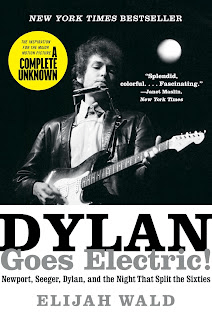
The LRB recently published a letter from Benjamin Letzler called the Shoah after Gaza[1]. Letzler’s only point is that Bob Dylan was a plagiarist when he wrote the song “With God On Our Side “. Dylan took the “With God on Our Side” melody from the traditional Irish folk song “The Merry Month of May”. “Dominic Behan wrote a song “The Patriot Game. Behan said Dylan stole the melody and the opening two verses of his song, where the storyteller gives his name and age. Behan tried to claim the melody as an original composition, but in reality, Behan had done the same thing as Dylan, using the melody without accreditation. According to Letzler, “Nothing came of the spat, not even a fistfight, is a testament that Dylan’s ‘With God on Our Side’ was a dud. Nobody cared”.
By any stretch of the imagination, this important song deserves far more thought than Benjamin Letzler has given it, especially in light of the current Genocide being perpetrated by the neo-fascist Israeli regime in Gaza. In another letter to the LRB, Martin Gorsky makes his point. “Elizabeth Benedict cast doubt on Pankaj Mishra’s remark, quoting Peter Novick, that the Holocaust ‘“didn’t loom that large” in the life of America’s Jews until the late 1960s’ (Letters, 25 April). In 1964, Bob Dylan’s album The Times They Are a-Changin’ featured the track ‘With God on Our Side’, which included the words:
The Second World War
Came to an end
We forgave the Germans
And then we were friends
Though they murdered six million
In the ovens, they fried
The Germans now too
Have God on their side
The song ranges from the Genocide of Indigenous Americans to the conflicts of the Cold War, arguing that barbarism always comes clothed in moral righteousness.”[2]
According to Wikipedia, “The lyrics address the tendency of Americans (or many societies) to believe that God will invariably side with them and oppose those with whom they disagree, thus leaving unquestioned the morality of wars fought and atrocities committed by their country.”
There is a childishness and stupidy about Letzler’s letter. The fact that the LRB published without comment is telling. Not everyone has been as light-minded as Letzler. Again, according to Wikipedia, “In a 1984 interview with David Barsamian, Anthony B. Herbert reported that while serving in the U.S. Army during the Vietnam War, he was asked by a general to stop playing a record containing Joan Baez’s version of “With God on Our Side,” with the general describing Baez as “anti-military”.
Dylan has been forced into defending his body of work on numerous occasions. In an interview with Rolling Stone magazine, he offered a robust defence of his art, “I’m working within my art form. It’s that simple,” I work within the rules and limitations of it. There are authoritarian figures that can explain that kind of art form better to you than I can. It’s called songwriting. It has to do with melody and rhythm, and then, after that, anything goes. You make everything yours. We all do it.”[3]
A cursory look at the “With God On Our Side” lyrics shows it to be a complex and politically astute song. Dylan mentions American and world historical events, such as the murder of Native Americans in the nineteenth century, the Spanish–American War, the American Civil War, World Wars I and II, The Holocaust, the Cold War and even the betrayal of Jesus Christ by Judas Iscariot.
It is perhaps ironic that a few years after Dylan wrote the song, he was accused of being a Judas[4]. He replied, “Judas – the most hated name in human history! If you think you’ve been called a bad name, try to work your way out from under that. Yeah, and for what? For playing an electric guitar? As if that is in some kind of way equitable to betraying our Lord and delivering him up to be crucified. All those evil … can rot in hell,”.
Letzler is entitled to his opinion, but before he opens his mouth again, he should maybe put his brain into gear or, in the words of the great man, he “can rot in hell,”.
I am working on a review of George Orwell and Russia by Masha Karp. There are several new books on Orwell out now, so I will be kept busy doing reviews. I have paid primary visits to the archives of George Orwell held at UCL, and Bernard Crick’s archive is at Birkbeck.
Three long-term projects are the books. I will update the collection of the Why I Write series that is already in eBook form on Amazon. I want to add some more writers to a new version. The second will be a collection of essays on the historian Raphael Samuel. The third will be a short book or long essay on Oliver Cromwell and the Putney Debates. Cromwell was the subject of my car crash 2003 dissertation for my BA History at Birkbeck.
I will write a short letter to the London Review of Books. It published a terrible letter from B. Letzler called The Shoah after Gaza. He managed to call Bob Dylan’s With God on Our Side “Dud”
Recent Book Purchases
The Carnation Revolution by Alex Fernandes. I have written previously on this subject.
Until I Find You by Rachel Nolan. An extraordinary book well researched on the disappeared children and coercive adoptions in Guatemala.
Cancion by Eduardo Halfon
The Great Revolutions by Duncan Hallas. I fine SWP tradition seems to concentrate on What happened rather than why.
The Blazing World by J Healey. This is the paperback version. I have been meaning to get around to reviewing this for ages.
Travellers of the World Revolution by B Studer, Verso
Marxism and the English Revolution by John Rees. This has not been released yet. I will get a review copy, hopefully.
Recent Events
I regularly attend the online SEP Postal Workers Committee. I follow their work closely and their stuff on the Post is way better than I can write. They write about it. I work it. A good combination.
I have started to watch a few episodes of Sky’s Royal Kill List. What a terrible piece of television. If there was a historian consulted on this programme, he should share the same fate as Charles 1st. When a series has so much swearing, it has very little to say and even less history.
Following in the Footsteps of Oliver Cromwell by James Hobson is a well written and good introduction to the life of Oliver Cromwell. It is not an orthodox biography and was written to fill a gap. Hobson explains, “Following in the Footsteps of Oliver Cromwell is a history of the man mediated through the places where he lived, worked, fought and ruled. It is a biography, but different to others. It’s also an introduction to the famous places associated with Cromwell”.
Unfortunately, The book entered a crowded market and was published before John Morrill’s major work on Cromwell[1]. Like most books on Cromwell Hobson’s resonates today because we still live with the social and political consequences of the English bourgeois revolution.
Hobson’s books are usually aimed at the general reader but retain a good academic standard. To his credit, he does not pander to the latest revisionist historiography. Still, he believes a revolution occurred and that Cromwell was part of a ruling elite that carried it out.
The book could have done with a better attempt to place Cromwell in a more objective context. As the great revolutionary Karl Marx once said, “Hegel remarks somewhere that all great world-historic facts and personages appear, so to speak, twice. He forgot to add: the first time as tragedy, the second time as farce. Caussidière for Danton, Louis Blanc for Robespierre, the Montagne of 1848 to 1851[66] for the Montagne of 1793 to 1795, the nephew for the uncle. And the same caricature occurs in the circumstances of the second edition of the Eighteenth Brumaire.
Men make their own history, but they do not make it as they please; they do not make it under self-selected circumstances but under existing circumstances, given and transmitted from the past. The tradition of all dead generations weighs like a nightmare on the brains of the living. And just as they seem to be occupied with revolutionizing themselves and things, creating something that did not exist before, precisely in such epochs of revolutionary crisis, they anxiously conjure up the spirits of the past to their service, borrowing from them names, battle slogans, and costumes in order to present this new scene in world history in time-honoured disguise and borrowed language. Thus Luther put on the mask of the Apostle Paul, the Revolution of 1789-1814 draped itself alternately in the guise of the Roman Republic and the Roman Empire, and the Revolution of 1848 knew nothing better to do than to parody, now 1789, now the revolutionary tradition of 1793-95. In like manner, the beginner who has learned a new language always translates it back into his mother tongue. Still, he assimilates the spirit of the new language and expresses himself freely in it only when he moves in it without recalling the old and when he forgets his native tongue”.
To conclude, I would recommend this book. It deserves to be on every reading list at major universities and deserves a wide read. Hobson is to be congratulated for his work on this important revolutionary. His books should be a basic textbook to aid future study.
About the Author
Author James Hobson has written such works as ”Dark Days of Georgian Britain’, ‘The English Civil War Fact and Fiction’. Hobson has a website @ https://about1816.wordpress.com/
Marta Álvarez is an author and children´s book illustrator living in A Coruña, Spain.She graduated in Psychology from the University of Santiago de Compostela in 2001, however her real passion was always drawing doodles in the margins of the notebooks.Marta debuts in 2002 writing and illustrating her first picture book “¡Cómo está o galiñeiro!” published by Xerais. Since then, she has worked for several Spanish and international publishing houses.In 2007 her artwork was selected and exhibited at the Bratislava Biennial of Illustration (BIB). She illustrated “Shark Lady: The True Story of How Eugenie Clark Became the Ocean´s Most Fearless Scientist”, which was named one of the Best Children´s Books of 2017 by Parents Magazine, and won the Blue Spruce Award in 2018. She also painted the funny and charming illustrations of “What is Poo?”, which won the Silver Award at the Junior Design Awards 2017.Marta Álvarez is a member of the Galician Illustrators Association (AGPI).
Q. How did you get involved in the Jose Feeds the World Book
I had previously worked with Sourcebooks publishing house illustrating picture book biographies like “Shark Lady” and “The Girl Who Heard the Music”. So I guess they thought I was perfect for this new project, and I am Spanish like José Andres, which was an added plus.
I was very excited to illustrate this nice story, and it was a little challenging for me, too, because I had never painted scenes of natural disasters or war scenes. I didn’t want the book to be too dramatic or sad; I wanted to highlight more the feeling of hope and help from José Andres and World Central Kitchen.
Q. Tell me a little about your background and previous work.
I was born in Vilagarcía, a small town surrounded by countryside and sea in northern Spain. As a child, I enjoyed nature and animals. I liked to create my own stories and draw a lot, but I did not study fine arts when I grew up. Instead, I graduated in Psychology in 2001. In 2002, I wrote and illustrated my first Picture book titled “¡Cómo está o galiñeiro!” (means like crazy chickens), and a small Galician publishing house published it. Since then I’ve been illustrating books for Spanish publishers and for publishers mainly in the US and UK, although many of my books have already been translated into many languages such as Chinese, Swedish or Japanese. My best-known books are “Shark Lady”, “Dinosaur Lady” and “What is poo? Very first questions and Answers” which is part of a very popular children’s book series in the UK and abroad.
Q. Have you always worked digitally for the book Jose Feeds the World?
Most of it, yes. I usually make the sketches with pencil and paper, then scan them and finish the final art in photoshop or other painting software. I always try to make digital art similar to other, more traditional media. It’s much easier to change digital art because it’s all organized into multiple layers.
Q How, if at all, has AI impacted your work
Well, I hope it has not had too much of an impact for the moment in the sense that AI ends up replacing us and leaving illustrators out of work. Making a book is much more complex for an AI than making a single image. There is a repeated character, and there must be very good consistency in all the illustrations. You start to notice a lot when an image is made by AI. When you look closely, you see that there are many strange, incomprehensible or unfinished details. It is possible to speed up some tasks, AI is a powerful tool in many fields. I know that some illustrators use it to get inspiration in the sketching phase, not as final art, but it doesn’t appeal to me at all. My style is very personal.
Q Central Kitchen is currently working in Gaza. The Israeli military blatantly killed some
of its members. Could you comment on that situation?
I think it was something terrible. In general, I believe that what Israel is doing in Gaza is disproportionate and horrible. Spain will recognize the Palestinian state on May 28. I want them to agree and stop this war soon, but I imagine it won’t be easy.
Q the book has received much praise and publicity. Have you been involved in any of the publicity?
No, but I would have liked to. Since I live in Spain, I don’t know much about what’s going on there, but I try to keep up to date on social media, and I’m very happy to see that the book is recommended. I also like to be in contact with the writer, David Unger, and see his book presentations in bookstores or libraries. It’s great!
Q: What projects or books are you working on now?
I am working on a series of books that unite science and faith. The first book has already been published: “God’s Little Astronomer”, and now I am finishing the second: “God’s little oceanographer.”