On 16/03/26, I visited the Socialist Workers Party bookshop, Bookmarks. While looking at the second-hand bookshelves, I noticed a lot of old Workers Revolutionary Party (WRP) books, like 10 copies of the Trotskyism Versus Revisionism series 1-6. The bookshop has three large bookshelves of second-hand books. I noticed more books, like Marx’s collected works, Lenin’s collected works and more books by Leon Trotsky.
I felt something was wrong here, so I went to the reception desk and asked if they knew anything about it. I was told that a representative from Vanessa Redgrave had initially offered two storage lockers full of books in early 2025. The SWP told Redgrave that they don’t buy. Redgrave donated the books to the SWP. The books were loaded into a medium-sized van in June or July of 2025. The books were advertised for sale through the SWP’s social media sites.
Given that Healy had a library that spanned over fifty years, one can only imagine how many were donated and what exactly Redgrave kept back. It is not well known that Healy’s secretaries kept a political diary. Excepts can be seen in Corrin Lotz’s somewhat sycophantic biography of Gerry Healy. What documents does Redgrave still hold on to?
Having a further look at the books on the Bookmarks shelves, I notice a significant number with G Healy written inside. Healy spent an inordinate amount of time writing in the books.
Healy clearly annotated his books to engage more deeply with the text, enhance comprehension, and retain information, essentially turning his reading into an active conversation with the author. It serves as a personal record of his thoughts, feelings, and insights, facilitating easier reference later and adding a deeper layer of enjoyment to the reading experience. It means that future historians will not have access to this precious archive.
It is clear that the books donated are not from Redgrave’s library but are, in fact, Healy’s personal library. I know this because six months before the split in the WRP in 1984, Redgrave sold off an enormous amount of her books. I purchased two suitcases full of her books, including the proof copy of One Long Night, with her name inside.Also, there appear to be several books from the WRP library, which I assume were at Clapham. It appears Redgrave must have looted that library. This needs further investigation, but I am pretty sure it is part of, or the whole of, G Healy’s library.
It is clear that Redgrave has no interest in revolutionary politics and by carrying out this act of political and historical vandalism spits on the history of the movement. The books should have been donated to a library or an academic institution such as Warrick University.
“Men of Maize” is a singular, difficult mine that will yield rich ore to those willing to dig for it.
Miguel Ángel Asturias.
“The earth falls dreaming from the stars, but awakens in what once were green mountains, now the barren peaks of Ilóm, where the guarda’s song wails out across the ravines, the hawk swoops headlong, the giant ants march, the dove sighs, and where sleeps, with his mat, his shadow and his woman, he who should hack the eyelids of those who fell the trees, singe the eyelashes of those who burn the forest, and chill the bodies of those who dam the waters of the river that sleeps as it flows and sees nothing until trapped in pools it opens its eyes and sees all with its deep water gaze …
Men of Maize
“What matters in life is not what happens to you but what you remember and how you remember it.”
― Gabriel Garcia Marquez
“To be radical is to grasp things by the root.”
Karl Marx, Critique of Hegel’s Philosophy of Right
“There is no royal road to science, and only those who do not dread the fatiguing climb of its steep paths have a chance of gaining its luminous summits.”
Karl Marx, Capital: A Critique of Political Economy Volume 1
Miguel Ángel Asturias (1899–1974) is a pivotal figure for anyone who wants to understand Latin American culture and the anti‑imperialist struggle. His fiction and political writing—above all Hombres de maíz (Men of Maize) and El señor presidente (Mr President) combine a literature of the oppressed with a critique of oligarchy, comprador rule and imperialist intervention. Hombres de maíz in particular provides a complex myth‑social account of indigenous life and capitalist dispossession.
Having said that, outside of the work of Gerald Martin and a few others, Miguel Ángel Asturias has been, for a long time, treated by the literary establishment in Latin America and around the world like a “dead dog”, and not content with that, they have continued to pile a further amount of other dead dogs upon his literary reputation.
One of the primary reasons for the cultural abandonment of Asturias has been decades of political and cultural reaction, with dire consequences. The professors, critics and journalists who make up what is called the intelligentsia want no part of Asturias’s sharp critique of both Yankee imperialism and its oligarch friends in Latin America.
There is a hostility amongst these layers to his tireless commitment to social truth, to historical and psychological reality, his building up of his characters’ situations and dilemmas, his engagement with towering questions, including many of the essential facts of class society, critique of Latin American illusions and delusions, his refusal to flatter his readers, all this continues to fly in the face of contemporary academic pettiness and subjectivism, lazy, irrationalist postmodernism and political timidity.
While that dire situation has apparently not changed much, there have been slight but significant recent developments regarding this great writer’s work. David Ungar’s excellent new translation of the 1946 novel El Señor Presidente (Mr President) by Ángel Asturias was published in 2022. While welcoming this critical event, several reviewers bemoaned the “strange lack of interest in the author in the English-speaking world.”[1]
On April 25th 2025, Penguin republished Men of Maize with a translation by Gerald Martin, and in 2026, Verso Publications will release an English translation of “Weekend in Guatemala” by the renowned academic David Lee. The book is an essential collection of stories written in anger after the 1954 CIA-backed overthrow of the Guatemalan government.
Men of Maize, Asturias’s 1949 novel, is considered by many to be his most essential work, yet it remains one of the least understood novels he wrote. Asturias himself said of it as “a singular, difficult mine that will yield rich ore to those willing to dig for it.”
Hector Tober goes so far as to call it “Asturias’s Mayan masterpiece, his Indigenous Ulysses, a deep dive into the forces that made and kept the Maya a subservient caste, and the perpetual resistance that kept Guatemala’s many Mayan cultures alive and resilient. Like most people born in Guatemala, Asturias likely had some Indigenous ancestry, even though his father, a judge, was among the minority of Guatemalans who could trace their Spanish heritage to the seventeenth century. When the dictatorship of Manuel Estrada Cabrera (later the subject of Asturias’s novel Mr President) sent the future author’s father and family into internal exile in the Maya-centric world of the provincial Alta Verapaz, the young Miguel Ángel fell deeply into the great well of Indigenous culture for the first time.”[2]
Miguel Ángel Asturias and the origins of magical realism
Asturias has long been credited with originating the Magical Realism style of writing. His novel El Señor Presidente (published 1946) prefigures the techniques later associated with Magical Realism. As Rafael Azul points out in his excellent article Gabriel García Márquez: A giant in the literature of the Americas, “Making the experiences of Latin American social struggle, repression, and tyranny the subject of his literary effort was not unique to García Márquez. Mister President (El Señor Presidente), by the Guatemalan author Miguel Ángel Asturias, who was exiled in Paris, was published in Mexico in 1946. The novel details the assembly line quality of sadistic brutality meted out by an unnamed dictator in an unnamed Central American nation. The novel, a blend of surrealism and naturalism, inaugurated a new style, magical realism, that characterised the later literary boom on the continent. García Márquez became one of its masters. By incorporating fantasy and magic into their narratives, Asturias, García Márquez, and others sought to represent reality, including the reality of human consciousness, in all its facets and complexities. Memories, native myths and fantastic beings are all integrated in the stories. The characters travel back and forth in time, and their memories of the past become activated in the present. The dead intervene in the lives of the living. All this is done not as a means of escaping or masking reality, but as a way of penetrating it.[3]
Any examination of Asturias’s work must situate it in the concrete social and political conditions of Central America—U.S. imperial intervention, oligarchic rule, and the class domination that produced mass dispossession and terror. Asturias wrote amid the rise of authoritarian regimes and open imperial interference in the region. The grotesque continuity of oligarchic power, state terror and foreign corporate influence created a social reality in which everyday life often had the character of a nightmare and the irrational. Magical realism emerges when lived experience itself is surreal: mass violence, dispossession, and ideological mystification produce a popular consciousness that mixes myth, memory, and the uncanny. Asturias’s novels compress these social facts into narrative forms that reveal the social totality behind individual pathology.
Asturias does not merely adorn his prose with “magical” elements for aesthetic effect. His technique fuses myth, surreal episodes and symbolic grotesquerie to expose the law of motion of class rule: how state power, landholding elites and imperial influence reproduce domination. This method both records popular memory and refracts historical processes through mythic forms—an approach that can illuminate social contradictions when read dialectically.
It should be warned against reading Asturias too uncritically. His examination of myths, while important, is no substitute for a concrete examination of social relations. There is, of course, a danger that idealist constructions can hide real social relations. Leon Trotsky insisted that aesthetic form must be abstracted from its social and class roots: the formalist separation of form from content obscures the class forces that shape cultural production. As Trotsky wrote
“It is unquestionably true that economic conditions do not create the need for art. But neither is the need for food made by economics. On the contrary, the need for food and warmth creates economics. Indeed, one cannot always rely on Marxist principles in deciding whether to accept or reject a work of art. A work of art should, in the first place, be judged by its own law, that is, by the law of art. But Marxism alone can explain why and how a given tendency in art has originated in a given period of history; in other words, who it was who made a demand for such an artistic form and not for another, and why. It would be childish to think that every class can entirely and fully create its own art from within itself, and, particularly, that the proletariat is capable of creating a new art by means of closed art guilds or circles, or by the Organisation for Proletarian Culture [Proletkult], etc. Generally speaking, the artistic work of man is continuous. Each new rising class places itself on the shoulders of its preceding one. But this continuity is dialectical, that is, it finds itself through internal repulsions and breaks. New artistic needs or demands for new literary and creative points of view are stimulated by economics through the development of a new class, and minor stimuli are supplied by changes in the class’s position under the influence of its growing wealth and cultural power. Artistic creation is always a complicated turning inside out of old forms, under the influence of new stimuli originating outside art. In this large sense of the word, art is a handmaiden. It is not a disembodied element feeding on itself, but a function of social man indissolubly tied to his life and environment.[4]
Asturias’s life work must be read as a socio-historical document, not as an ahistorical ornament. Studying Miguel Ángel Asturias scientifically is not an inward-looking cultural exercise; it is a political weapon to expose the roots of oppression.
Notes
Revisiting Men of Maize: Historical Truths, Literary Distortions, and Asturias in Today’s Guatemala -Elaine Elliott
Tall Tales Made to Order: The Making of Myth in Men of Maize by Miguel Angel Asturias René Prieto: MLN, Vol. 101, No. 2, Hispanic Issue (Mar., 1986), pp. 354-365
Myth As Time and Word by Ariel Dorfman
Myth and Social Realism in Miguel Angel Asturias-Luis Leal
A Literary Study of Magical Realism in Hombres de Maíz -LIU Lu-yao
[1] See keith-perspective.blogspot.com/2024/07/mr-president-by-miguel-angel-asturias.html
[2] On Asturias’s Men of Maize- August 16, 2024-www.theparisreview.org/blog/2024/08/16/on-asturiass-men-of-maize/
Making Space is a beautifully crafted 32-page eBook. It is essentially about a childless couple who take in a mysterious boy in a dark and foreboding short story about the responsibility of parenthood, self-sacrifice, and how we perceive the future. It is also what happens to a person’s soul when they sell it to the devil. Although different from Oscar Wilde’s Picture of Dorian Gray, there are striking similarities.[1]
R. F. Kuang’s Making Space is part of The Time Traveller’s Passport. It is a collection of stories about memory, identity, and the choices we make in life. New York Times bestselling author John Joseph Adams edited the book. It is a little surprising that Amazon would snare an author of Kuang’s stature. The book is currently only available on Amazon, and a printed version has not been released yet. Review copies appear to be sanctioned by Amazon through NetGalley.[2]
Although the short book genre is new to Kuang, she handles it superbly, serving as a testament to her intellect and experience. The dark and not-unsurprising ending is typical of Kuang. Her main narrative is beautifully crafted, delving into the complexities of human relationships and social responsibilities. However, it is a little disturbing that Kuang makes far too many concessions to the right-wing #MeToo campaign.
I am not saying that Kuang is an ardent supporter of the #MeToo movement. However, her work on Making Space makes it difficult to turn such narrow, selfish concerns of Jess into great, compelling drama.
As the great G. V. Plekhanov wrote, “I know that an artist cannot be held responsible for the statements of their heroes. But very often he, in one way or another, indicates his own attitude to these statements, and we are thus able to judge what his own views are.”
And writing an observation that would not look out of place in today’s world, He writes in the same essay, “in present-day social conditions, the fruits of art for art’s sake are far from delectable. The extreme individualism of the era of bourgeois decay cuts artists off from all sources of genuine inspiration. It renders them completely blind to what is happening in social life, condemning them to sterile preoccupation with personal emotional experiences that are entirely without significance and marked by the fantasies of a morbid imagination. The end product of their preoccupation is something that not only has no relation to beauty of any kind, but which moreover represents an obvious absurdity that can only be defended with the help of a sophistically distorted idealist theory of knowledge.”[3]
While there is nothing wrong with using the internet to publish books or short stories, it does contain certain dangers. Kuang has been accused of using AI to write her books on TikTok. But as one reader succinctly puts it, “Sadly, AI is so common now that talent is suspicious! Would you accuse Sanderson or Stephen King of AI? Or is ‘too articulate’ a critique only reserved for female authors?”.
In defence of Kuang Varika Rastogi writes, “Kuang—in no small part because of the role TikTok has played in her rise to success—is also deeply aware of the Internet being the ‘realm that the social economy of publishing exists on, and she deploys this (Yellowface) novel as a means to assess how it can both heal and harm projects. A significant portion of Yellowface is represented through Twitter discourse and Goodreads reviews. By placing us in the shoes of the targets of its vitriol and negativity, the author attempts to make us privy both to the mental impact such harassment can have on a person, as well as to the fact that “allegations get flung left and right, everyone’s reputations are torn down, and when the dust clears, everything remains exactly as it was.” However, if nothing changes, it is also because someone is making a profit”[4]
Making Space is still a superbly written book. Kuang is to be commended for her recent efforts in the field of battle against the racialisation of literature, and her defence of the fundamental right of an author to write about whatever they want without fear of their books being burned or pulped. However, Making Spaces is a dangerous concession to the #MeToo movement. Her new book, Katabasis, which is already a best seller, will be reviewed at a later date.
Given that the average age for a United Kingdom postal worker is around fifty-five, it is a fair bet that the majority of postal workers have witnessed over four decades of betrayals by the Communication Workers Union(CWU).
A small number of postal workers in their late sixties or seventies, believe it or not, are still working. They would remember the first national postal strike in 1971[1]. I raise this matter because the most pressing question facing postal workers at the moment is the issue of leadership.
Over the last five decades, postal workers have witnessed betrayal after betrayal and have seen their pay and working conditions decimated. It is time to face the facts: the CWU is nothing more than a company union that is doing the current owner, Daniel Kretinsky’s, dirty work. There is no line it will not cross to impose Amazon-style working conditions that will turn Royal Mail into an Amazon-style company with all the implications that entails.[2]
Postal workers have not been taking these attacks by the company and the union lying down. They have met these attacks head-on with every weapon at their disposal. However, it is time to face the facts: the old way of struggle has not worked. Do not get me wrong, I am not saying not to strike, but what is the new perspective that postal workers must fight for?
Leadership is an art. As the Russian Marxist Leon Trotsky said, “There is an ancient, evolutionary-liberal epigram: Every people gets the government it deserves. History, however, shows that the same people may in the course of a comparatively brief epoch get very different governments (Russia, Italy, Germany, Spain, etc.) and that the order of these governments doesn’t at all proceed in the same direction: from despotism to freedom as was imagined by the evolutionist liberals. The secret is this, that a people is comprised of hostile classes, and the classes themselves are comprised of different and in part antagonistic layers which fall under different leadership; furthermore, every people falls under the influence of other peoples who are likewise comprised of classes. Governments do not express the systematically growing “maturity” of a “people”. Still, they are the product of the struggle between different classes and the different layers within the same class, and, finally, the action of external forces – alliances, conflicts, wars and so on. To this should be added that a government, once it has established itself, may endure much longer than the relationship of forces which produced it. It is precisely out of this historical contradiction that revolutions, coup d’etats, counterrevolutions, etc., arise.
The very same dialectic approach is necessary in dealing with the question of the leadership of a class. Imitating the liberals, our sages tacitly accept the axiom that every class gets the leadership it deserves. In reality, leadership is not at all a mere “reflection” of a class or the product of its own unrestrained creativeness. Leadership is shaped in the process of clashes between the different classes or the friction between the various layers within a given class. Having once arisen, the leadership invariably arises above its class and thereby becomes predisposed to the pressure and influence of other classes. The proletariat may “tolerate” for a long time a leadership that has already suffered a complete inner degeneration but has not as yet had the opportunity to express this degeneration amid significant events. A great historic shock is necessary to reveal sharply the contradiction between the leadership and the class. The mightiest historical shocks are wars and revolutions; precisely for this reason, the working class is often caught unawares by war and revolution.[3]
It is pretty clear that postal workers have been caught unawares by the unprecedented nature of the attacks on their pay and conditions. They have, in Trotsky’s words, witnessed a great historical shock. It is time to face reality square on and realise that the CWU is dead and is just waiting to be buried.
Postal workers have tolerated the CWU for a long time because they did not really have an alternative, but now they do. Firstly, they have the World Socialist Website (wsws.org). Its analysis has been second to none in terms of accuracy and perspective. It offers a new way forward for postal workers. The CWU bureaucracy knows it is in a fight to the finish, so much so that it has lashed out at the WSWS on several occasions.[4]
Postal workers need a new organisation. The way forward is the struggle to build the Postal Workers Rank-and-File Committee (PWRFC). Although it is small at the moment, it has the only socialist perspective to take on both the CWU bureaucracy and Royal Mail. While it must join and build this new organisation, the task facing postal workers is a political one. The philosopher Hegel was fond of saying, “The owl of Minerva spreads its wings only with the coming of the dusk”, and this is true for postal workers today. To be blunt, postal workers do not have much time to build this leadership. Any delay in building the PWRFC will mean that, soon, there will be nothing left to defend.
“Canceled Lives tells the whole sad story and the personal pain Bailey suffered. His publisher had no right to do what they did to him. This book, about accusations of terrible behaviour and their effect on a book and its author, goes beyond memoir and reveals the profound harm such assertions can cause. It deserves a wide and discerning audience.”
Martin Garbus, Prominent First Amendment Lawyer
“I heed the cry of the women insulted and injured. However, I am also anxious about the nature of the tribunal that is adjudicating these charges. As a civil libertarian, I am anxious because there doesn’t seem to be a tribunal. What I see instead is a publicised accusation instantly followed by peremptory punishment.
Philip Roth
“The history of my discontent, as I remember it”
Philip Roth
“The purging of Bailey’s book sets a sinister example, intended to intimidate artists, biographers and scholars alike. The message being sent is clear: any influential figure who rubs up against establishment public opinion can be denounced and dismissed in like manner.”
David Walsh
When Blake Bailey’s excellent 900-page biography of the writer Philip Roth was published in 2021, it should have been the standard work on Roth’s life for some time to come. Unfortunately for Bailey, we were already amidst the #MeToo movement’s vilification of Roth, his work and worldview. Roth was cognisant of the fact that some women had been abused, saying, “I heed the cry of the women insulted and injured. But I am also made anxious by the nature of the tribunal that is adjudicating these charges. I am made anxious, as a civil libertarian, because there doesn’t seem to be a tribunal. What I see instead is a publicised accusation instantly followed by peremptory punishment.”[1]
Bailey became a casualty in this war against Roth for essentially defending Roth’s right to his worldview. Bailey fell afoul of his publishers’ “morals charge” after accusations of sexual abuse were levelled at him via social media. Some of Bailey’s former eighth-grade students at Lusher High School in New Orleans came forward with allegations that he had groomed them for sex. Two women, including one of his former students at Lusher, subsequently accused him of rape.
Although no formal charges were made against Bailey, it did not stop his so-called friends in the literary scene, who “fell over one another”, disassociating themselves from Bailey. His biography was then pulped by his publisher, W.W.Norton, an act that is akin to book burning carried out by the Nazis in the 1930s.
As David Walsh wrote, “ In a significant act of censorship, with chilling implications for democratic rights, publisher W.W. Norton has announced its decision to “permanently” remove Blake Bailey’s biography of American novelist Philip Roth (1933–2018) from print. Several individuals have accused Bailey of sexual wrongdoing, including rape, dating back to 2003. None of them has come forward with any evidence to back up the claims. Bailey’s 880-page book, well-received critically and considered one of the essential works of the year in its field, will be pulped. Norton also reported its dropping of Bailey’s 2014 memoir. In a statement dripping with hypocrisy, Norton’s president, Julia A. Reidhead, asserted that “Mr Bailey will be free to seek publication elsewhere if he chooses.” Overnight, Bailey has become a “non-person.” he has ceased to exist.[2]
Most of Bailey’s friends and fellow writers stayed silent when he was made a “non-person. It was not until the World Socialist Website marshalled some resistance that people started to speak out. Several prominent writers, historians, and film people contacted by the WSWS condemned W. W. Norton’s treatment of Bailey. Novelist, memoirist and short-story writer James Morrison wrote, “Even if Blake Bailey were charged, tried, and convicted of a crime, it would still be indefensible for W. W. Norton to pulp his book. Can American readers not have the option to think for themselves? The “#MeToo movement” might have accomplished something if it had facilitated the prosecution of cases involving harassment or assault. Still, it has resulted in something like its opposite: a bizarre spectacle of social panic, moral shaming, and public burning, based on unfounded accusations in the media. Norton’s cancellation of Bailey’s book is not the action of a free institution in a democratic society. It is the procedure of craven functionaries deep in a politburo.[3]
Author, editor and blogger Kathleen Spaltro said, “Thomas Aquinas clarified that the aesthetic value of art has nothing whatever to do with whether the artist is a good person. The artist may be a good person, or not, but that is the moral question faced by the artist as a person, not as an artist.
Film critic, film historian and author Jonathan Rosenbaum: Cancel culture, perhaps the most poisonous and befuddled offshoot of “political correctness,” is a totalitarian expression of impotence, not any real exercise of political power. It’s a way of saying that because one can’t defeat racism or misogyny or abuse in the real world, at its sources, one can pretend to defeat it symbolically, by canceling words, sounds, images and other forms of communication, thus pretending that the people and communicators one disapproves of can be “canceled” (i.e., ignored and suppressed). It’s an insult to the principles of free expression that can only be practised by defeated bigots who’ve given up on free expression and democratic processes, and by gamblers who prefer to cheat.”
It took a while for Bailey to understand what had happened to him. Canceled Lives is his attempt to process and collect his thoughts and to answer his detractors. Patrick Mullins describes the new book’s journey: “Originally titled Repellent, it was scheduled to be published in April 2023. Speaking circumspectly, Bailey has explained that the executors of Roth’s estate, Andrew Wylie and Julia Golier, objected to the inclusion of Bailey’s conversations with Roth in the manuscript, arguing that the publication of these exchanges, which supposedly made up the bulk of the book, would violate the agreement Bailey signed as Roth’s authorised biographer. And so Repellent was reworked, becoming Cancelled Lives, and Bailey’s dealings with Roth were transformed into an account of his father’s death braided with chapters narrating Bailey’s disgrace.”[4]
There are many themes running through Canceled Lives. One being Bailey’s sexual activity. Bailey was no angel, and some of his relationships were questionable at best. There seems to be a period in his life where his penis did most of the thinking, but this does not mean he deserved what happened to him.
He writes, “The worst of what I was accused of wasn’t true. I did nothing illegal and nothing vicious. I’m not a rapist, I did not deliberately groom anybody; these were long-time friends. You have enterprising reporters calling hundreds of your former students, hundreds of the people you’ve mentioned in your acknowledgements. People, for various reasons, are eager to get their shots”.
A strong theme of the book is death. Bailey discusses the life and early death of his older brother, Scott, who committed suicide in his early thirties after a life of drug addiction and crime. Bailey harshly describes Scott’s suicide as doing “himself and his loved ones a favour ”. Bailey spent a significant amount of time researching his book on Roth, so much so that he must have ended up with deep feelings for Roth.
He tells how he witnessed Roth’s final moments alongside Roth’s former lovers and closest friends surrounding his hospital deathbed. It is not surprising that the book provides little information about his relationship with Roth. Given how much he had to process in his own life and to come to terms with so many devastating attacks on him. Perhaps it is just as well, as he was while Roth was still alive, unable due to disclosure limitations imposed by the Roth estate on Bailey.
As Walsh intimates in his work on Bailey, most of the attacks on Bailey are less about his sexual proclivities and more to do with the fact that he wrote a perceptively objective biography of Roth and, in the end, defended both Roth and his political worldview against his detractors in the #MeToo movement.
In a recent video call, David Walsh spoke with Bailey about his new book, “The Sexual Witch Hunt,” and democratic rights, as well as briefly discussing the subject matter of his various biographies. Bailey thanked the World Socialist Website for its support, saying, “You could be speaking for me, and you did, after everything blew up. I was enormously grateful for the courage of it. Very few people spoke up. People wrote me private notes expressing their outrage, or at least chagrin, about how viciously and relentlessly I was attacked. But I can’t think of anyone offhand who was as outspoken publicly as you were. And if I didn’t say it emphatically enough before, let me say now that I was very grateful for that.[5]
It is striking that the Trotskyist movement has been left to lead the defence of Bailey and his democratic rights in the pages of the World Socialist Website. The campaign to defend Bailey has cut across the right-wing attack on him led by the #MeToo movement. It is worth noting that the movement has been ably assisted by numerous pseudo-left media organisations that have joined the attacks on both Roth and Bailey. These so-called leftists have shown their support for banning books and removing them from bookshelves. The next logical step for these organisations will be to join the book burning.
Bailey’s new book, Cancelled Lives—My Father, My Scandal, and Me, is a stunning response to his detractors and slanderers, and it deserves a broad audience. Unlike too many of the #MeToo victims, Bailey has decided to fight and set the record straight. This is an entirely welcome and healthy development, a contribution to the cleansing of the cultural atmosphere. Bailey has the right to see the world as he sees fit.
[2] Book-burning comes to America-https:ww.wsws.org/en/articles/2021/04/29/bail-a29.html
[3] Writers, biographers protest W.W. Norton’s decision to “permanently” remove Blake Bailey’s biography of Philip Roth from print-www.wsws.org/en/articles/2021/05/04/bail-m04.html
[5] A conversation with Blake Bailey, Philip Roth biographer and author of Cancelled Lives: My Father, My Scandal, and Me: “I said … I’m not going to take this lying down”
“If you want a picture of the future, imagine a boot stamping on a human face—forever.”
George Orwell 1984
“All animals are equal, but some are more equal than others.”
Animal Farm
“But if thought corrupts language, language can also corrupt thought.”
George Orwell
In the most recent edition of The Orwell Society Journal, John Rodden wrote an article[1] defending George Orwell from a “Never Ending Siege”. According to Rodden, no day goes by without Orwell coming under sustained attack from both left and right writers or journalists.
In the first part of his article, under the heading The Hate Campaign: From Two Minutes to a Hundred Years Rodden examines one of the more recent and sustained attacks on Orwell from the poison pen of Naoise Dolan writing in the Financial Times[2]. The FT donated an inordinate amount of space for her to bemoan Orwell’s influence: She writes, “ George Orwell died in 1950, but he’s in the newspapers nearly every day. In the past few years alone, the British press has quoted him on whether Britain is an unserious country, whether book blurbs are degenerate and why a good British pub should be revolting.
Writers ask what he would have made of the end of British coal, and repeat his counsel on how to make the perfect cup of tea. They cite him on why English people love queueing, the importance of having hobbies, and why “cancel culture” is a poor substitute for free speech. They ask what he can teach us about Israel and Palestine, and when Britain will tire of its culture wars. One might just as well ask when Britain will tire of the obligatory Orwell reference.”
Naoise Dolan is an Irish novelist, while I have nothing against novelists, it would appear that Dolan has not read too much Orwell or perhaps not understood what she has read. She would also appear to be weighed down by an extraordinarily large axe, looking for a place to grind it.
Rodden breaks his article down into seven parts. In the first part, he perhaps inaccurately states that Orwell “hated the Marxist Left”. A wildly inaccurate generic term if ever I saw one. It would be an understatement to say that Rodden is loose with his wording, something that Orwell hated. Just read his essay Politics and the English Language.
The “Marxist Left “ is a vague term meaning just about every radical group under the sun. Although in the end Rodden is forced to make the distinction between the Marxist Left, by which he means the Stalinist British Communist Party, who are the Far Left, Rodden does not elaborate. The term usually denotes radical groups such as the Socialist Workers Party (SWP), who do not hate Orwell; in fact, one of its leading members is an expert on Orwell.[3]
The Stalinists, on the other hand, had good reason to hate Orwell, and for more than two minutes. Orwell, who called himself a democratic socialist, first came to prominence in the 1930s for the powerful social criticism of Down and Out in Paris and London and The Road to Wigan Pier. The Stalinists hated these two books. The general secretary of the British Communist Party, Harry Pollitt, accused Orwell of “slumming it” and “bourgeois snobbery”.
He wrote, “If ever snobbery had its hallmark placed upon it, it is by Mr Orwell. If on his return from Mandalay he had bought one or two penny pamphlets on socialism and the working-class movement, what fatal experiences he could have saved himself from, because one never gets to know the movement by slumming. I gather that the chief thing that worries Mr Orwell is the “smell” of the working-class, for smells seem to occupy the major portion of the book. Well, pardon me if I say at once, without any working-class snobbery, that it’s a lie.”[4]
However, what put the Stalinist noses severely out of joint was the publication of Orwell’s Homage to Catalonia. According to Fred Mazelis: “ When Homage to Catalonia was published, Orwell was virtually ostracised for this account of the Spanish Civil War, which laid bare the Stalinists’ treachery against the Spanish and international working class. The Stalinists and their supporters were enraged by the book’s exposure of their role in strangling a genuine revolutionary movement through the same bloody methods then being utilised inside the USSR. In the ensuing years, Orwell found it increasingly difficult to get his writings published.”[5]
In section two, Spain and the Communists, Betrayal of the Left, Homage to Catalonia 1938, Rodden ends the paragraph with the strange assertion that the Russian secret police spied on Orwell and may have targeted him for elimination. Given what we know about Orwell and his wife, it is pretty clear that if Orwell’s wife had not acted when she did, they would have both been murdered by the Stalinists in Spain.
Orwell spent the last few years before his death coming to terms with the betrayal of the Russian Revolution and the rise of Stalinism. Orwell’s Animal Farm was his second attempt at reckoning with Stalinism, his first being the book Homage to Catalonia. At 120 pages, the book Animal Farm can be read on many levels. As John Newsinger points out, “The politics of the book were pretty straightforward: a capitalist farmer had been quite properly overthrown by the worker animals, and an egalitarian socialist system had been introduced on the farm. The pigs had then betrayed the revolution with the revolutionary Snowball (Trotsky) driven out and the dictator Napoleon (Stalin) establishing a murderous police state”.[6]
Right-wing ideologues have attempted to portray the book as anti-revolutionary. Orwell refuted this slander, saying, “I meant the moral to be that revolutions only effect a radical improvement when the masses are alert and know how to chuck out their leaders as soon as the latter have done their job. The turning point of the story was supposed to be when the pigs kept the milk and apples for themselves (Kronstadt). If the other animals had had the sense to put their foot down, then it would have been all right…I was trying to say, “You can’t have a revolution unless you make it for yourself; there is no such thing as a benevolent dictatorship.”
Although Homage to Catalonia was a devastating exposure of the counterrevolutionary nature of the Stalinists, he was to some extent blinded by his bitter experiences with the pro-Stalinist intellectuals and the smug pro-Stalinist liberals. Although his analysis of these people was usually accurate, his method was largely a subjective one. He dismissed the historic significance of the Russian Revolution and saw nothing left to defend in this revolution.
Mazelis writes, “This finds expression in Animal Farm and especially in 1984. While there is much that is powerful in these books, Orwell’s outlook also made it possible for them to be used by the anti-communists. Stalinism itself, of course, bears the major responsibility for dragging the name of socialism through the mud.”[7]
Orwell certainly did not write 1984 to drag Socialism through the mud. Published in June 1949, it came out amid rising Cold War tensions. As Richard Mynick explains, “The novel’s police state bore an obvious resemblance to Stalin’s USSR. Coming from Orwell—a self-described democratic socialist who was deeply hostile to Stalinism—this was unsurprising. But while Orwell was too clear-sighted to conflate Stalinism with socialism (writing, for example, “My recent novel [‘1984’] is NOT intended as an attack on socialism…but as a show-up of the perversions…which have already been partly realized in Communism and Fascism.…”), his Cold War-era readership was often blind to this distinction. His cautionary notes (“The scene of the book is laid in Britain…to emphasize that the English-speaking races are not innately better than anyone else and that totalitarianism…could triumph anywhere”) were largely overlooked, and in the public mind, the novel’s grim prophesy (“If you want a picture of the future, imagine a boot stamping on a human face—forever”) attached itself mainly to political systems seen as enemies of Western-style capitalist “democracies.”
Yet Nineteen Eighty-Four was no endorsement of the West. It posits only an unaccountable elite that rules in its interests and maintains power by taking state-run mind control to its logical extreme. It examines what’s operationally involved in compelling a population to submit to exploitative rule, without regard to the nominal form of economic organisation. Put a bit differently, the book considers the psycho-social machinery of unaccountable state power in general, regardless of whether it originates from a ruling bureaucracy or finance capital. It explores the general problem of maintaining social stability in a highly unequal society, which can be done only through some combination of repression and controlling the population’s consciousness.”[8]
In section six, The Anti Intellectual Brigade, Rodden examines E.P. Thompson’s attack on Orwell. Thompson criticised Orwell from the right, not the left; he compared Orwell to “a man who is raw all down one side and numb on the other. He is sensitive—sometimes obsessionally so—to the least insincerity upon his left, but the inhumanity of the right rarely provoked him to a paragraph of polemic.”
Thompson spent most of his academic career distancing himself from his former life inside the British Communist Party. His criticism of Stalinism was not from an orthodox Marxist position; instead, he advocated a type of “socialist humanism”. Thompson at an early age rejected the classical Marxism of Leon Trotsky; despite later breaking with Stalinism, it is clear that Thompson’s subsequent historical and political writings still retained ideological baggage from his Stalinist past.
As Rodden’s article shows the discussion over Orwell’s work and, more importantly, his opposition to Stalinism continues unabated today. At a recent election meeting held by the UK Socialist Equality Party, a member of the audience used Orwell’s book Animal Farm to conclude that revolutions have always been defeated. In his reply, Chris Marsden said that despite Orwell being a brilliant writer and an opponent of Stalinism, he nonetheless drew pessimistic conclusions from the victory of Stalinism in the former USSR.
One example of this confusion was his turning over some 35 of these names, a year before he died in 1950, to a secret government unit called the Information Research Department. This arm of the British Foreign Office had been set up to organise anti-Soviet and anti-communist propaganda. Marsden made the point that the co-leader of the Russian Revolution and his Left Opposition opposed Stalinism from the standpoint of Marxism and had faith in the working class overthrowing it. They worked under extraordinary political and physical pressure to provide a Marxist opposition to Stalinism, something Orwell could never have done.
[1] The Never Ending Siege-Orwell and the Left The Orwell Society-Journal no 25 spring 2025
[2] How George Orwell Became a Dead Metaphor-https:www.ft.com/content/83625fad-f101-4712-ba2b-483b87ef0e12
“The wrongs which we seek to condemn and punish have been so calculated, so malignant, and so devastating that civilisation cannot tolerate their being ignored because it cannot survive their being repeated. We must never forget that the record on which we judge these defendants today is the record upon which history will judge us tomorrow.”
Chief Prosecutor Robert H. Jackson
“To initiate a war of aggression, therefore, is not only an international crime; it is the supreme international crime differing only from other war crimes in that it contains within itself the accumulated evil of the whole.”
“War makes murderers out of otherwise decent people. All wars, and all decent people.”—Ben Ferencz
The leader by will of the people differs from the leader by will of God in that the former is compelled to clear the road for himself or, at any rate, to assist the conjuncture of events in discovering him. Nevertheless, the leader is always a relation between people, the individual supply to meet the collective demand. The controversy over Hitler’s personality becomes the sharper the more the secret of his success is sought in himself. In the meantime, another political figure would be difficult to find that is, in the same measure, the focus of anonymous historical forces. Not every exasperated petty bourgeois could have become Hitler, but a particle of Hitler is lodged in every exasperated petty bourgeois.
Leon Trotsky- What Is National Socialism? (June 1933)
This is an interesting and well-researched book on the writers who covered the Nuremburg Trials of leading Nazis after the Second World War. The magnitude of the trials drew in journalists and writers from all over the world. Writers John Dos Passos, Rebecca West, Martha Gellhorn, Janet Flanner, William Shirer, and future German politicians such as Willy Brandt all observed the trials. The title of the writers’ castle was because the journalists were housed in the Schloss Faber-Castell castle in Stein, a nearby town.
Neumahr is a German author and literary agent, and his book is less about the crimes of the Nazis but more about the writer’s reaction to the crimes of the Nazis. As Neumahr points out in the book, not all journalists or writers cover themselves with glory. Even a cursory glance at their reports of the trials shows that some resorted to outright lying and presented less-than-objective accounts of the proceedings. Alfred Döblin, the author of Berlin Alexanderplatz, offered a first-hand account of the courtroom he never went to.
Others brought their ideological baggage with them, which showed in their articles. Erika Mann was the daughter of the novelist Thomas Mann. Because of the Nazi’s treatment of the Jews, (she was considered a Jew by the Nazis) she held an abiding hatred of the Nazis, which coloured her writings on the trial. The French Stalinist writer Elsa Triolet wrote many misleading and downright false reports to support her belief that the Anglo-American judges and lawyers were pro-Nazi.
Neumahr’s approach is “biographical and kaleidoscopic”. Given the highly political nature of the trial, it is a little strange that NeuMahr rarely delves into the politics of prosecutions or the writers that covered it, which is a big weakness in the book. As Bill Niven points out, “In most cases, he is as much, if not more, preoccupied with the lives of his chosen protagonists before, during and after their time at the Faber-Castell castle than he is with their actual journalistic response to the military tribunal. Neumahr is especially interested in all the social goings-on at the castle, whose guests – despite the separation of male and female quarters and, eventually, of Soviet reporters from all others – enjoyed a high level of fraternisation. Neumahr follows the various relationships of his protagonists. Erika Mann moved into the castle with her partner and fellow reporter Betty Knox (whom she referred to as her ‘beloved lunatic’) despite the press camp being run by the American military, for whom homosexuality was a punishable crime. Rebecca West and Francis Biddle, a US judge at Nuremberg, had an affair. As Neumahr tells it, this was something of a relief for both parties: ‘Like Biddle, the fifty-three-year-old West was sexually frustrated’, he writes, because ‘she hadn’t had sex with her husband in years.’ In his chapter on Gellhorn, we learn about her tempestuous relationship with Ernest Hemingway, while the chapter on the Prix Goncourt-winning Russian-French writer Elsa Triolet – who stayed in Nuremberg’s Grand Hotel and not the castle – focuses heavily on her relationship with the poet Louis Aragon.”[1]
The book’s strongest part is how Neumahr relates to how many writers and journalists were morally tarnished by political bias or other prejudices. This applies to author Eric Kästner[2]. One of my favourite childhood books was Emil and the Detectives. Despite having his books burnt by the Nazis in 1933, Kastner made a career for himself under the Nazis.
According to his Wikipedia page, “ The Gestapo interrogated Kästner several times, the national writers’ guild expelled him, and the Nazis burned his books as “contrary to the German spirit” during the book burnings of 10 May 1933, instigated by Joseph Goebbels. Kästner witnessed the event in person and later wrote about it. He was denied membership in the new Nazi-controlled national writers’ guild, Reichsverband deutscher Schriftsteller (RDS), because of what its officials called the “culturally Bolshevist attitude in his writings before 1933. During the Third Reich, Kästner published apolitical novels such as Drei Männer im Schnee (Three Men in the Snow) (1934) in Switzerland. In 1942, he received a special exemption to write the screenplay for Münchhausen, using the pseudonym Berthold Bürger. The film was a prestige project by Ufa Studios to celebrate the twenty-fifth anniversary of its establishment, an enterprise backed by Goebbels.
In 1944, Kästner’s home in Berlin was destroyed during a bombing raid. In early 1945, he and others pretended that they had to travel to the rural community of Mayrhofen in Tyrol for location shooting for a (non-existent) film, Das falsche Gesicht (The Wrong Face). The actual purpose of the journey was to avoid the final Soviet assault on Berlin. Kästner had also received a warning that the SS planned to kill him and other Nazi opponents before the arrival of the Soviets.[8] He was in Mayrhofen when the war ended. He wrote about this period in a diary published in 1961 under the title Notabene 45. Another edition, closer to Kästner’s original notes, was published in 2006 under the title Das Blaue Buch (The Blue Book).”[3]
Neumahr’s intention was never to write about the political nature or the duplicity of those prosecuting the Nazis. As Bill Hunter points “During this ten months, while the prosecutors of Britain, France, America and the Soviet Union, listed the sickening crimes of Nazism, world events showed the hypocrisy of the prosecuting Allies. Even while the aggressions of the Nazis were being recounted. British imperialism was maintaining a regime of terror and oppression in Greece, suppressing the colonial peoples struggling for freedom, and strafing Indonesian villages.The British prosecutor prated about justice. Meanwhile, Dr Kiesselbach, according to Tribune 6 September a declared opponent of de-Nazification was placed by British imperialism in charge of the German “Central Office of Justice”.
While the courtroom resounded with castigations of Nazi oppression and racial discrimination, American imperialist suppression was active in the Philippines, and lynch law was rampant in the Southern States.The prosecutors denounced the occupation methods of the Nazis. Yet, even while the French prosecutor mouthed phrases of indignation, the agents of French imperialism were torturing the natives of Indo-China and burning their villages.The miseries of slave labour under the Nazis were related to the court at the same time as 10 million Germans were uprooted and wandered homeless as a result of the wholesale expulsion policy of the Soviet bureaucracy. In the face of world events during the trial, who can deny that at Nuremberg, the pot called the kettle black, blackening itself still further even while doing so?[4]
“If there was hope, it must lie in the Proles because only there, in those swarming disregarded masses, eighty-five per cent of the population of Oceania, could the force to destroy the Party ever be generated.”
George Orwell 1984
“All animals are equal, but some animals are more equal than others.”― George Orwell, Animal Farm.
The ancient philosopher said that strife is the father of all things. No new values can be created where a free conflict of ideas is impossible. To be sure, a revolutionary dictatorship means, by its very essence, strict limitations of freedom. But for that same reason, epochs of revolution have never been directly favourable to cultural creation; they have only cleared the arena for it. The dictatorship of the proletariat opens a wider scope to human genius the more it ceases to be a dictatorship. The socialist culture will flourish only in proportion to the dying away of the state.
Leon Trotsky Revolution Betrayed (1936)
The essence of Marxism consists in that it approaches society concretely, as a subject for objective research, and analyses human history as one would a colossal laboratory record. Marxism appraises ideology as a subordinate integral element of the material social structure. Marxism examines the class structure of society as a historically conditioned form of the development of the productive forces; Marxism deduces from the productive forces of society the inter-relations between human society and surrounding nature, and these, in turn, are determined at each historical stage by man’s technology, his instruments and weapons, his capacities and methods for struggle with nature. Precisely this objective approach arms Marxism with the insuperable power of historical foresight.
Leon Trotsky’s Dialectical Materialism and Science (1925)
D J Taylor’s new book is an extremely good introduction to the work of George Orwell. However, it joins an already overcrowded market, so much so Taylor was encouraged to justify his new book. It must said Taylor’s book is one of the better book releases. It is a well-researched perceptive analysis of the work of Orwell. Unfortunately, that cannot be said of many new releases and articles attempting the “uncover the real Orwell”. Some of these books and articles have been nothing more than hack work aimed at character assignation and burying Orwell ‘s reputation under a large pile of dead dogs.
Before I review Taylor’s book, I would like to say something about a recent article from the Orwell’s Society’s website[1]. The article in question was by Patrick Homes called Can We Truly Rebel? Fisher and Orwell[2]. Homes begin by mislabeling Fisher as a Marxist. Fischer was nothing of the sort. He was a pseudo-left masquerading as a Marxist and a very pessimistic one at that.
Fisher’s 2008 book Capitalist Realism offers no real alternative to Capitalism. It was easier for him to “imagine the end of the world than the end of Capitalism”. Fisher cannot imagine a modern world without Capitalism. Not a very classical Marxist position I might add. While offering mild criticism of Capitalism, Fisher accepts that Capitalism “entails subordinating oneself to a reality that is infinitely plastic, capable of reconfiguring itself at any moment.”[3] It would appear that Fisher has accepted Francis Fukuyama’s Mantra that we have reached the “End of History” and that Liberal Capitalism is now the only game in town.[4]
Fisher writes, “The catastrophe in Children of Men is neither waiting down the road nor has it already happened. Rather, it is being lived through. There is no punctual moment of disaster; the world doesn’t end with a bang. It winks out, unravels, and gradually falls apart. What caused the catastrophe to occur, who knows; its cause lies long in the past, so absolutely detached from the present as to seem like the caprice of a malign being: a negative miracle, a malediction which no penitence can ameliorate. Such a blight can only be eased by an intervention that can no more be anticipated than was the onset of the curse in the first place. Action is pointless; only senseless hope makes sense. Superstition and religion, the first resorts of the helpless, proliferate. But what of the catastrophe itself? It is evident that the theme of sterility must be read metaphorically as the displacement of another kind of anxiety. I want to argue this anxiety cries out to be read in cultural terms, and the question the film poses is: how long can a culture persist without the new? What happens if the young are no longer capable of producing surprises?”[5]
Unfortunately there are no surprises in Fisher’s book. He is both hostile and disdains orthodox Marxism and its history in equal measure, writing, “One of the left’s vices is its endless rehearsal of historical debates, its tendency to keep going over Kronstadt or the New Economic Policy rather than planning and organising for a future that it believes in.”
Unlike Homes, I do not believe Fisher’s intellectual framework offers an insightful understanding of George Orwell’s work, particularly Nineteen Eighty-Four. Regardless of his faults, and there were many, Orwell did not share Fisher’s total pessimism or despair. His “Hope Lies in the Proles “ from 1984 is a clear indication that Orwell saw the working class as a revolutionary class and was the only force that could overthrow Capitalism. Orwell was not a Marxist, but throughout his life, he sought to understand and live by Marx’s theory that “The history of all hitherto existing society is the history of class struggles.”[6] I am pretty sure that Orwell would have concurred with Marx’s understanding of the role of the individual in history. Marx wrote, “Men make their history, but they do not make it as they please; they do not make it under self-selected circumstances, but under circumstances existing already, given and transmitted from the past. The tradition of all dead generations weighs like a nightmare on the brains of the living. And just as they seem to be occupied with revolutionising themselves and things, creating something that did not exist before, precisely in such epochs of revolutionary crisis, they anxiously conjure up the spirits of the past to their service, borrowing from them names, battle slogans, and costumes to present this new scene in world history in time-honoured disguise and borrowed language.”[7]
As was said earlier Taylor’s book is a fine introduction to the literature of Orwell. D. J. Taylor is a leading scholar on Orwell, and this book is the product of decades of work on Orwell. Taylor concentrates mostly on Orwell’s literary output and focuses less on his political involvement. Orwell’s trip to Spain had an enormous impact on him, and if you want to understand the real Orwell, you have to study Orwell’s experience in Spain and his book Homage To Catalonia. This book is far more important than Animal Farm or 1984. As Taylor writes, “Spain, it is safe to say, politicised Orwell in a way that his exposure to homegrown Socialism in the previous five years had not. To begin with, it offered him a vision of how an alternative world, founded on the principles of freedom and equality, might work.”[8] Taylor is not a Marxist and can only offer a perfunctory analysis of Orwell’s experiences in Spain.
A closer approximation of Orwell’s time in Spain can be found in the analysis of the Marxist writer Vicky Shaw, who wrote, “Orwell’s experience was different from most other artists and intellectuals, who went to Spain as supporters of the Stalinist Communist Parties, which many still associated with Lenin’s Bolshevik party and the revolutionary traditions of October 1917 and which possessed a massive apparatus for both propaganda and direct repression of dissent. For George Orwell to produce and publish such material then was, therefore, no small task. The Kremlin bureaucracy was actively seeking the physical annihilation of the entire generation of Marxist workers and intellectuals who had made the Russian Revolution in 1917 possible, while internationally, the Communist Parties were acting as the agents of Stalin in suppressing any opposition to the bureaucracy’s interests wherever such opposition appeared. Orwell’s honest account of the Spanish events also conflicted with the reigning perceptions amongst large layers of revolutionary-minded working people.
Homage to Catalonia is, therefore, a seminal text and remains an excellent introduction to the Spanish events and the strangling of the revolution by Stalinism. However, Orwell could not elaborate on a revolutionary alternative to Stalinism. Eventually, the domination of the workers’ movement by the bureaucracy, combined with the victories this gave Fascism, led him to extreme forms of political demoralisation, as is seen in his book 1984. He supported the democratic imperialist powers in the Second World War”.[9]
Taylor does not make much of Orwell’s faith in the working class. In 1984, he believed the “proles were the only hope for the future. If there was hope, it MUST lie in the proles, because only there, in those swarming disregarded masses, eighty-five per cent of the population of Oceania, could the force to destroy the Party ever be generated.” If only they could somehow become conscious of their strength needed only to rise and shake themselves like a horse shaking off flies. If they chose, they could blow the Party to pieces tomorrow morning. The proles had stayed human. They had not become hardened. They had a “vitality which the Party did not share and could not kill…the future belonged to the proles”.
That said, Orwell never clarified his position towards the 1917 October Revolution. As Fred Mazellis correctly states, “Orwell was always ambivalent about the genuine legacy of the October Revolution which Trotsky represented. His identification with the working class was based more on emotion and sentiment than scientific conviction. He associated with centrists like the Independent Labour Party in Britain and the POUM in Spain. The ILP called for “left unity,” adapting to the Stalinists and criticising Trotsky’s merciless critique of Stalinism as “sectarian.” In Spain, the POUM played a similar role, supporting the Popular Front government, which turned around and suppressed it. At the same time, the Stalinists assassinated the POUM leaders because they could not tolerate any independent left-wing working-class movement.”[10]
To conclude, the discussion about Stalinism and the betrayal of revolutions has little interest for Taylor, which is certainly reflected in this book. His main concern is literature and culture. As John Newsinger correctly points out, “Taylor’s achievement is to construct an Orwell who is acceptable to the literary establishment, someone non-threatening, irredeemably one of them. As far as he is concerned, two major influences on Nineteen Eighty-Four were Orwell’s rat phobia and the totalitarian horrors he had experienced at his prep school, St Cyprian’s!”.
“If there was hope, it must lie in the Proles because only there, in those swarming disregarded masses, eighty-five per cent of the population of Oceania, could the force to destroy the Party ever be generated.”
George Orwell 1984
“All animals are equal, but some animals are more equal than others.”― George Orwell, Animal Farm.
The ancient philosopher said that strife is the father of all things. No new values can be created where a free conflict of ideas is impossible. To be sure, a revolutionary dictatorship means, by its very essence, strict limitations of freedom. But for that same reason, epochs of revolution have never been directly favourable to cultural creation; they have only cleared the arena for it. The dictatorship of the proletariat opens a wider scope to human genius the more it ceases to be a dictatorship. The socialist culture will flourish only in proportion to the dying away of the state.
Leon Trotsky Revolution Betrayed (1936)
The essence of Marxism consists in that it approaches society concretely, as a subject for objective research, and analyses human history as one would a colossal laboratory record. Marxism appraises ideology as a subordinate integral element of the material social structure. Marxism examines the class structure of society as a historically conditioned form of the development of the productive forces; Marxism deduces from the productive forces of society the inter-relations between human society and surrounding nature, and these, in turn, are determined at each historical stage by man’s technology, his instruments and weapons, his capacities and methods for struggle with nature. Precisely this objective approach arms Marxism with the insuperable power of historical foresight.
Leon Trotsky’s Dialectical Materialism and Science (1925)
D J Taylor’s new book is an extremely good introduction to the work of George Orwell. However, it joins an already overcrowded market, so much so Taylor was encouraged to justify his new book. It must said Taylor’s book is one of the better book releases. It is a well-researched perceptive analysis of the work of Orwell. Unfortunately, that cannot be said of many new releases and articles attempting the “uncover the real Orwell”. Some of these books and articles have been nothing more than hack work aimed at character assignation and burying Orwell ‘s reputation under a large pile of dead dogs.
Before I review Taylor’s book, I would like to say something about a recent article from the Orwell’s Society’s website[1]. The article in question was by Patrick Homes called Can We Truly Rebel? Fisher and Orwell[2]. Homes begin by mislabeling Fisher as a Marxist. Fischer was nothing of the sort. He was a pseudo-left masquerading as a Marxist and a very pessimistic one at that.
Fisher’s 2008 book Capitalist Realism offers no real alternative to Capitalism. It was easier for him to “imagine the end of the world than the end of Capitalism”. Fisher cannot imagine a modern world without Capitalism. Not a very classical Marxist position I might add. While offering mild criticism of Capitalism, Fisher accepts that Capitalism “entails subordinating oneself to a reality that is infinitely plastic, capable of reconfiguring itself at any moment.”[3] It would appear that Fisher has accepted Francis Fukuyama’s Mantra that we have reached the “End of History” and that Liberal Capitalism is now the only game in town.[4]
Fisher writes, “The catastrophe in Children of Men is neither waiting down the road nor has it already happened. Rather, it is being lived through. There is no punctual moment of disaster; the world doesn’t end with a bang. It winks out, unravels, and gradually falls apart. What caused the catastrophe to occur, who knows; its cause lies long in the past, so absolutely detached from the present as to seem like the caprice of a malign being: a negative miracle, a malediction which no penitence can ameliorate. Such a blight can only be eased by an intervention that can no more be anticipated than was the onset of the curse in the first place. Action is pointless; only senseless hope makes sense. Superstition and religion, the first resorts of the helpless, proliferate. But what of the catastrophe itself? It is evident that the theme of sterility must be read metaphorically as the displacement of another kind of anxiety. I want to argue this anxiety cries out to be read in cultural terms, and the question the film poses is: how long can a culture persist without the new? What happens if the young are no longer capable of producing surprises?”[5]
Unfortunately there are no surprises in Fisher’s book. He is both hostile and disdains orthodox Marxism and its history in equal measure, writing, “One of the left’s vices is its endless rehearsal of historical debates, its tendency to keep going over Kronstadt or the New Economic Policy rather than planning and organising for a future that it believes in.”
Unlike Homes, I do not believe Fisher’s intellectual framework offers an insightful understanding of George Orwell’s work, particularly Nineteen Eighty-Four. Regardless of his faults, and there were many, Orwell did not share Fisher’s total pessimism or despair. His “Hope Lies in the Proles “ from 1984 is a clear indication that Orwell saw the working class as a revolutionary class and was the only force that could overthrow Capitalism. Orwell was not a Marxist, but throughout his life, he sought to understand and live by Marx’s theory that “The history of all hitherto existing society is the history of class struggles.”[6] I am pretty sure that Orwell would have concurred with Marx’s understanding of the role of the individual in history. Marx wrote, “Men make their history, but they do not make it as they please; they do not make it under self-selected circumstances, but under circumstances existing already, given and transmitted from the past. The tradition of all dead generations weighs like a nightmare on the brains of the living. And just as they seem to be occupied with revolutionising themselves and things, creating something that did not exist before, precisely in such epochs of revolutionary crisis, they anxiously conjure up the spirits of the past to their service, borrowing from them names, battle slogans, and costumes to present this new scene in world history in time-honoured disguise and borrowed language.”[7]
As was said earlier Taylor’s book is a fine introduction to the literature of Orwell. D. J. Taylor is a leading scholar on Orwell, and this book is the product of decades of work on Orwell. Taylor concentrates mostly on Orwell’s literary output and focuses less on his political involvement. Orwell’s trip to Spain had an enormous impact on him, and if you want to understand the real Orwell, you have to study Orwell’s experience in Spain and his book Homage To Catalonia. This book is far more important than Animal Farm or 1984. As Taylor writes, “Spain, it is safe to say, politicised Orwell in a way that his exposure to homegrown Socialism in the previous five years had not. To begin with, it offered him a vision of how an alternative world, founded on the principles of freedom and equality, might work.”[8] Taylor is not a Marxist and can only offer a perfunctory analysis of Orwell’s experiences in Spain.
A closer approximation of Orwell’s time in Spain can be found in the analysis of the Marxist writer Vicky Shaw, who wrote, “Orwell’s experience was different from most other artists and intellectuals, who went to Spain as supporters of the Stalinist Communist Parties, which many still associated with Lenin’s Bolshevik party and the revolutionary traditions of October 1917 and which possessed a massive apparatus for both propaganda and direct repression of dissent. For George Orwell to produce and publish such material then was, therefore, no small task. The Kremlin bureaucracy was actively seeking the physical annihilation of the entire generation of Marxist workers and intellectuals who had made the Russian Revolution in 1917 possible, while internationally, the Communist Parties were acting as the agents of Stalin in suppressing any opposition to the bureaucracy’s interests wherever such opposition appeared. Orwell’s honest account of the Spanish events also conflicted with the reigning perceptions amongst large layers of revolutionary-minded working people.
Homage to Catalonia is, therefore, a seminal text and remains an excellent introduction to the Spanish events and the strangling of the revolution by Stalinism. However, Orwell could not elaborate on a revolutionary alternative to Stalinism. Eventually, the domination of the workers’ movement by the bureaucracy, combined with the victories this gave Fascism, led him to extreme forms of political demoralisation, as is seen in his book 1984. He supported the democratic imperialist powers in the Second World War”.[9]
Taylor does not make much of Orwell’s faith in the working class. In 1984, he believed the “proles were the only hope for the future. If there was hope, it MUST lie in the proles, because only there, in those swarming disregarded masses, eighty-five per cent of the population of Oceania, could the force to destroy the Party ever be generated.” If only they could somehow become conscious of their strength needed only to rise and shake themselves like a horse shaking off flies. If they chose, they could blow the Party to pieces tomorrow morning. The proles had stayed human. They had not become hardened. They had a “vitality which the Party did not share and could not kill…the future belonged to the proles”.
That said, Orwell never clarified his position towards the 1917 October Revolution. As Fred Mazellis correctly states, “Orwell was always ambivalent about the genuine legacy of the October Revolution which Trotsky represented. His identification with the working class was based more on emotion and sentiment than scientific conviction. He associated with centrists like the Independent Labour Party in Britain and the POUM in Spain. The ILP called for “left unity,” adapting to the Stalinists and criticising Trotsky’s merciless critique of Stalinism as “sectarian.” In Spain, the POUM played a similar role, supporting the Popular Front government, which turned around and suppressed it. At the same time, the Stalinists assassinated the POUM leaders because they could not tolerate any independent left-wing working-class movement.”[10]
To conclude, the discussion about Stalinism and the betrayal of revolutions has little interest for Taylor, which is certainly reflected in this book. His main concern is literature and culture. As John Newsinger correctly points out, “Taylor’s achievement is to construct an Orwell who is acceptable to the literary establishment, someone non-threatening, irredeemably one of them. As far as he is concerned, two major influences on Nineteen Eighty-Four were Orwell’s rat phobia and the totalitarian horrors he had experienced at his prep school, St Cyprian’s!”.
All animals are equal, but some animals are more equal than others.
George Orwell
“If there was hope, it must lie in the Proles because only there, in those swarming disregarded masses, eighty-five per cent of the population of Oceania, could the force to destroy the Party ever be generated.”
George Orwell 1984
Who controls the past controls the future: who controls the present controls the past.”
George Orwell 1984
“If you want a picture of the future, imagine a boot stamping on a human face—forever.”
George Orwell
The ancient philosopher said that strife is the father of all things. No new values can be created where a free conflict of ideas is impossible. To be sure, a revolutionary dictatorship means, by its very essence, strict limitations of freedom. But for that very reason, epochs of revolution have never been directly favourable to cultural creation; they have only cleared the arena for it. The dictatorship of the proletariat opens a wider scope to human genius the more it ceases to be a dictatorship. The socialist culture will flourish only in proportion to the dying away of the state.
Leon Trotsky Revolution Betrayed (1936)
The essence of Marxism consists in this that it approaches society concretely, as a subject for objective research, and analyses human history as one would a colossal laboratory record. Marxism appraises ideology as a subordinate integral element of the material social structure. Marxism examines the class structure of society as a historically conditioned form of the development of the productive forces; Marxism deduces from the productive forces of society the inter-relations between human society and surrounding nature, and these, in turn, are determined at each historical stage by man’s technology, his instruments and weapons, his capacities and methods for struggle with nature. Precisely this objective approach arms Marxism with the insuperable power of historical foresight.
Leon Trotsky’s Dialectical Materialism and Science (1925)
The Socialist Patriot, published in 2023, joins an extremely busy book market on the English writer George Orwell, one of the most important and influential writers of the 20th century. There is no special reason for reviewing Stansky’s book other than to place it in the context of recent Orwell studies.
The majority of recent publications, it must said, have not been very good. Some have been written by paid-up members of the #MeToo movement that have been nothing short of character assassination. The attack on Orwell by Anna Funder in her book Wifedom is particularly nasty.[1] Given the caustic nature of the attack, it is not surprising that Orwell’s son, Richard Blair, took to his father’s defence in the Spring edition of the Orwell Society’s journal. In the same journal, John Rodden argues that Orwell was neither a “plagiarist” nor a “predator”. Other writers have written in defence of Orwell.
In an essay for The Article, Jeffrey Meyers defends Orwell. He relates how “In Barcelona in May 1937, the Stalinists attacked POUM, their supposed anti-fascist allies, and began a civil war within the Civil War that led to their defeat. Orwell was in the losing faction of the losing side. While he was fighting at the front, the Stalinist police searched Eileen’s hotel room. She was not arrested and hid their passports and chequebooks under the mattress while she remained in bed. Funder says Orwell “abandoned” Eileen by returning to the front, but he went to Spain to fight the fascists, not to take care of her. It is true that when he was shot through the throat, she devotedly nursed him. In July, the Stalinist secret tribunal condemned Orwell and Eileen to death for espionage and high treason, and they barely managed to escape with their lives into France.
Anna Funder, extremely imperceptive, says she’d read Orwell’s Homage to Catalonia (1938) twice without realising that Eileen had been in Spain with him. Though there are in fact 37 references to Eileen in his book, Funder, determined to put a malign interpretation on everything Orwell does, states that she’s scarcely mentioned and never named and that he wrote her out of the story. She doesn’t realise that Homage is about Spain, not Eileen and that his sense of privacy and decorum prevented him from naming her. (Orwell would have been sickened by the current dedications “To my beautiful and brilliant wife” that are deleted in the post-divorce edition.) More important, after being convicted of treason and condemned to death, he feared he could be murdered by Soviet agents whom he knew were operating in England, and wanted to protect Eileen from dangerous reprisals by hiding her connection to POUM Funder repeatedly calls his very real fear “paranoia”. But millions of people were murdered in Stalin’s Purges of 1936-38, and Leon Trotsky was assassinated in Mexico in 1940. The Communists continued to murder their enemies for the next 80 years. Recently, Sergei Skripal was poisoned in England, and Yevgeny Prigozhin was blown up for opposing the present Russian dictator.[2]
While containing biographical elements, The Socialist Patriot is more polemic than biography. Stansky is broadly politically sympathetic towards Orwell. While reading Stansky’s book, one is struck by how contemporary much of what Orwell wrote about. Room 101, Ignorance is Strength, Big Brother, and doublethink – to name but a few are Orwellian phrases instantly recognisable even today’s phrase-laden society. Despite being born over one hundred years ago, Orwell’s writing is still part of our everyday culture.
Orwell was a brilliant writer who took the study of culture very seriously and was one of many writers in the 20th century to chart its influence. Orwell had an extraordinary range. He wrote about the 19th-century British novelists Charles Dickens and Rudyard Kipling, the Irish poet W.B. Yeats, the American writer Henry Miller, and Donald McGill’s postcards, to name but a few. While Orwell’s Novels and cultural writings are important, I believe Orwell’s greatest book is neither Animal Farm nor 1984 but his Homage To Catalonia.
In a letter he wrote to Cyril Connolly from the hospital in Barcelona where he was being treated for a bullet wound to his throat and arm by the fascists, he wrote: “Thanks also for recently telling the public that I should probably write a book on Spain, as I shall, of course, once this bloody arm is right. I have seen wonderful things and I believe in Socialism, which I never did before. On the whole, though I am sorry not to have seen Madrid, I am glad to have been on a comparatively little-known front among Anarchists and POUM [Workers Party of Marxist Unification] people instead of in the International Brigade, as I should have been if I had come here with CP [Communist Party] credentials instead of ILP [Independent Labour Party] ones. “[3]
In Another letter to his publisher, Victor Gollancz On 1 May 1937, he wrote “ I shall be going back to the front probably in a few days & barring accidents I expect to be there till about August. After that, I think I shall come home, as it will be about time I started on another book. I greatly hope I come out of this alive, if only to write a book about it. It is not easy here to get hold of any facts outside the circle of one’s own experience, but with that limitation, I have seen a great deal that is of immense interest to me. Owing partly to an accident, I joined the POUM militia instead of the International Brigade, one which was a pity in one way because it meant that I had never seen the Madrid front; on the other hand, it has brought me into contact with Spaniards rather than Englishmen & especially with genuine revolutionaries. I hope I shall get a chance to write the truth about what I have seen. The stuff appearing in the English papers is largely the most appalling lies – more, I can’t say, owing to the censorship. If I can get back in August I hope to have a book ready for you about the beginning of next year.[4]
After Orwell returned from Spain, he elaborated his commitment to Socialism by writing the essay/pamphlet The Lion and the Unicorn, Socialism and the English Genius. Orwell’s essay was not just a knee-jerk reaction to the war. Gregory Claeys writes, “Before he wrote The Lion and the Unicorn, Orwell had briefly suggested three of its central themes: first, patriotism was not inherently conservative or reactionary, but might be expressed as a legitimate sentiment among those on the left; second, patriotism alone would not prevent England’s defeat, but instead the social revolution must progress (and here his Spanish ideals were carried forward). Third, Orwell argued that it was those who were most patriotic who were least likely to “flinch from revolution when the moment comes.” John Cornford, a Communist killed while serving in the International Brigades, had been “public school to the core.” This proved, Orwell thought, that one kind of loyalty could transmute itself into another and that it was necessary for the coming struggle to recognise “the spiritual need for patriotism and the military virtues.”[5]
Orwell is crystal clear that the only way to beat the fascists was for the working class to make the war a revolutionary one. He writes, “It is only by revolution that the native genius of the English people can be set free. Revolution does not mean red flags and street fighting; it means a fundamental power shift. Whether it happens with or without bloodshed is largely an accident of time and place. Nor does it mean the dictatorship of a single class. The people in England who grasp what changes are needed and are capable of carrying them through are not confined to any one class, though it is true that very few people with over £2,000 a year are among them. Ordinary people want a conscious, open revolt against inefficiency, class privilege and the rule of the old. It is not primarily a question of change of government. British governments do, broadly speaking, represent the will of the people, and if we alter our structure from below, we shall get the government we need. Ambassadors, generals, officials and colonial administrators who are senile or pro-Fascist are more dangerous than Cabinet ministers whose follies have to be committed in public. Right through our national life, we have got to fight against privilege, against the notion that a half-witted public schoolboy is better for command than an intelligent mechanic. Although there are gifted and honest individuals among them, we have to break the grip of the monied class. England has got to assume its real shape. The England that is only beneath the surface, in the factories and the newspaper offices, in the aeroplanes and the submarines, has got to take charge of its destiny.”
Stansky spends a fair amount of time and space writing about Orwell’s The Lion and the Unicorn essay. It is then all the more bizarre that he could conclude on page 73 of his book that Orwell disdained theory and had an empirical outlook. He further elaborates that Orwell was part of an unbroken radical tradition. This is a line that is perpetrated by the Pseudo Lefts, who see the working class as inherently radical and in no need of a revolutionary perspective. It must be said that the paragraph looks out of place from the rest of the book. It seems like another writer might have inserted it.
Orwell spent the last few years before his death coming to terms with the defeat of the Russian Revolution and the rise of Stalinism. Orwell’s Animal Farm was his second attempt at reckoning with Stalinism, his first being the book Homage to Catalonia. At 120 pages, the book Animal Farm can be read on many levels. As John Newsinger points out, “The politics of the book were pretty straightforward: a capitalist farmer had been quite properly overthrown by the worker animals, and an egalitarian socialist system had been introduced on the farm. The pigs had then betrayed the revolution with the revolutionary Snowball (Trotsky) driven out and the dictator Napoleon (Stalin) establishing a murderous police state”.
Right-wing ideologues have attempted to portray the book as anti-revolutionary. Orwell refuted this slander saying, “I meant the moral to be that revolutions only effect a radical improvement when the masses are alert and know how to chuck out their leaders as soon as the latter have done their job. The turning point of the story was supposed to be when the pigs kept the milk and apples for themselves (Kronstadt). If the other animals had had the sense to put their foot down, then it would have been all right…I was trying to say, “You can’t have a revolution unless you make it for yourself; there is no such thing as a benevolent dictatorship.”
Despite having serious political differences with Leon Trotsky, there is no doubt that Orwell respected and was heavily influenced by the writings of Trotsky. As Jeffrey Meyers writes in his not-too-friendly essay on Trotsky and Orwell, “In May 1946 Orwell tried to persuade his publisher Fredric Warburg to publish the English edition of Trotsky’s Life of Stalin (1941): “I have read a good deal of it, mostly the bits dealing with Stalin’s childhood, with the civil war and with the alleged murder of Lenin” by Stalin. The earlier parts were “particularly interesting because they demonstrate the difficulty of establishing any fact about a public figure who has been a subject for propaganda. It might be worth trying to get a little more information about the circumstances of Trotsky’s assassination, which may have been partly decided on because of the knowledge that he was writing this very book.”
Remarkably, the political discussion over Orwell’s opposition to Stalinism continues unabated today. At a recent election meeting held by the Uk Socialist Equality Party,[6] a member of the audience used Orwell’s book Animal Farm to conclude that revolutions have always been defeated. In his reply, Chris Marsden said that despite Orwell being a brilliant writer and an opponent of Stalinism, he nonetheless drew pessimistic conclusions from the victory of Stalinism in the former USSR. One example of this confusion was his turning over some 35 of these names, a year before he died in 1950, to a secret government unit called the Information Research Department. This arm of the British Foreign Office had been set up to organise anti-Soviet and anticommunist propaganda.
Marsden made the point that The co-leader of the Russian Revolution and his Left Opposiiton opposed Stalinism from the standpoint of Marxism and had faith in the working class overthrowing it. They worked under extraordinary political and physical pressure to provide a Marxist opposition to Stalinism, something Orwell could never have done.
As the Marxist writer Fred Mazelis wrote, “The Trotskyists showed that there was a socialist alternative to Stalinism and that the bourgeois-democratic regimes headed by Churchill and Roosevelt, the same regimes which praised the Soviet government at the time of the Moscow Trials and were its allies during WWII, and whose predecessors had intervened to destroy the Russian Revolution, were no defenders of democracy at all. Those who today praise Orwell as a solitary opponent of Stalinist are the same ones who deliberately censor any mention of Trotsky, the Left Opposition and the Fourth International.”
“But won’t this just be another Animal Farm?” The reports delivered to the Socialist Equality Party general election rally in Holborn and St Pancras provoked an important discussion, centred on why there were not more socialists and wouldn’t there be a degeneration of any socialist government. This raised an important discussion on Stalinism, which was warmly received. #GazaGenocide#GeneralElection#socialism#AnimalFarm


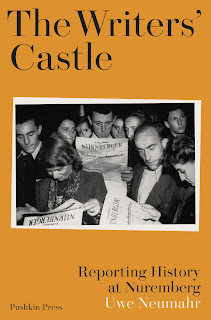


 A Trumpet of Sedition