“I don’t believe lies are something to stand on. I believe lies are something to build on.”
― Philip Roth, Our Gang
“Facts are stubborn things; and whatever may be our wishes, our inclinations, or the dictates of our passion, they cannot alter the state of facts and evidence.”
― John Adams
“The Senator was vulgar, almost illiterate, a public liar easily detected, and in his “ideas” almost idiotic, while his celebrated piety was that of a traveling salesman for church furniture, and his yet more celebrated humour the sly cynicism of a country store. Certainly there was nothing exhilarating in the actual words of his speeches, nor anything convincing in his philosophy. His political platforms were only wings of a windmill.”
― Sinclair Lewis, It Can’t Happen Here
In his introduction to this book Joseph Kishore makes the following point that the return of Donald Trump to power represents “the violent realignment of the American political superstructure to correspond with the real social relations that exist in the United States.”
He continues “Trump’s rise and return to power is not an aberration but the product of deep-rooted crises in American and world capitalism. His administration is carrying out a historic restructuring of the state, tearing apart the remaining democratic constraints on oligarchic rule, and preparing for global war.”
Why is this analysis made by the World Socialist Website so important. Because the analysis, published by the World Socialist Web Site (WSWS) following Trump’s second election, not only traces the emergence of Trump, but the political forces also that enabled him, they provide an essential strategy for opposing his government.
While there is a violent realignment of the American political superstructure to correspond with the real social relations that exist in the United States a similar process taking place in the working class. The working class will need to realign its politics to meet head on the new challenge. Part of that process is a systematic study of the articles contained in this book.
Leon Trotsky was fond of saying that the motive force of history is truth and not lies. The correct and truthful analysis made by the World Socialist website has been met by a number of Pseudo Left organisations with hostility at the temerity of calling Trump a Fascist.
Alan Woods, leader of the Revolutionary Communist International (RCI), the successor to the International Marxist Tendency (IMT), published an article that starkly illustrates the complacent and anti-Marxist orientation of his political tendency. Revealingly titled “Trump victory: a kick in the teeth for the establishment,” the article echoes Trump’s fraudulent claims of being an anti-establishment figure while downplaying the immense dangers posed by a Trump presidency to the working class.[1]
Woods writes “The ruling class of America – firmly supported by the governments of Europe – was determined to keep him [Trump] out of office, by fair means or foul. After Trump was ousted in the 2020 election, everything was done to prevent him from standing again… All the numerous attacks against him rebounded and turned against those who were seen – correctly – as being involved in a conspiracy to prevent him from re-entering the White House.”[2]
The World Socialist Website opposed Woods complacency writing “This portrayal is false. The ruling class was not “determined to keep [Trump] out of office.” Significant sections of the financial and corporate elite, including billionaires like Elon Musk and Peter Thiel, actively supported Trump, viewing his authoritarian and pro-business agenda as a means of furthering their own class interests. Others, like Jeff Bezos, have proclaimed their support for Trump after the election.” [3] The article went on to reiterate its position that Trump and his allies were fascists.
The writer Sinclair Lewis was well aware of people like Woods who downplayed the fascist danger writing “The tyranny of this dictatorship isn’t primarily the fault of Big Business, nor of the demagogues who do their dirty work. It’s the fault of Doremus Jessup! Of all the conscientious, respectable, lazy-minded Doremus Jessup’s, who have let the demagogues wriggle in, without fierce enough protest.”[4]
While the development of an American fascist oligarchy is a new development the fear of an American oligarchy is not. In his book John Adams and the Fear of an American Oligarchy Luke Mayville shows that Adams who was the second American president spent most of his adult life warning about the development of an American Oligarchy. In a letter to Thomas Jefferson dated 2 September 1813 he writes. Now, my Friend, who are the aristoi.? Philosophy may Answer “The Wise and Good.” But the World, Mankind, have by their practice always answered, “the rich the beautiful and well born.” And Philosophers themselves in marrying their Children prefer the rich the handsome and the well descended to the wise and good.”[5]
While it is one thing to describe Trump and his gang as fascists it is another to set his dictatorship in the same context as the rise of Hitlerite fascism in 1933. David North, the chairman of the International Editorial Board of the World Socialist Web Site and national chairman of the Socialist Equality Party (US), in his introductory remarks to the post-election online webinar “The Election Debacle and the Fight Against Dictatorship,” warned:
Now, it is not the position of the SEP and the WSWS that the accession of Trump to the presidency is the equivalent of Hitler’s 1933 victory. The United States is not Weimar Germany, and the transformation of the United States into a police state dictatorship backed by a mass fascist movement will not, whatever Trump’s intentions, be achieved overnight. But it would be politically irresponsible, and contribute to the success of Trump’s aims, not to recognize the dangerous implications and real consequences of last Tuesday’s election. At the very least, it is necessary to take Trump at his word.[6]
Not all are inclined to take Trump at his word. In a recent collection of essays entitled Did it Happen Here, Perspectives on Fascism and America the British historian Richard Evan took Umbridge that Trump is a fascist, and his gang constituted an albeit small fascist movement.
He writes “The temptation to draw parallels between Trump and the fascist leaders of the 20th century is understandable. How better to express the fear, loathing and contempt that Trump arouses in liberals than by comparing him to the ultimate political evil? But few who have described Trump as a fascist can be called real experts in the field, not even Snyder. The majority of genuine specialists, including the historians Roger Griffin, Matthew Feldman, Stanley Payne and Ruth Ben-Ghiat, agree that whatever else he is, Trump is not a fascist.”[7]
It is perhaps a little surprising that a historian of Evans calibre should be so complacent and wrong. His solution to the crisis of American democracy is also wrong and sows’ dangerous illusions. He writes “Whether the US and its citizens succeed in preserving democracy and its institutions depends largely on whether they succeed in identifying what the real threats are and developing appropriate means to defeat them. Imagining that they are experiencing a rerun of the fascist seizure of power isn’t going to help them very much in this task. You can’t win the political battles of the present if you’re always stuck in the past.
It is recommended that those workers and youth who recognize that Trump is threatening dictatorship, and is a fascist should carry out a thorough a study of the analysis made on the World Socialist Web Site and especially the articles contained in this book and prepare themselves for the coming momentous battles.
[1] Trump victory: a kick in the teeth for the establishment-https://marxist.com/trump-victory-2024.htm
[2] Trump victory: a kick in the teeth for the establishment-https://marxist.com/trump-victory-2024.htm
[3] Alan Woods, leader of pseudo-left RCI, hails election of Trump as “kick in the teeth” to US ruling class.wsws.org
Marx “Men make their history, but they do not make it just as they please; they do not make it under circumstances chosen by themselves, but under circumstances directly encountered, given and transmitted from the past.
Karl Marx
“But history is neither watchmaking nor cabinet construction. It is an endeavour toward better understanding.”
Marc Bloch
“We develop new principles for the world out of the world’s own principles. We do not say to the world: Cease your struggles, they are foolish; we will give you the true slogan of struggle. We merely show the world what it is really fighting for, and consciousness is something that it has to acquire, even if it does not want to.”
Karl Marx, (1843)
“The ‘great’ national historian Macaulay, vulgarises the social drama of the seventeenth century by obscuring the inner struggle of forces with platitudes that are sometimes interesting but always superficial.”
Leon Trotsky
Michael Braddick is to be commended for writing the first and only biography of the Marxist historian Christopher Hill. Having said that it is a little surprising that the Pabloites at Verso book publishers want Hill to be known as a radical historian rather than a Marxist one. Whether Braddick protested over this is unknown to me but throughout the book he clearly believes Hill was a Marxist from an early age.
The book is professionally written and researched. If Thomas Carlyle looked to clear Oliver Cromwell’s reputation from under a pile of dead dogs Braddick had to do the same with Hill. By any margin this is a significant and ground-breaking book. Although given the statue and importance of Hill, it is still hard to believe this is the first biography of the great man.
As Braddick correctly portrays Hill was a mass of political and social contradictions he was both a Fellow of the British Academy and the Master of Balliol College, Oxford, a paid-up member of the British Communist party and gave lectures at the British Socialist Workers party summer schools on a regular basis.
Braddick had his work cut out in examining and placing Hill in the context of the time. With his fifteen books and dozens of articles, Hill fundamentally changed how we understood the English Revolution and popularised the theory that there was a bourgeois revolution in 1640s England. Hill’s theory came under sustained attack from the Stalinists inside the Communist Party of Great Britain. Hill’s essay The English Revolution of 1640 was the catalyst for a wide-ranging and divisive battle within the groups and beyond. Stalinists which included leading historians inside the group and leading members of the central committee of the Communist party took exception to Hill’s characterisation of the English Revolution as ‘Bourgeois.’ They, therefore, opposed the conception that the 1640s revolution represented major a turning point in the transition from feudalism to capitalism. Anyone who sided with Hill’s position was accused of “Hillism.”[1].
Hill influenced how a generation of students and general readers saw the English Revolution. Although his viewpoint that the events of the 1640s constituted a revolution was rejected and attacked by a group of revisionist historians and writers. Undeterred Braddick still believes that general readers and academics still must define their position on the period from his perspective.
Hill’s reluctance to take on the revisionists politically did not stop the Pseudo lefts in the SWP from using Hill to try a launch an unsuccessful struggle against them. The historical revisionism that struck the study of the English Revolution began in earnest in the 1960s. Its central aim was to refute both the Whig and Marxist interpretation of the English Revolution and, in doing so, conceal the true political and class nature of the Revolution. John Rees was a former member of the Socialist Workers. Party (now a member of Counterfire). At the time he was a member of the SWP and like all Pseudo Left organisations, the SWP was extremely reluctant to take to the battlefield against a coterie of revisionist historians. The SWP would sooner wait till it set up a connection with left-leaning historians, such as Hill and Brian Manning and let them do the fighting. To say the results of this policy were mixed was an understatement.
In an article John Rees wrote in 1991, “We have waited some considerable time for Christopher Hill to enter the lists against the revisionist historians of the English Revolution. Of course, Hill has taken the occasional pot-shot at the revisionists in articles and lectures, some of which form the basis for this book. But generally, he seems to have stayed a little aloof, cultivating a disdain which still lingers in this book’s introduction, where he claims, ‘We should not take these fashions too seriously: they go in cycles, and it is no doubt my age that makes me a little sceptical of latter-day “revisionist” historians who try to convince us that there was no revolution in 17th century England, or that if there was it had no long-term causes or consequences.[2]
Before reading any history book one should always take on board the great E H Carr’s maxim “Study the historian before you begin to study the facts.”[3] Braddick is not a Marxist historian and is heavily influenced by the French historian Fernand Braudel who championed the idea of the “longue durée.”
As “Simon Jenkins wrote “Michael Braddick is a true Braudelian. He is a historian not of who, what and when but of how and why. From Stonehenge to Brexit and Danegeld to coronavirus, his concern is for the setting of history, its intellectual and physical environment, and “the capacity of British people to use political power to get things done.”[4]
Although Braudel had strengths he also had very deep-seated weaknesses. As the Marxist writer Ann Talbot points out, “If Braudel’s approach to history has its strengths, it also has disadvantages. These relate to two areas-historical change and socio-political history. Braudel was a conservative historian who, although living in a country whose name was synonymous with revolution, was averse to change, particularly sudden changes of a revolutionary character. He attempted to develop a form of socio-economic history that did not rely on Marxist concepts and stressed continuity rather than change.”[5]
Throughout the book Braddick constantly grapples with the conundrum of what was Hill politically. Braddick uses the term Marxist without really examining precisely what that means. Hill was never an orthodox Marxist and was never remotely close to Leon Trotsky or the Trotskyists inside the Fourth international who defended Marxism from its Pabloite and Pseudo Left revisionists. As Ann Talbot writes “The fact that Hill was not among the most politically advanced elements of the party—those who then joined the Fourth International—is a greater tribute to them than it is a criticism of him. His work showed him to be a better historian than he was a political thinker.”
I somehow doubt that Braddick contacted or looked at the work of the Marxists of the World Socialist Website. If he, had he would have found an excellent and thought-provoking essay on Hill by Ann Talbot.
As Ann Talbot asks in her excellent obituary of Christopher Hill, “What any serious reader interested in history or politics wants to know is, when we read Hill’s books, are we reading the work of an apologist for the Stalinist bureaucracy or of someone who was genuinely struggling to make a Marxist analysis of an aspect of English history? It must be said that this is a complex question. Not everyone who was attracted to the bureaucratically degenerated Communist Party could be classified with the Webbs. The most gifted and outstanding representatives of the British intellectual elite, whether poets, novelists, scientists, musicians or historians, associated themselves with the Communist Party because the old institutions of church and state had lost their hold over the imaginations of the young while the Soviet Union seemed to embody all that was new, modern and progressive.”[6]
One thing that does surprise me is that a historian of John Rees’s expertise was not invited to write a major review of Braddick’s book. Rees did a review for his political organisation Counterfire.[7] Rees tends to imply in this quote below that Hill and the Communist Party historians Groups adoption of Peoples history and the so-called Marxist-humanist current was a valid part of classical Marxism. He writes:
“Hill’s Marxism was certainly formed originally in the 1930s while he joined the Communist Party. Even then, the historians within the Communist Party were certainly not a pale reproduction of Moscow orthodoxy. In part, they were simply more deeply engaged in the study of their various periods and were producing material in greater depth than could be covered by the generalities of the orthodoxy. This part of the review I have no qualms about. It is this part that I have an opposition to. He continues:
“This was not necessarily a hostile counter position. Generalisations and specific research can often interact in productive ways: generalisation is amended by specific findings, and specific findings altered when placed in a general context. However, that may be, by the time Hill and other members of the Communist Party Historians Group (CPHG) left the party in 1957 in the wake of the Russian invasion of Hungary, they were also being shaped by the so-called Marxist-humanist current of that time. This current had deep roots in Marx’s method, in particular the early writings then for the first time becoming widely available. It obviously was adopted, and methodologically defended, by Hill’s friend and comrade Edward Thompson. It was also common coin for Hill, Rodney Hilton, Victor Kiernan, Brian Manning, and other former members of the CPHG.”
This so-called Marxist-humanist current produced “Peoples History” As Ann Talbot succinctly puts it “the Communist Party sponsored a form of “People’s History,” which is typified by A.L. Morton’s People’s History of England in which the class character of earlier rebels, revolutionaries and popular leaders was obscured by regarding them all as representatives of a national revolutionary tradition. This historical approach reflected the nationalism of the bureaucracy, their hostility to internationalism and their attempts to form an unprincipled alliance with the democratic capitalists against the fascist Axis countries. People’s history was an attempt to give some historical foundation to the policies of Popular Front—the subordination of the working class to progressive sections of the bourgeoisie and the limiting of political action to the defence of bourgeois democracy—which supplied a democratic facade to the systematic murder of thousands of genuine revolutionaries, including Trotsky. It was the approach that Christopher Hill was trained in, along with E.P. Thompson, Rodney Hilton and Eric Hobsbawm, who were part of the Marxist Historians Group and came under the influence of Maurice Dobb and Dona Torr.” Hil was enough of a Marxist is not completed absorbed by Morton’s Peoples History genre, but he did keep Morton’s national approach to historical questions. And the influence of the popular front politics and national outlook of Stalinism stayed with him most of his career.
Overall Braddick’s book has been met with serious and mostly favourable media responses. One ridiculous and dissenting voice appeared in the form a review entitled A Stalinist chump at Oxford, the Civil War historian who misjudged his own times by Richard Davenport-Hines in the TLS (Times Literary Supplement) He writes:
“Four years ago, Braddick published an ambitious study of political agency, spanning the period from Neolithic to Brexit Britain, entitled A Useful History of Britain: The politics of getting things done. It is a compelling study of people outside ruling institutions mustering their organizational strength, preparing themselves for action and maximizing their collective force to achieve social and material change: every chapter bears Hill’s traces. Braddick’s epigraph for his Useful History – Marc Bloch’s remark that “a man may wear himself out just as fruitlessly in seeking to understand the past, if he is totally ignorant of the present” – would serve Hill equally. He misjudged the conditions in which he lived the first half of his life, and therefore interpreted the past in terms that could be skewed or incomplete.”[8]
To justify is hack work he enlists other historians to do his dirty work saying “There was formidable criticism of Hill’s method, and especially of his arrangement of research notes by predetermined categories. “Whatever Christopher Hill reads seems to provide him with additional support for views he already holds,” Keith Thomas noted. Briggs judged that his “highly dubious categorization” was essential to his work’s “creative richness.” John Morrill reproached him for neglect of archival sources and original letters. Others objected that he plucked quotations out of context, omitted material that contradicted his arguments and made excessively bold jumps in his conclusions.”
Davenport- Hines’s hack review aside Braddick’s excellent biography not only situates Hill’s life and work in its historical context but looks to rescue Hill for a new generation of readers. As Ann Talbot said “As a historian he stands far above his detractors and his books deserve to be read and reread, and if with a critical eye, it should always be with the knowledge that his limitations and faults as much as his great historical insights and innovations are the product of his time. He may be bettered, but never dismissed, and only bettered by those who have studied him closely.”
[1] Document 12 (1947) the Basis and Character of Tudor Absolutism-Ideology, Absolutism, and the English Revolution: Debates of the British Communist Historians, 1940-1956 (2008) David Parker-Lawrence & Wishart.
“They were careless people, Tom and Daisy- they smashed up things and creatures and then retreated into their money or their vast carelessness or whatever it was that kept them together, and let other people clean up the mess they had made.”
― F. Scott Fitzgerald, The Great Gatsby
“It still feels exciting and important to spread this tool around the world and improve people’s lives.”
Sarah Wynn-Williams
“move fast and break things”
Mark Zuckerberg
I must insist upon the masses, and their integrity as a whole. I have great faith in the masses. The noble character of mechanics and farmers—their curiosity, good temper, and open-handedness—the whole composite make. Significant alike in their apathy, and the promptness of their love—I know they are sublime. Before we despair we have to count them in—after we count them in we won’t despair.
Walt Whitman- Democracy
“ The character of the new Trump government marks a violent realignment of the state to correspond with the nature of capitalist society itself. The world’s richest individuals and corporations control resources on an unfathomable scale, with a growing number of centibillionaires whose personal wealth exceeds the GDP of the world’s 120 poorest nations. In the United States, the three wealthiest people now collectively control more wealth than the bottom 50 per cent of the population combined”
WSWS Editorial Board Statement
To a certain extent, you can see why Meta, formerly Facebook would want to ban this book and gag the author from publicizing it. Both actions by Meta failed and backfired spectacularly as the book has sold in the millions.
Careless People is an interesting if limited expose of Facebook. An organization that has been called pretty accurately a ‘diabolical cult’. Wynn-William spent seven years at Facebook and her 400-page book is a pretty damning indictment. The first thing that strikes one about the leading players on Facebook is the stunning level of hypocrisy and duplicity. Williams cites Facebook’s number two Sheryl Kara Sandberg’s 2013 book Lean In: Women, Work, and the Will to Lead.
Sandberg casts herself as a feminist icon however the reality is a little different. Her advice to pregnant working women – “Don’t leave before you leave” – meaning that the mother should work herself to death just before the baby is born. As one reviewer said, “It doesn’t occur to her that Lean In feminism might serve as a fig leaf covering self-exploitation and soul-depleting workaholism.” Wynn-Williams, among others, was also bizarrely invited by Sandberg to sleep in her bed presumably to have sexual relations.
Having said that before Sandberg treated her like a piece of crap Wynn-Williams exhibited a large degree of political naivety and outright fawning over Sandberg and Facebook in general writing “Until this moment, it had never occurred to me to see Sheryl as a celebrity or be awestruck by her… But now I can see how she’s sprinkling some of her stardust, whatever that magical quality is that she has that makes you forget to focus on the substance of the meeting at hand and instead wonder what it is she’s doing differently that makes her better than you.”[1]
The book’s title comes from F Scott Fitzgerald’s The Great Gatsby: “They were careless people, Tom and Daisy – they smashed up things and creatures and then retreated into their money or their vast carelessness.” As a useful analogy for the “Careless People” at Facebook, it only takes one so far. While Zuckerberg and his cohorts were indeed amoral, stupid, reckless and devoid of any principles they were representatives of an oligarch that has now captured the White House in America and is launching attack after attack on the working class. Significant protests against Trump’s attacks on immigrants and escalating deportation operations have erupted across the United States. Student leader Momodou Taal has been targeted by the Trump administration who have tried to have him deported for speaking out against the Israeli genocide in Gaza.
As Robert Reich correctly states “Mark Zuckerberg, the second-richest person, has followed suit, allowing Facebook to emit lies, hate and bigotry in support of Trump’s lies, hate and bigotry. All three of these men were in the first row at Trump’s inauguration. They, and other billionaires, have now exposed themselves for what they are. They are the oligarchy. They continue to siphon off the wealth of the nation. They are supporting a tyrant who is promising them tax cuts and regulatory rollbacks that will make them even richer. They are destroying democracy so they won’t have to worry about “parasites” (as Musk calls people who depend on government assistance) demanding anything more from them. When billionaires take control of our communication channels, it’s not a win for free speech. It’s a win for their billionaire babble”.[2]
Or to put it more precisely as a statement by WSWS Editorial Board does “ The character of the new Trump government marks a violent realignment of the state to correspond with the nature of capitalist society itself. The world’s richest individuals and corporations control resources on an unfathomable scale, with a growing number of centibillionaires whose personal wealth exceeds the GDP of the world’s 120 poorest nations. In the United States, the three wealthiest people now collectively control more wealth than the bottom 50 per cent of the population combined”.[3]
This type of wealth is becoming increasingly incompatible with Walt Whitman’s beloved idea of Democracy. But this political and economic situation largely passes Wynn-Williams by. She is completely indifferent to the assault by Oligarch Zuckerberg’s Facebook on the Socialist movement. The orthodox Marxists of the WSWS.Org have faced the brunt of Facebook’s wrath and censorship. What is not mentioned in Wynn Williams’s book is that Facebook was and still is engaged in an escalating campaign of internet censorship targeting the socialist left. Entire Facebook pages were taken down, and individual accounts were permanently disabled, without any explanation given or recourse allowed.
Facebook began its systematic censorship of the WSWS.Org after the January 6th 2021 attempted coup by Trump and his supporters. As Kevin Reed points out “It could not be clearer that the entire US ruling establishment is attempting to utilize the events of January 6 as justification for shutting down progressive, left-wing, anti-capitalist and socialist political organizations and publishers on social media platforms such as Facebook. The subsequent shutdown of groups, pages and accounts—including the International Youth and Students for Social Equality (IYSSE) at the University of Michigan and leading members of the Socialist Equality Party in the US—by Facebook that began on January 22 is part of this strategy”[4]
Wynn Williams’s book is a well-written but somewhat limited insight into the lives of Facebook Oligarchs. For a far more precise and revolutionary insight into the rise of the oligarchs one should purchase a copy of the newly released book from Mehring books.com entitled The Election of Donald Trump: The insurrection of the oligarchy.
(This is a loosely edited transcript of the above book event. This transcript was done by Christopher Thompson. I include in this publication some comments made by Thompson.)
Houseman’s Thanks everyone for joining today. Thanks for giving up your Saturday night. We are joined today by Michael Braddock, who is the author of a new biography of Christopher Hill, which is out now from Verso. Braddick has written many books before, including a biography of John Lilburn, Common Freedom of the People. God’s fury, England’s fire. Most recently, a useful history of Britain, the Politics of Getting Things Done. What drove his work? What motivated? And also, I suppose, what motivated you to write his biography? Thanks.
Braddick: Can I just say thanks so much to you for your interest in Hill and for giving up your Saturday night to come and hear about him? So Chris Hill was born in 1912 in York, son of a very prosperous solicitor, and brought up a believing and devout Methodist with the extreme principled view that you should have serious thoughts about the world, and you should act on them to make the world a better place. And that was one of his first important intellectual inheritances, I think, because he lost his faith in the thirties, but he retained that seriousness about living an examined life, leading a life that was serious about how the world could be better and trying to act on that. Although he did spend a lot of time pondering how he could act helpfully in the world.
He lost his faith and gained his Marxism in a process that’s not very clear. But he became a convinced Marxist while an undergraduate at Oxford, and he graduated in 1934. Should know that. But didn’t join the communist party immediately. He had reservations about the communist party strategy.
He went to the Soviet Union between 1934-36 and came back convinced that he should join the communist party, partly because of what he’d seen in the Soviet Union and partly because the CBGB had changed its political strategy in a way that made it an easier party home for him. He remained a member of the CPGB for nearly twenty years. He left in nineteen fifty-six, fifty-seven. Prompted not by the invasion of Hungary, but by the refusal of the party to allow free internal discussion of the invasion of Hungary. It was he who left on the point of inner party democracy.
And the second part of that was that he didn’t think the party had allowed them to discuss the implications of Khrushchev’s secret speech, which had been made in secret but published by the CIA quite widely. Both of which made him think that the communists had been misled by the party, had been misinformed by the party, and that the daily work of the party’s paper had deliberately suppressed information that was critical of the Stalinist line. So I laid it at that point because he was an intellectual Marxist and a communist, but he was a communist only for those twenty years. And it was a political strategy that he took up in ’36, and he dropped it in ’57. And it’s a distinction that isn’t much honoured in liberal commentary on Hill.
He’s routinely referred to interchangeably as a communist or a Marxist, but his membership of the party was a strategy. And understanding why he took it on and left it is important for understanding his politics. By the time he left the party in ’57, he’d been a fellow of Oxford College. He went to Balliol in 1931 and left in 1978. Not a standard Marxist career.
He had two years in Cardiff in the late 1930s. He had four years, I think, of military service. But he was in Balliol for his whole life. Down to ’56 and ’57, he’d been doing a lot of work for the party, a lot of publication for the party and party, for explaining Marxism, setting out what a Marxist history might look like. And also, I’m sorry, write or I’m sorry, writing apologies for Stalinist, Russia and Stalinist policies.
Out of the party, he then pursued a freer career, I think, an intellectually freer career to pursue the implications of his intellectual Marxism. Having dropped the political strategy of the CBGB, he was freer to explore the implications of Marxism for his understanding of the world. And there, I got very interested in the relationship between the British left and the British past, and how, at each phase of his writing career, you can see him in dialogue with the contemporary world, trying to understand the past for the present that would equip us better for the future. And in the forties and fifties, that was mainly about the state and reform of the state and political economy. In the early sixties, it was about science and progress, how progressive ideas, but particularly scientific ideas, could be set free.
That’s a lot to unpack there, but he did think of politically progressive ideas as scientific in the same way that an understanding of the natural world could be scientific. So he had a view of, you know, scientific progress in the early sixties. Sixties. In the late sixties, he was master of writing, letters to the undergraduates to explain why they couldn’t have a condom machine in the college, while writing the world turned upside down, this glorious celebration of personal freedom and personal liberation. So in the late sixties, he was very interested in the possibilities of personal liberation from a Marxist perspective.
And then in the eighties, he wrote about the experience of defeat as the shadow of Thatcherism came to lie over the aspirations he’d been pursuing really for a whole political career. He began to write about seventeenth-century radicals and their experience in the Restoration. What is it like when the world turns against you, and what do you do about your ideals, and how do you nurture them and keep them alive for better times? So, it’s an interesting life in several ways. And there is that paradox I kind of alluded to, the difficulty of reconciling a life as a fairly, you know, well, as a very assiduous Oxford Tutor, undistinguishable, really, in his practice from his liberal colleagues in Oxford.
Braddick: He behaved as an Oxford Tutor was expected to do. And then as a master of a college, balancing and representing all the interests in a relatively conservative institution. And doing all that while pursuing this radical career in writing. And one final thought about life is, as I said at the very start, he became a convinced Marxist, also carrying from his Methodism a view that you should act on your beliefs to improve the world. And the way he thought he could do that was by writing.
Writing was for him a way of improving the world, equipping people with a different past to give them a different sense of the present and a different idea about the possibilities of the future. That’s what he thought he could contribute to the improvement of society. And he wrote to the communist party leadership, I think, in 1949, saying, I know this is a smallish backwater of activity, but it’s the one where I can make a difference. And he juxtaposed it directly with what he’d done leafleting at the factory gate, campaigning and by-elections and so on. But he felt that, as a posh guy with a posh Oxford accent, what he could do for the movement was to develop a radical past on which people could draw in thinking about the present and charting a radical future.
You’ve kind of mentioned that, you know, to suppose about what drew him to history in the English past, but why, particularly, was the English Revolution? What was it about the English Revolution that appealed to him? And how did his, you know, how did his kind of communism and his Marxism affect how he viewed that particular struggle, particularly in that early period? Yeah. So I think it was taken for granted at the time, and he used the term, ironically, that England was the top nation until the First World War.
Bradick: And the understanding that was to understand the first bourgeois state, the state that had the first bourgeois revolution, the first industrial revolution, the first urbanized mass society. So it wasn’t a sort of little Englander patriotism that made him concentrate on England. It was thought that it was the first bourgeois society, and understanding how the first bourgeois society evolved and came about and became supported by, you know, all the structures that support a bourgeois society. You were learning something important for the history of the whole globe. And so he spent a lot of time arguing that the seventeenth-century crisis in England was a bourgeois revolution, and a precursor to the better-known bourgeois revolution in France.
And that was one of his major academic concerns was to establish the view that we should view the seventeenth-century crisis as a bourgeois revolution. Why did he do that’s one set of one kind of answer to your question, but another one is that his departure from Methodism was associated with a strong view that bourgeois culture was experiencing its death throes. And, if you wanted to understand what would come next, you needed to understand the birth of bourgeois culture. And he understood that not just as the institutions of economy and society, but also the way that bourgeois culture shapes the family, shapes the transmission of property, gives us, social roles that are necessary to sustain the structures of a bourgeois life and how those bourgeois expectations of us as individuals are ultimately really constraining. They’re inventions of the human mind, but we experience them as cages.
And he felt a deep sense of personal alienation in the 1930s. So there are these various ways in which you wanted to understand the origins of bourgeois alienation from ourselves, bourgeois structures, the behaviour of bourgeois states only fifteen, twenty years after the war to end all wars were about to pitch, obviously, on route to yet another one that would be even more destructive and awful. And it was the madness of bourgeois civilization in the thirties and its dissatisfactions that made him interested in the origin interested in the origins of bourgeois society, and he thought they lay in England in the seventeenth century. So it mustn’t be a kind of narrow patriotism. It’s a real thought that, for this for that question, England was the place to study.
That, you know, if you’re looking at the kind of origins of the bourgeois British state, British society, that’s very different from what I think most people, if they’ve approached Hill. They’ve approached the world, and the world has turned upside down. Here’s a kind of great book on, from the late sixties. Is that right? Seventy-two.
Seventy and, you know, which looks at the kind of bubbling undercurrents of radicalism, religious, political, social, yeah. In that revolutionary moment, you know, the moment that kind of bourgeois England emerges, there’s also this kind of undercurrent. You know, what drew him to that? And, you know, what were the conclusions that he drew from it? Did that change his view of the revolution generally or of the kind of that period?
Braddick: Well, it so here’s a problem for the biographer. He never said. And when he did, I’m fairly sure that he weeded out his papers. I think I know that he weeded out his papers and didn’t want people like me, you know, poring over them after he’d gone. So there’s a difficulty in actually answering the question, but the the reconstruction I do in the book is to say that he had always been interested in personal liberation and alienation and his Marxism was ultimately a humanist Marxism about how a fairer society would set us free as individuals to flourish in ways that are healthier than are demanded by a bourgeois society.
So I think that had been his concern from very early on, but he didn’t get around to writing it because he got sidetracked into explaining the origins of the bourgeois revolution in England, which I think was not in retrospect where his interest lay, but it was critical to his heart the whole architecture of his life that there was a bourgeois revolution. And so, World Turned Upside Down is now his most-read book, but in the eighties, probably his most influential book. Well, no. This isn’t quite true, but as influential in the eighties was a book called The Century of Revolution, published in 1961, which set out the case for the bourgeois revolution in the whole cultural sense. So, I think he turned he turned to, and the world turned upside down.
And in the early seventies, he was commissioned to write that book. There are there was an enterprising publisher behind it. But I think it allowed him to say something that had been on his mind, really, for forty years. And another interesting point in writing the biography rather than just the history of his work is that in those years, that was the high point of student rebellion in Oxford. And he was in his day job having to deal with radical figures including Alex Callinicos who, Edward Heath visited the college, and Callinicos and Simon Sedgwick Gell were now allowed to say, I think, I’m being recorded, Allegedly, allegedly, two people went into the common room where Ted Heath was going to be entertained and wrote fuck Heath on the wall, you know.
And they were sent down and so on. So, he was dealing with this and occupations and rent strikes. So, radicalism in Oxford was pale back in Paris with Exeter and Essex, and certainly LSE and pale by comparison to Paris. But still, as the head of the college, he had to deal with this. And, it’s very interesting that in his day job, he was kinda holding the line for college respectability and saying you really mustn’t say rude words about the prime minister while he was writing The World Turned Upside Down.
And literally, there was a fantastic exchange over the condom machine that the students had installed without the permission of the senior members of the college. And the senior members then said, You’ve got to take it out because it’s an offense to our moral sensibilities. And anyway, you can buy condoms in Norwich now, it’s not very far to travel. And the students took it. And anyway, it had to be, they said we can take it down, but the London Rubber Company can’t come and collect it for a while.
And they said, right. We’ll take it, and it will go in the dean’s room until the London Rubber Company can collect it. And Dean and Hill had to represent all this with a straight face, saying, you know, it’s a moral offense to some members of the college to have a condom machine. They’re available elsewhere. And on the other hand, he’s writing the world turned upside down, which is all about this tremendous effusion of sexual and other forms of personal liberation.
And, it was dramatized on the South Bank by Keith Dewhurst as an, you know, example of radical theatre and theatre that could change the world. And it was put on by a company that was famous for living a, you know, a liberated life and, allegedly. And so Hill was completely in favour of all this liberation. Although I think he thought, you know, some student politics were a bit, you know, tokenistic and gestural politics rather than substantial politics. But basically, he was behind it all.
But in his day job, he was having to maintain the respectable front. And I think it’s critical to his personality that he did it. He felt, I, you know, I have this duty. This is my role. This is my job.
It’s not me. It’s the job I have to do. But really, there’s a me off stage that’s interested in all this liberation stuff. Yeah. Sorry.
Very long rambling. No. No. That was fascinating. I think, you know, I think it’s a testament also to the book itself.
So your chapter on Balliol. I didn’t think I’d be so interested in the internal politics of Balliol, your college, but it Yeah. You know, it is kind of fascinating and shows a lot about Hill as a person as well as a writer. I think you get from that. I also wanted to ask about, you know, he left the communist party in ’57.
Braddick: Yeah. Not with some of the others, EP Thompson, Raphael Samuel, and others who left the year before, directly after or around the events of Hungary. This was about inner party democracy. It was a year later at the special congress, right, in ’57, that he left. I was quite in quite involved, right, with the congress held internally at the communist party about the question of democracy.
Right? But before that, he was very involved with the communist party historians’ group. Yeah. I want to ask about you know, this is an incredible collection of historians who shaped the study and the writing of history in mid-century Britain. Ralph O Samuel, EP Thompson, Eric Hobsbawm, Victor Kiernan, and Yeah. Chris Piel and others, and many others. You know, what was it about the communist party that, you know, first of all, kind of nurtured or allowed these historians, right? But what also what did their what did those historians get from both the group of historians around the communist party, or the communist party itself?
Braddick: Yeah.
The party had turned in the late thirties to a kind of Popular Front strategy that they should build a progressive alliance for change and abandon a kind of class-based conflict. And the only way to achieve change was through class conflict. And what it allowed us to do was build a progressive alliance alongside the core revolutionary ambition. And it trended towards a ref a reformist ambition. And that made it easier for intellectuals.
And so in the late thirties, Margot Heinemann has a very nice chapter on this. The communist party developed a culture strategy, radio, TV in the post-war period, drama, art, visual art, literature, and history to try to build a progressive consciousness and to give people resources to develop a progressive consciousness. And so there is a relatively free hand then for writers and artists to pursue their creative individualism within the service of the party. It was a very creative moment, and some great writing and great history came out of it. And so there’s a cultural committee, and then the culture committee had us, effectively a subcommittee, the historians group.
And the historians group was set up with two aims in mind. One was that AL Morton had written a classic history of the people’s history of England, and it was being revised. And the party wanted to give him advice on how to revise it. And the second thing was that Hill had written in 1940 a kind of manifesto for his view of a bourgeois revolution that had caused controversy about whether it was properly Marxist or not. And so the second focus was to discuss whether Hill’s account of the bourgeois revolution was properly Marxist. And it sounds, you know, terribly sort of restrictive thing, you know, as if the dogma is going to be imposed. But actually, it was an open question about how Marxists should think about the bourgeois revolution and how Marxists should think about sixteenth-century and seventeenth-century England. And it attracted a generation of people who were turned off by an extremely conservative university curriculum and school curriculum that was the story of kings and queens and the doings of great men and, had a kind of liberal continuity to it, that nothing ever unpleasant had happened in Britain, and no change had ever required any unpleasantness. And, we’re not like the foreigners. So there was this attempt to recover a kind of radical history of the British past and the way that ordinary people had shaped the conditions of their lives and how understanding the radicalism of ordinary people would help you understand the British past, but it also give the radicalism of ordinary people a present and a future.
So there was a kind of progressive ambition behind it. But it was quite an open-ended, quite open. And the key thing for the party, I don’t know if you were going to ask me about this, the party regarded such issues through the lens of democratic centralism. The idea being that you had a democratic discussion until a line was reached, and then the line became the line, and you fell in line with the party line. And on all these issues, rigorous debate was thought necessary so that the party could develop a line.
So that lots of people misunderstand, I think, the role of the party here. They think the party was commissioning a history from these people. But actually, the party was trying to foster a debate about Marxists that would lead to a line that the party could then adopt. And democratic centralism was exactly the issue in ’57. And, you know, we’ll talk about that later, I suppose.
But in the early post-war period, it was giving these people a lot of freedom to think about how they might reconfigure an understanding of the British past. But they were very concerned that it should meet academic standards. It wasn’t simply party-political history. It was that it should be rigorous history, better than liberal history, living by academic standards more rigorously than liberal history, and thus be better history and give a good basis on which Marxists could think about the present and the future.
You’ve kind of alluded already to his influence, particularly in the kind of sixties and seventies, right? You know, he was you know, there were plays put on of his history books, you know, his books were taught widely across the curriculum. I think at a kind of level, looked at, you know, the three universities were kind of the defining or one of the defining kinds of interpretations of the English revolution at the time. And what was that like for him to be, you know, he was a very private man. He was very kind, you know, he was, you say quite shy, quiet, you know, he wasn’t, very false. What was it like for him to have been this?
And, also, I suppose, what was it like culturally to have this kind of, you know, the dominant narrative of this pivotal moment in history to be one that was explicitly a Marxist reading?
Braddick: Yeah. Yeah. Well, I think he was extremely private and modest, and I think he felt he was putting himself at the service of his readers. You know?
I’m, you know, I don’t think he, I don’t think there was much ego involved in being such a big figure for him. I think it was that he, you know, I’m being of help here. And that was important for him because he wanted to be helpful, and he came from a family of Methodist activists in York. Some of whom had been very active in charity. You know, we might think of their activism differently now, but the missionaries and some people wanted to change the world.
So I think it was really important for him to feel useful in the world, and I think he took that seriously, took that responsibility seriously. And I think it was also a tremendous relief because in the early fifties, in particular, well, in the late thirties and then again in the early fifties, communists found it very hard. Communist men party members and Marxists at large found it very hard to get university employment. And several people had jobs and lost them, and it was thought to be political. And Hill was always on their side.
And he said to one confidant in the fifties that he or in the sixties that he only kept his job because Balliol, you know, Balliol just doesn’t care what the outside world thinks. You know, he’s one of our chaps. So, he benefited from Oxford’s privilege, and I think he took all that quite seriously. And at the very end of his career, he worked in the Open University, where lots of former comrades had ended up because they had been pushed out of universities in the fifties. They’d gone into adult education, gone into the Workers’ Education Authority, and that had been the obvious place to recruit people for the OU in the seventies.
And so the CPGB was reunited, really, in the Open University in the eighties. But there were very few. Kiernan wrote to him. Kiernan had a job in Edinburgh, but Kiernan wrote to him saying there’s no point in going for x or y job because, you know and and Rodney Hilton or Hill’s very first article was published under a pseudonym. And Hilton said that was because if you knew this was in ’38. And Hilton said if he’d published this with his name on that would have, you know, it would have been a serious problem for his career.
That’s when he first set out a Marxist interpretation of the seventeenth century. So he was, I think, conscious of his privilege and anxious that he should make that privilege a benefit to other people. And he wrote letters. I can’t remember who it was, but he wrote in defence of someone who’d lost a job. I think it might have been that Arblaster was not given a job at Manchester, having been there for two years.
I think it was Anthony Arblaster. But he anyway, he wrote to him and said no. I remember writing this. I’ll just tell you what he says. He says, it’s outrageous that a heretic should be debarred from doing their job because of their heresy alone.
You know, show me that by being a heretic, I’m doing the job badly, then you’ve got a case. But you cannot dismiss people simply for their heresy. And I think he felt tremendously protected, and he felt a real responsibility to the wider movement, as, you know, the guy in a position. Yeah. He goes in the seventies from that, you know, position of, you know, being at the top of his field.
In the nineteen-eighties, there was a very different reaction to his work. Right? You know, it’s kind of belated in some ways, but it, you know, it’s a fierce reaction. Yeah. You know what happened in that moment and to him in particular, but also, you know, because I think it ties so closely with a political moment in Britain.
Braddick: The Thatcherite, yeah. Yeah. Moment Yeah. Yeah. Affected Hill incredibly.
Yeah. And it hit here also I I don’t want to talk about me, but I entered the story a little bit here because this is part of why I want to write the book that my elder brother and sister read Hill at A level. I didn’t. And when I went to university in 1981, I was only four years younger three years younger than my elder brother. But when I went in ’81, we were given Hill, as this is the wrong idea.
So Hill was the object of revision, not the oracle anymore. And it had happened quickly, in the early Thatcher years. And it’s taken a long time to disentangle, I think, a political critique of Marxism and what was claimed to be a Marxist domination of the British universities. And as you know, we hear it still, you know, British universities are centres of progressive heresy, to disentangle that from some technical problems with Hill’s work, which are genuine. So, I think there is a generational effect in history writing.
Each generation does better work than its predecessor, and that is certainly true that Hill, and particularly his economic history, doesn’t cut the mustard anymore, you know, and you wouldn’t do economic history the way Hill did it. So, for a long time, it was difficult to say that sort of thing without being identified with a political program against the kind of history he was trying to promote. So, one aim of the book is to try to disentangle history from politics. And my view is that, you know, if history is simply writing your politics, why do history? Why not just state your political position?
And if history isn’t a test of your politics and isn’t making you think and examine your politics, then there’s no point in doing it. But in the eighties, I talked about the Education Act and the national curriculum and how the battles over that were directed particularly against this progressive history, and people should be taught the greatness of Britain. And, you know, all this nonsense about slavery, we should forget about that and talk about democracy instead. In the national curriculum, the national curriculum was forming people for the next stage. So, it’s exactly the politics that he’d set out to challenge.
And he was at the heart of those political debates, saying, Mrs Thatcher knows nothing about history. You know, this is just, authoritarian state trying to input trying to mark its homework. But at the same time, people who were actually on the left and quite sympathetic to left-wing causes were saying, you know, some of these books don’t work very well, and we should be doing this work differently and a bit better. So, at the time and coming back to what I said to start with in ’81, when I started, I was confronted with this, and I couldn’t unpick what was going on here. Whether I was being told Hill was wrong because I was being taught by Thatcherites, or am I being told that Hill is wrong because you can do this another way better?
And that’s but it it it so that’s sort of a personal way of putting it. But what happened to him in the eighties was that he became conflated with a general attack on leftism and progressivism, the values of the sixties, the world turned upside down, and dismissals of Israel did come from there. But also, from a, you know, academic critique that we should do this differently and better. Yeah. I always find it interesting that Hill was the one who kind of bore the brunt of that.
Yeah. Whereas someone like Hobsbawm, who remained in the party, never you know, there was you know, it was very much kind of still accepted. There still is, I think, in the kind of establishment, yeah. In a different way. Yeah.
Braddick: Yeah. So, I didn’t know. I know I’m going to name drop here. I know Sir Keith Thomas a bit. And I didn’t realize there was a higher honour than being Sir Keith Thomas, but in fact, there is, as being a companion of honour.
And I knew it because Keith Thomas became the companion of honour at the same time that Elton John did. And then Hobsbawm was a companion of honour. You know, it’s the highest thing the establishment can do for you. And I find I do find it hard to judge because one of the things that got him in trouble was that he never although he said to the party, I’m renouncing Stalinism, and I’m not renouncing you because you’re Stalinist, he would give comfort to the capitalist press by saying it to the capitalist press. He would never sell out his former comrades by doing it in public.
So he had this repentance, but it was a quiet repentance. And he was beaten with that through the eighties and nineties. Unrepentant Stalinist, you know. Ferdinand Mount said, having an unrepentant Stalinist as Master of Balliol, you might as well have a recently convicted paedophile. He said that you know.
And he wasn’t an unrepentant Stalinist either. And somehow, Hobsbawm escaped that. Hobsbawm stayed in the party. He was, I don’t know, quite how he did it, except that he’s less concerned with the national story. Yeah.
He’s not in those national curriculum debates. He talks about Europe in his early career, then he’s a global historian. It’s less offensive to an establishment view of the British character, yeah. Then Christopher Hill said, you know, it hasn’t always been, respectful and deferential and, you know, and people haven’t always just abided by the rules of the game that they’re given. And I suppose by undercutting the story of the English revolution, you are implicitly or explicitly even kind of undercutting the story of the British establishment.
Now this is, you know, this is the kind of start of where we are now. There’s something kind of by going directly there, you’re kind of going to the roots of this. Right? Yeah. Yeah.
So this is my kind of interest actually, but the eleven years in the post-Roman history of Britain, where we had a republic, and we call it the interregnum, the period between kings. And it ends in a restoration, although what was restored was nothing like what had been overthrown. So, there’s this meta-narrative that’s just kind of drilled into us by the very naming of the events. And, to undercut that is to undercut the position of the establishment, I think. So, I think he’ll, I mean, he probably couldn’t have complained actually because he wanted to undercut.
He wanted to be a threat to the establishment. He wanted his writing to destabilize these comforting stories. But then in the end, you know, when the boot was firmly on that foot, I mean, he did suffer, I think. So I think, you know, if he kind of suffered that kind of revisionist moment, seems we’re in a different moment now both I mean, politically, may maybe not actually, but intellectually in terms of the study of English revolution, I think we’re in a very different moment now particularly than the eighties and nineties where it was at its kind of peak. Yeah.
And I think that was a factor in you coming to this book now? And also, I suppose, how is and how should we think about Hill’s work today? You know, how is it received in the field, and how should we, as kind of general readers, or how should we approach Hill’s work?
Braddick: Yeah. So, I didn’t know Chris Hill, but I’m no Chris Hill.
Whatever that John f Kennedy quote is. I mean, I wouldn’t compare myself to it at all, but in terms of, you know, importance or influence. But I do want to try to get a post-hill story going about the English revolution because for forty years students have been taught not that, not that, not that, not that. And I sense an appetite among the students I teach, not many nowadays, but for a more constructive, progressive engagement with the seventeenth century and the events of the seventeenth century. So I think there’s a moment coming.
I don’t think I’m not sure I can deliver. I can pose the question, I hope, about what we should say about all this. I am writing a book about the 1650s, and I’m in Oxford. Normally, I suppose.
But, I taught a graduate class in Oxford this year on the Marxist historians, and there’s an appetite among graduate historians. One of the students said to me, we’re the generation of no alternative, you know, and they’re looking back to this generation of progressive thinkers, not just in, history, but, you know, progressive art and they’ve they’re interested in Frankfurt School and how you can have an authentic culture that’s not just, commercial stuff squirted down the Internet at you. And they’re returning to Hill more than the new left, actually, interestingly. But Hill and Hobsbawm, Thompson in particular, are fascinated by it. I realize I’ve written about the wrong Marxist historian.
But there, they’re looking for inspiration not to reproduce and recapture that moment, but for inspiration that might lead them to the birth of a new moment. And I feel we desperately need it, you know. The left hasn’t had a game to put up against the rise of the light. And yeah. So, I think that there’s an appetite for it.
And the English Revolution. Historical consciousness about the English Revolution could be part of that. But I’m afraid I know, it’s beyond me to provide it. I’m afraid. Yeah. But I do hope that, you know, this brings people to heal to the question and prompts people to think about what the new line new hope could be.
I was thinking about this, particularly this kind of political moment and the political moments that you say he was kind of responding in his work to this political moment. My favourite work of Hill’s is the experience of defeat. Yeah. You know, which I think sadly feels very, very kind of relevant again now. You know, it’s about the kind of experience of Milton and other revolutionaries after the Restoration.
You know, what happened to them? I don’t want to ask you necessarily about that, but do you have a favourite work of Hill’s? What is the one that you would know, you want to return to if you still feel the kind of pull?
Braddick: I’ve become so, I would like to say about that, though. He, Bunyan, was really important to Hill very early in life, and it comes from his Methodism.
And there’s a lot of fair talk about in a book in the media, as the war was breaking out. And he wrote love letters daily to a woman from the barracks, and they’re very moving. And they reveal a lot about his views on love, marriage, authenticity, sex, and politics. Because she was a liberal, he kept correcting her politics. Marriage didn’t laugh.
But overshadowing him was the thought that he was going to die. And he reached Bunyan in that moment, too. And the thing in Bunyan he drew on was, he said it then, and he said it again in the eighties. We dare not despair. We betray our ideals.
We betray our ideals if we despair. So the one thing we must not do is despair, and it’s struggle which will keep the faith alive and keep the ideals alive. So all that is, I was going to use the word elegiac for that, but it’s very it’s poignant, isn’t it? And it’s about his own experience and so on. But there is at the core of it this thing, okay, young uns, the one thing you mustn’t do is despair.
Yeah. My favourite book, I’ve become very interested in, he actually, this is relevant to his affair with Sheila Grant Duff, who was very conventionally bourgeois and thought that since she was in love with another man as well as Hill, she shouldn’t sleep with Hill. And Hill thought she shouldn’t be hung up on these bourgeois values, and he didn’t mind. So he urged on her the importance of leaving Andrew Marvel’s ode to his coy mistress, you know, with the thought that they were going to die. And, you know, why give in to these bourgeois values?
You know, we must run before the sun. But it made me very interested because he said it was that poetry that first led him to the English Revolution. It’s people living in a society, whose values they feel uncomfortable with. And I like that writing of his. He read at the time he read T.S. Eliot in particular, and Eliot was expressing the sense of personal alienation that you have to live within these bourgeois expectations, and they do violence to who you are. And Hill got very interested in that dynamic in seventeenth-century literature. And so I like the Milton book, because he’s talking about the conflicts that Milton feels, in the society in which he’s required to live and how that does violence to who he is. I don’t know if that’s my time of life, but I’ve been more drawn to that kind of he. he was interested in what’s often said about him is that he’s a determinist and he’s not interested in people, but it’s untrue.
You know, he’s very interested in the experience people have of dislocation from that society. And that’s the writing I’ve become more interested in. I, ironically enough, started my career writing about the state and transformation and so on. And I’ve ended up writing a biography, and it’s similar. Hill got more interested in subjectivity, I think, and the conflicted subjectivities we have as a result of the structures in which we live. So that’s my answer.
Yeah. That’s a great answer. I think you’ve probably been talking enough.
Comment by Christopher Thompson
I have been very puzzled to read the transcript of Michael Braddick’s interview at Housman’s Bookshop in London earlier this month. It was part of the process of promoting the biography composed by Braddick (All Souls College, Oxford) and was, I suspect, given in front of an audience sympathetic to Hill’s beliefs and career. What appears to me to be a problem in the talk is the connection drawn between the appearance of ‘revisionism’ in early to mid-17th-century historiography and the rise of Thatcherism in British political life. The criticisms of Marxist and Whig historiography associated with Conrad Russell, John Morrill, Kevin Sharpe and others came into print in the mid to late 1970s under the Labour governments of Harold Wilson and James Callaghan.
Russell’s essay on Parliamentary politics was published in 1976, as was John Morrill’s book on the Revolt of the Provinces. Kevin Sharpe’s edited volume of essays appeared in 1978. None of them could remotely be described as apostles of Thatcherism. Nor, indeed, could the essays that were to be found in The Journal of British Studies and the Journal of Modern History across the Atlantic in 1976 and 1977, respectively. One of Lawrence Stone’s most distinguished postgraduate pupils at Princeton at that time told me relatively recently that Stone had been unaware – ‘blindsided’ was his word – by developments in the United Kingdom. In Hill’s case, despite the origins of ‘revisionism’ amongst former and current Oxford University-trained historians, he had been completely unaware of the developing reaction against his soft determinism and Marxist preconceptions. Well before the Conservative victory in the 1979 General Election in Britain, Hill and Stone had ceased to make the historiographical weather. Dismissing ‘revisionism’ as a form of antiquarian empiricism, as Stone did, or repeating the analytical claims of the 1960s as Hill tried to do, simply did not work. Both had been sidelined by then.
Housman’s Bookshop interview extract earlier this month.
In the nineteen-eighties, there was a very different reaction to his work. Right? You know, it’s kind of belated in some ways, but it, you know, it’s a fierce reaction. Yeah. You know what happened in that moment and to him in particular, but also, you know, because I think it ties so closely with a political moment in Britain.
Braddick: The Thatcherite, Yeah. Yeah. Moment Yeah. Yeah. Affected Hill incredibly.
Yeah. And it hit here also I I don’t want to talk about me, but I entered the story a little bit here because this is part of why I want to write the book that my elder brother and sister read Hill at A level. I didn’t. And when I went to university in 1981, I was only four years younger three years younger than my elder brother. But when I went in ’81, we were given Hill, as this is the wrong idea.
So Hill was the object of revision, not the oracle anymore. And it had happened quickly, in the early Thatcher years. And it’s taken a long time to disentangle, I think, a political critique of Marxism and what was claimed to be a Marxist domination of the British universities. And as you know, we hear it still, you know, British universities are centres of progressive heresy, to disentangle that from some technical problems with Hill’s work, which are genuine. So I think, there is a generational effect in history writing.”
Mark Olden’s book Murder in Notting Hill is a well-researched and crafted investigation into the racist murder of Kelso Cochrane in 1959. Unsurprisingly, the killer was never caught despite being well-known in the area. Olden outs the killer in the book, saying, “After I began investigating the case in 2005, I learned that the killer’s identity was “the worst kept secret in Notting Hill”. Three people identified Digby to me as the man who struck the fatal blow. Two of them had been questioned by the police about the murder; the third was Digby’s stepdaughter, Susie Read. Breagan, who insisted he was innocent, told me that when the police detained him, he was placed in a cell next to Digby, where he was able to iron out a discrepancy in their stories – after which the police released them both.”
Cochrane’s murder is one of the first recorded racially motivated murders in the UK. Olden is an excellent journalist and, among other things worked at the BBC. While there, he worked on the BBC programme Who Killed My Brother? Broadcast in 2006, Which examined the Cochrane Murder. Much of the book is influenced by that programme.
While working at the BBC, he gained access to material that a layperson could only dream of. Olden supplemented his research with a significant number of interviews. Many of the people interviewed were speaking publically for the first time. They give a real sense of what it was like to live in Notting Hill in 1959.
As part of his research for the book, Olden spent significant time at the National Archive in Kew, London. Perhaps unsurprisingly, he found out that the Labour government and police were more interested in suppressing political opposition to the fascists and containing the riots in London and Nottingham than solving a murder.
Olden points out that there are remarkable similarities between the way that Kelso’s death was investigated and the investigation into the murder of Stephen Lawrence. On April 22, 1993, 18-year-old Stephen Lawrence and Duwayne Brooks were attacked by five racist white youths in Eltham, southeast London. Stephen was stabbed to death. It was only in 2012 that two men were convicted of Lawrence’s murder after a long and bitter campaign by his parents. It was only a small measure of justice. Cochrane never did get justice. His murder remains unsolved to this day.
During his time at the National Archives in London, it would be fair to say that Olden would have been astonished to find that the National Archives authorities would thwart his attempts to establish the truth behind the Cochrane murder by refusing to release papers about the murder until 2044/54 on spurious grounds it ‘could put at risk certain law-enforcement matters, including preventing or detecting crime, arresting or prosecuting offenders and the proper administration of justice’. It was all the more galling because the man named by Olden as the probable murderer was dead, but still, a state-led cover-up was in place.
Only after a bitter and long campaign by members of Cochrane’s surviving family and their lawyers did the Metropolitan police permit the National Archives to release the files that were originally to be opened in 2054. Even a cursory look at the new files showed that this was a premeditated murder by outright fascists. It would be naïve to think that after all this time, the police will bring the family justice that can only be achieved by the mobilisation of the one force that can achieve justice, and that is the working class black and white.
While Olden’s book cannot be faulted as a piece of journalism, Olden has no explanation as to what social, economic and political conditions gave rise to the growth of Fascism in London and Nottingham at the time and also how the fascists could be opposed and defeated. The only class that could have opposed the racists and fascists was the working class. However, Olden believes that the white working class was either passive or racist.
But as Cliff Slaughter explains so well in his article Race Riots: the Socialist Answer,[1]“So long as we look only at the surface of social life, so long as we try to deal with each question separately as it arises, we shall continue to find ourselves bewildered by events like the race riots. But they are no nine days’ wonder. Every worker in the country must clearly understand this. Only if we can trace the social roots of racial conflict shall we be able to weed them out and, with them, those who profit from it. The starting point for the working class must be unity and solidarity against the employers and their political representatives—in the first place, the Tory Party. All the problems the working class now faces—growing unemployment, the housing shortage, rent increases, the rising cost of living, attacks on wages and working conditions, and, above all, the threat of an H-bomb war—can be solved only by the unity and determined action of the working class. It is no accident that the steady growth of unemployment over the last year has been accompanied by an insidiously growing campaign around the slogan ‘Keep Britain-White’.
Slaughter goes on to explain the nature of fascism: “Fascism is a movement financed by big business which seeks support from the ‘middle classes’ and the most backward workers. Fascism’s real aim is to provide a mass basis for the smashing of workers’ organisations by a State machine which permits no democratic rights and rules with the whip and the torture chamber. To succeed, fascism must detach from the working class discontented elements who can be persuaded that something other than big business is their real enemy. This is why the fascists have recently returned to one of their favourite themes—racialism. Fascists were prominent in the Notting Hill riots and will cash in wherever they can on anti-coloured feelings. They will try to create a mob ready to use violence and to attack any scapegoat rather than the workers’ real enemy.”
Murder in Notting Hill is a good book. As a piece of investigative journalism, it is second to none. On the question of fascism, workers and youth need to look elsewhere to understand its rise and how to defeat it. As the great Marxist revolutionary and writer Leon Trotsky wrote, “Fascism comes only when the working class shows complete incapacity to take into its own hands the fate of society.”[2]
[1] Race Riots: the Socialist Answer, Labour Review, Vol. 3 No. 5, December 1958, pages 134-137.
[2] Leon Trotsky, Fascism: What It Is and How to Fight It
“The wrongs which we seek to condemn and punish have been so calculated, so malignant, and so devastating that civilisation cannot tolerate their being ignored because it cannot survive their being repeated. We must never forget that the record on which we judge these defendants today is the record upon which history will judge us tomorrow.”
Chief Prosecutor Robert H. Jackson
“To initiate a war of aggression, therefore, is not only an international crime; it is the supreme international crime differing only from other war crimes in that it contains within itself the accumulated evil of the whole.”
“War makes murderers out of otherwise decent people. All wars, and all decent people.”—Ben Ferencz
The leader by will of the people differs from the leader by will of God in that the former is compelled to clear the road for himself or, at any rate, to assist the conjuncture of events in discovering him. Nevertheless, the leader is always a relation between people, the individual supply to meet the collective demand. The controversy over Hitler’s personality becomes the sharper the more the secret of his success is sought in himself. In the meantime, another political figure would be difficult to find that is, in the same measure, the focus of anonymous historical forces. Not every exasperated petty bourgeois could have become Hitler, but a particle of Hitler is lodged in every exasperated petty bourgeois.
Leon Trotsky- What Is National Socialism? (June 1933)
This is an interesting and well-researched book on the writers who covered the Nuremburg Trials of leading Nazis after the Second World War. The magnitude of the trials drew in journalists and writers from all over the world. Writers John Dos Passos, Rebecca West, Martha Gellhorn, Janet Flanner, William Shirer, and future German politicians such as Willy Brandt all observed the trials. The title of the writers’ castle was because the journalists were housed in the Schloss Faber-Castell castle in Stein, a nearby town.
Neumahr is a German author and literary agent, and his book is less about the crimes of the Nazis but more about the writer’s reaction to the crimes of the Nazis. As Neumahr points out in the book, not all journalists or writers cover themselves with glory. Even a cursory glance at their reports of the trials shows that some resorted to outright lying and presented less-than-objective accounts of the proceedings. Alfred Döblin, the author of Berlin Alexanderplatz, offered a first-hand account of the courtroom he never went to.
Others brought their ideological baggage with them, which showed in their articles. Erika Mann was the daughter of the novelist Thomas Mann. Because of the Nazi’s treatment of the Jews, (she was considered a Jew by the Nazis) she held an abiding hatred of the Nazis, which coloured her writings on the trial. The French Stalinist writer Elsa Triolet wrote many misleading and downright false reports to support her belief that the Anglo-American judges and lawyers were pro-Nazi.
Neumahr’s approach is “biographical and kaleidoscopic”. Given the highly political nature of the trial, it is a little strange that NeuMahr rarely delves into the politics of prosecutions or the writers that covered it, which is a big weakness in the book. As Bill Niven points out, “In most cases, he is as much, if not more, preoccupied with the lives of his chosen protagonists before, during and after their time at the Faber-Castell castle than he is with their actual journalistic response to the military tribunal. Neumahr is especially interested in all the social goings-on at the castle, whose guests – despite the separation of male and female quarters and, eventually, of Soviet reporters from all others – enjoyed a high level of fraternisation. Neumahr follows the various relationships of his protagonists. Erika Mann moved into the castle with her partner and fellow reporter Betty Knox (whom she referred to as her ‘beloved lunatic’) despite the press camp being run by the American military, for whom homosexuality was a punishable crime. Rebecca West and Francis Biddle, a US judge at Nuremberg, had an affair. As Neumahr tells it, this was something of a relief for both parties: ‘Like Biddle, the fifty-three-year-old West was sexually frustrated’, he writes, because ‘she hadn’t had sex with her husband in years.’ In his chapter on Gellhorn, we learn about her tempestuous relationship with Ernest Hemingway, while the chapter on the Prix Goncourt-winning Russian-French writer Elsa Triolet – who stayed in Nuremberg’s Grand Hotel and not the castle – focuses heavily on her relationship with the poet Louis Aragon.”[1]
The book’s strongest part is how Neumahr relates to how many writers and journalists were morally tarnished by political bias or other prejudices. This applies to author Eric Kästner[2]. One of my favourite childhood books was Emil and the Detectives. Despite having his books burnt by the Nazis in 1933, Kastner made a career for himself under the Nazis.
According to his Wikipedia page, “ The Gestapo interrogated Kästner several times, the national writers’ guild expelled him, and the Nazis burned his books as “contrary to the German spirit” during the book burnings of 10 May 1933, instigated by Joseph Goebbels. Kästner witnessed the event in person and later wrote about it. He was denied membership in the new Nazi-controlled national writers’ guild, Reichsverband deutscher Schriftsteller (RDS), because of what its officials called the “culturally Bolshevist attitude in his writings before 1933. During the Third Reich, Kästner published apolitical novels such as Drei Männer im Schnee (Three Men in the Snow) (1934) in Switzerland. In 1942, he received a special exemption to write the screenplay for Münchhausen, using the pseudonym Berthold Bürger. The film was a prestige project by Ufa Studios to celebrate the twenty-fifth anniversary of its establishment, an enterprise backed by Goebbels.
In 1944, Kästner’s home in Berlin was destroyed during a bombing raid. In early 1945, he and others pretended that they had to travel to the rural community of Mayrhofen in Tyrol for location shooting for a (non-existent) film, Das falsche Gesicht (The Wrong Face). The actual purpose of the journey was to avoid the final Soviet assault on Berlin. Kästner had also received a warning that the SS planned to kill him and other Nazi opponents before the arrival of the Soviets.[8] He was in Mayrhofen when the war ended. He wrote about this period in a diary published in 1961 under the title Notabene 45. Another edition, closer to Kästner’s original notes, was published in 2006 under the title Das Blaue Buch (The Blue Book).”[3]
Neumahr’s intention was never to write about the political nature or the duplicity of those prosecuting the Nazis. As Bill Hunter points “During this ten months, while the prosecutors of Britain, France, America and the Soviet Union, listed the sickening crimes of Nazism, world events showed the hypocrisy of the prosecuting Allies. Even while the aggressions of the Nazis were being recounted. British imperialism was maintaining a regime of terror and oppression in Greece, suppressing the colonial peoples struggling for freedom, and strafing Indonesian villages.The British prosecutor prated about justice. Meanwhile, Dr Kiesselbach, according to Tribune 6 September a declared opponent of de-Nazification was placed by British imperialism in charge of the German “Central Office of Justice”.
While the courtroom resounded with castigations of Nazi oppression and racial discrimination, American imperialist suppression was active in the Philippines, and lynch law was rampant in the Southern States.The prosecutors denounced the occupation methods of the Nazis. Yet, even while the French prosecutor mouthed phrases of indignation, the agents of French imperialism were torturing the natives of Indo-China and burning their villages.The miseries of slave labour under the Nazis were related to the court at the same time as 10 million Germans were uprooted and wandered homeless as a result of the wholesale expulsion policy of the Soviet bureaucracy. In the face of world events during the trial, who can deny that at Nuremberg, the pot called the kettle black, blackening itself still further even while doing so?[4]
“Heiden was a young socialist student in Munich when he first saw Hitler speak. It was 1923, the year of inflation and political chaos in Germany. Heiden was not impressed by what he saw: a self-centered demagogue at the head of what he calls the army of uprooted and disinherited.”
Richard Overy
“Fascism has opened up the depths of society for politics. Today, not only in peasant homes but also in city skyscrapers, there lives alongside those of the twentieth century, the tenth or the thirteenth. A hundred million people use electricity and still believe in the magic power of signs and exorcisms. The Pope of Rome broadcasts over the radio about the miraculous transformation of water into wine. Movie stars go to mediums. Aviators who pilot miraculous mechanisms created by man’s genius wear amulets on their sweaters. What inexhaustible reserves they possess of darkness, ignorance, and savagery! Despair has raised them to their feet; fascism has given them a banner. Everything that should have been eliminated from the national organism in the form of cultural excrement in the course of the normal development of society has now come gushing out from the throat; capitalist society is puking up the undigested barbarism. Such is the physiology of National Socialism.
Leon Trotsky-From What Is National Socialism
“fascism comes only when the working class shows complete incapacity to take into its own hands the fate of society.”
― Leon Trotsky, Fascism: What It Is and How to Fight It
First published in 1944, Konrad Heiden’s superb biography of Adolf Hitler culminated in 20 years of study and political opposition to Hitler. The book covers from the 1920s up to June 1934. Heiden wrote and researched it in near real-time, and it is one of the best biographies on the subject of Hitler and the rise of German fascism. As Robert Gale Woolbert, in his review, correctly writes Heiden’s book is “A profusion of detail and brilliant psychological understanding. The analysis is not only of the man but of his movement and the economic, social, and intellectual disorder on which it fed and finally attained success”.[1]
While many modern-day historians, such as Daniel Goldhagen,[2] have placed the blame for the rise of German fascism and the Holocaust on “ordinary Germans,” it was, however, a shock to see Gale Woolbert’s 1944 review containing and defending the same right-wing theory. Wollbert writes, “Where many will feel that Heiden’s explanation breaks down is in his unwillingness to place responsibility for Nazism squarely on the German people or any important class or group among them. This ability to dodge the necessity of rigorous and honest self-criticism seems to characterize even the German liberals and German Jews who have suffered most at the hands of their countrymen.[3]
Despite being over eighty years old, Heiden’s book has a contemporary relevance. It should be read alongside Leon Trotsky’s The Struggle Against Fascism by all those who want to understand the development of fascism of the past and the present. The British Historian Richard Overy writes the introduction. Overy highly praises and defends the book against those who have sought to downplay its significance.
Since its publication over eighty years ago, there has been a veritable cottage industry solely devoted to the study of Hitler and German fascism with varying degrees of success. But as John Lukacs writes in his book The History of Hitler, “We are not yet finished with Hitler (“[wir sind] mit Hitler noch lange nicht fertig”), wrote two members of a younger generation of German historians, independently of each other, in the 1980s–and this is so in both the broader and the narrower sense of “finished.” The first of these should be evident. History means the endless rethinking–and reviewing and revisiting–of the past. History, in the broad sense of the word, is revisionist. History involves multiple jeopardy that the law eschews: People and events are retried and retried again. There is nothing profound in this observation since this is what all thinking is about. The past is the only thing we know. All human knowledge springs from past knowledge. All human thinking involves a rethinking of the past.
This is true in the narrower sense, too, involving the historical profession. The notion that once the scientific method has been applied accurately, with all extant documents exhausted, the work will be finished, and the result will be final (“the final and definitive history of the Third Reich, certified by German, American, British, Russian, liberal and conservative, nationalist and Jewish historians”) is a nineteenth-century illusion. There are probably more than one hundred biographies of Hitler, while there is no certainty that the 101st may not furnish something new and valid. What may matter even more than the accumulated quantity of the research (note the word “re-search”) is the quality of the revision. What is its purpose? In the broader sense, the purpose of historical knowledge is more than accuracy; it is understanding. In the narrower sense, the purpose of a revisionist historian may be exposé, scandal, sensation–or the more or less unselfish wish to demolish untruths. It may be his desire for academic or financial success, to further his advancement in the eyes of his colleagues, or, in the greater world, to gain publicity, or to further the cause of a political or national ideology–on which the treatment of his subject sometimes depends. There will be evidence in this book that this applies on this occasion–to the historical treatment of Hitler too.”[4].
Hitler has legitimately long fascinated historians, but the fascination of sections of the British ruling elite and aristocracy[5] who saw Hitler as an ally against Bolshevism is not so legitimate. Hitler’s Mein Kampf was a huge publishing success–in England and the United States, especially before the war. During my research for this article, I paid a trip to the London Library to find other work by Heiden on Hitler and the Nazis (a term that Heiden coined). I don’t know who was surprised more, me or the librarian, to see a copy of Heiden’s History of National Socialism published in 1934 in London by Meuthen and Co. Ltd with a gold embossed swastika on both the spine and cover. Perhaps all the more galling since Heiden was an active socialist. You can draw your own conclusions.
It would be a mistake to see this book as another Hitler biography. Heiden was an active socialist in opposition to Hitler and German fascism. He was a member of the German Social Democratic Party(SPD). Heiden, son of a German trade union official, had studied Hitler for 23 years. So much so that, according to Dorothy Thompson, he followed Hitler “like a Javert tracking down his man.”[6]
As David North writes in his excellent review of Goldhagen’s book “ The History of the German social democracy, in the years when it represented a revolutionary mass movement of the working class—that is, from the 1870s to the outbreak of the First World War I in 1914—is one of unrelenting struggle against anti-Semitism. The exigencies of the political struggle in the working class required an intransigent attitude toward all forms of anti-Semitic propaganda. Aside from democratic principles and moral considerations, the Social Democratic Party saw the association of anti-Semitism with demagogic anticapitalist rhetoric as an attempt to disorient the working class and subordinate it to the political representatives of the middle class.”[7] Heiden completely agreed with the program of the SPD and fought for it with every waking moment. The Gestapo hunted him, and he only just escaped with his life.
I have been unable to ascertain whether Heiden read any of Leon Trotsky’s writings on German fascism, but some of Heiden’s analysis of the class nature of German fascism would not look out of place in the work of Trotsky. Heiden writes, “They drew to them “the flotsam, the stragglers living on the fringe of their class . . . the unemployed . . . the declassed of all classes.” In all ages, this has been the way of counterrevolution: an upper layer that has lost its hold in society seeks the people and finds the rabble. The officers were out to find a demagogue, of whom it could be said that he was a worker. They found their leader in the lowest mass of their subordinates. The spirit of history, in its fantastic mockery, could not have drawn an apter figure.[8]
Perhaps Heiden’s most important contribution has been to understand and explain the nature of Hitler’s hatred of the Jews. Hitler’s anti-Semitism was, according to Heiden, a by-product of his all-consuming hatred of the proletariat. Hitler, he explained,” hated the whole great sphere of human existence which is devoted to the regular transference of energy into a product, and he hated the men who had let themselves be caught and crushed in this production process. All his life, the workers were, for him, a picture of horror, a dismal, gruesome mass. Everything that he later said from the speaker’s platform to flatter the manual worker was pure lies. Herein lies the key to an understanding of Hitler’s demonic obsession with the Jews. In Mein Kampf, Hitler explained how his conversion to anti-Semitism flowed from his encounters with the labor movement. It was among the workers that Hitler first came into contact with Jews. He then discovered, to his amazement, that many Jews played prominent roles in the labour movement. “The great light dawned on him,” wrote Heiden. “Suddenly, the ‘Jewish question’ became clear. … The labour movement did not repel him because it was led by Jews; the Jews repelled him because they led the labour movement.” Heiden concluded, “It was not Rothschild, the capitalist, but Karl Marx, the Socialist, who kindled Adolf Hitler’s anti-Semitism.”[9]
It would be fair to say that history has not been very kind to Heiden’s Marxist analysis of the rise of Hitlerite fascism. The modern-day Marxist writer David North rescued Heiden from the “condescension of history.” Apart from North, Heiden has largely been ignored, and his opposition to the right-wing historiography that is so loved today that “ordinary Germans” were responsible for fascism has been written out of today’s history books. Heiden shared the same fate when he wasWhile still alive. His Heiden’s books and Marxist analysis came under heavy attack.
In an article called The Mass-Man: Hitler, Hans Kohn starts by praising Heiden’s work, saying, “Mr. Heiden’s extremely well-written book is based on expert knowledge of the biographical material and the political background of Hitler’s rise to power. The dramatic terseness and vividness of its narrative have lost nothing in the excellent translation. Its brilliant analysis of German and, curiously enough, also of Russian politics makes the book not only a journalistic masterpiece but an authentic work of historical scholarship.
Kohn’s real opposition to Heiden comes to the fore when he writes, “Yet the crucial question of the essentially German nature of Hitlerism is not answered: Mr. Heiden seems to regard Hitler as representing the mind not only of the German masses but of the modern masses everywhere. Though he perceives the deep tie binding Hitler to the German masses and them to him, he often writes as if Hitler had to conquer the German masses against their innermost will. Hitlerism then appears as an international movement which could have happened anywhere and which found in Germany only its accidental starting point. Such an opinion underrates the deep roots of Hitlerism and Stalinism in the intellectual soil and the social structure of Germany and Russia, and at the same time, the intrinsic strength and the survival value of Western civilization.”[10]
Perhaps the most provocative and repellent review of Heiden’s work comes from the pens of the New York Times. They claimed Heiden was a propagandist and uncritically reported: “To the leaders of the Third Reich. Heiden was a hated and sought-after enemy. One of the Nazis’ acts upon taking over a country was always to ban and burn his books. The writer was a propagandist of a special kind-one who used objectivity and documents to destroy the object of his derision…. In 1932 his first book, History of National Socialism, was publicly burned by the Nazis, who were then on the brink of gaining power. When they took over… In 1933, he fled.”[11]
Despite giving world governments significant examples of the Nazi’s intentions and his books contained some of the earliest first-hand reports of Jews who fell victim to torture and internment at Dachau near Munich, Sachsenhausen or Oranienburg near Berlin, or Buchenwald near Weimar following the mass arrests of 1938 western capitalist governments did nothing to prevent the subsequent Holocaust.
Heiden is well worth reading today, and it is to David North’s credit this great historian of the 20th century can be read in the 21st century.
Further Reading
How To Read Hitler- Neil Gregor
The Struggle Against Fascism in Germany (Merit S.) Paperback – Illustrated, 1 Jun. 1971by L. Trotskii (Author), George Breitman (Editor)
Heiden’s Selected works
History of National Socialism (Berlin, 1932)
Birth of the Third Reich (Zürich, 1934)
Hitler: A Biography (Zürich, appeared in two volumes, 1936–1937)
The New Inquisition (New York City, 1939)
Der Führer – Hitler’s Rise to Power (Boston, 1944)
[1]Der Fuehrer-Reviewed by Robert Gale Woolbert-April 1944
I want to comment on the recent article on the World Socialist website entitled The CWU’s “framework agreement” backs Kretinsky’s Royal Mail takeover. The article is concise and spot-on. It is a culmination of months of analysis provided by WSWS.org on the current betrayal by the Communication Workers Union(CWU).
The CWU has become an open mouthpiece of Royal Mail and Kretinsky himself. Since the betrayal of the last postal strike, the union has worked around the clock to pave the way for the takeover of Royal Mail by Kretinsky.
As the recent article by Hyland and Tiernan states:
“The CWU’s deal with Kretinsky, “Rebuilding Royal Mail: A Framework Agreement between EP Group and CWU”, was unanimously endorsed by the CWU Postal Executive Tuesday. It sets out the union’s corporatist partnership with EP Group’s investors and gives union officials a seat at the boardroom table.”[1]
It goes on, “ Ward claimed the agreements with Kretinsky “give us the best chance of rebuilding Royal Mail.”Nothing could be further from the truth. The agreements seek Royal Mail’s transformation into a gig-economy parcel business to compete with Amazon. It is part of a global restructuring of the post and logistics sector, using AI and automation to slash thousands of jobs.”
Now, compare this analysis of a genuine and orthodox Marxist position to the analysis peddled by the UK Socialist Workers Party(SWP). In a recent article (which must be said is the only analysis the SWP has made in over five months at the least), “Unions Should Battle on after Royal Mail sell-off, “[2] the SWP takes obfuscation to a new level.
They write.” The postal workers’ CWU union is positive about the deal. It insists that Kretinsky has signed up to significant protection against asset stripping and breaking up the company. And it says that it and the government now have a greater say in how the firm will be run”. This is a lie and completely disarms postal workers as to the true nature of the CWU, the Labour government and Kretinsky. The SWP has become not only a cover for the treachery of the CWU but has become a mouthpiece for Kretinsky, writing that “he pledges that he wants to invest in Royal Mail for the long term. Kretinsky says he has no plans for compulsory redundancies and instead wants to expand the workforce.” Again, this is a direct lie. It is clear to anyone that the SWP is now a junior partner of not only the CWU bureaucracy but also a mouthpiece of the Labour Government and Kretinsky himself.
Any postal worker wishing to fight the CWU’s open betrayal should join the Postal Workers Rank-and File Committee/IWA-RFC and listen and participate in the PWRFC’s next online meeting on Sunday, January 5, at 7 pm. It will discuss the takeover agreed upon between Kretinsky, the Labour government and the CWU and a strategy to fight back.
[1] The CWU’s “framework agreement” backs Kretinsky’s Royal Mail takeover
The Portuguese Workers’ Revolution 1974-5 pamphlet by Mark Osborn has been re-published to coincide with the 50th anniversary of Portugal’s Carnation Revolution of 1974-5. The labour movement led by the syndicalist CGT, which belonged to the Portuguese anarchists, FARP, the Socialist-led Portuguese Worker Federation, and the small Inter-Sindical Commission led by the Communist Party, entered an unholy alliance to betray the revolution. The Pabloite groups, along with the pseudo-lefts, who covered up this betrayal, acted as secondary agencies of imperialism. While purporting to examine the politics of the Portuguese worker’s revolution, this pamphlet covers this betrayal up. Despite playing only a minor role in the betrayal, Workers Liberty has workers’ and students’ blood on its hands. The betrayal of the revolution is all the more pertinent since, had the revolution succeeded, it would have delivered a mighty blow to the solar plexus of international capital and inspired revolutionary movements worldwide.
On April 25 1974, a coup by lower-ranked army officers overthrew Portugal’s fascist Estado Novo government. The coup opened the way for a massive mobilisation of the working class, which had not been seen in Portugal before. It was one of the most important revolutions since the Second World War and caught the international bourgeoisie completely by surprise. It would take nearly two years to defeat the revolution. With relatively little violence or bloodshed, the Portuguese bourgeoisie could take back power at the expense of a few limited reforms. The popular front government established by the revolution, which contained a significant Communist Party presence under the leadership of Álvaro Cunhal, handed over power without a murmur from the numerous Pseudo left groups.
The coup was started by young military captains in the national armed forces. In her book, Raquel Varela[1] emphasises that these were only captains, as if this made them unconscious socialists. Rank and file soldiers did indeed come over to the revolution, as experienced by Bob Light, who saw first-hand soldiers giving the clenched fist salute and waving red carnations. Slogans such as ” the soldiers are sons of the workers” and “down with capitalist exploitation” were also heard on the streets. But despite these sections of the rank-and-file soldiers won the revolution, the Portuguese bourgeoisie would still control the army.
The Carnation Revolution was the latest of a line of revolutionary movements betrayed by Stalinism and Pabloism. Beginning in May 1968 in Paris, the 1969 ‘hot autumn’ in Italy, strike waves in Germany and Britain in the early 1970s and the struggle in Greece against military rule in 1973-4. International Socialist leader Tony Cliff argued that ‘Portugal, the weakest link in the capitalist chain in Europe, can become the launching pad for the socialist revolution in the whole continent.’
Cliff’s remarks were pure bravado as his International Socialist movement ensured this did not happen. Instead of being ‘the launching pad of the socialist revolution’, the defeat of the Portuguese revolution paved the way for various neoliberalism regimes. Varela’s book is a political amnesty for the betrayals of the Stalinists and radical groups such as the IS.
Although the revolution originated in Africa, the 1974 revolution was ultimately shaped by Portugal’s belated historical development. As Paul Mitchell describes in his 2024 article, “By 1973, there were some 42,000 companies in Portugal—one-third of them employing fewer than ten workers—but about 150 companies dominated the entire economy. Most were related to foreign capital but were headed by a few wealthy Portuguese families (Espirito Santo, de Melo, de Brito, Champalimaud). For example, the de Melos’ monopoly company Companhia União Fabril (CUF) owned parts of Guinea-Bissau and produced 10 per cent of the gross national product. Despite this industrialisation, a third of the population still worked as agricultural labourers, many in large estates or latifundia. An estimated 150,000 people lived in shantytowns concentrated around the capital, Lisbon. Food shortages and economic hardship—wages were the lowest in Europe at US$10 a week in the 1960s—led to the mass emigration of nearly 1 million people to other European countries, Brazil and the colonies. The 1960s also saw the emergence of liberation movements in the Portuguese African colonies of Angola, Mozambique and Guinea-Bissau. Fighting three guerrilla movements for over a decade drained the Portuguese economy and labour force. Nearly half the budget was spent on maintaining more than 150,000 African troops.[2]
He continues, “Compulsory military service lasting for four years, combined with poor military pay and conditions, laid the basis for grievances and the development of oppositional movements amongst the troops. These conscripts became the basis for the emergence of an underground movement known as the “Movement of the Captains.” The continuing economic drain caused by the African military campaigns was exacerbated by the world financial crisis that developed in the late 1960s.”
In the 1970s, the Portuguese ruling elite confronted a massive strike wave at home and uprisings in the colonies. Nearly one half of the national budget was spent keeping 150,000 troops abroad fighting the national liberation movements in Angola, Mozambique and Guinea Bissau. Compulsory military service combined with low pay intensified grievances in the army. It stimulated an oppositional movement amongst the troops known as the “Movement of the Captains,” which later developed into the Armed Forces Movement (MFA).
The Armed Forces Movement (MFA) or “movement of the Captains”, glorified by Varela, became an important bulwark against revolution once it was in power alongside the PCP. To stop the revolutionary mobilisation of the working class, the MFA invited the Communist Party (PCP) into government. The Communist Party was asked to take part in the First Provisional Government in May 1974 and took part in all six provisional governments. These governments were popular fronts containing trade unions, the Socialist Party, the Church, and the upper hierarchy of the armed forces.
The Socialist Party and the Church initially did not want the Communists in the government. Still, military sections knew the PCP would be useful in controlling rank-and-file soldiers and the working class. As Varela herself points out, “’The Portuguese Communist Party was prepared to abandon its radical army supporters (and a great many others) in exchange for a continued stake in government. The military left had become a burden on the Communist Party because its performance undermined the balance of power with the Nine and peaceful coexistence agreements between the USA, Western Europe and the USSR. Some 200 soldiers and officers, plus a handful of building workers, were arrested’ (p.246).
The PCP was outlawed, and its leadership was imprisoned or driven into exile. Following the Sixth Congress of the Comintern, the party had been purged in 1929, and Bento Gonçalves, who had only joined the organisation the previous year, was installed as General Secretary.
Cunhal joined the PCP in 1931 whilst studying law at university and left for the Soviet Union to attend a congress of Communist youth in September 1935. It was at this time that the Stalinist bureaucracy began to advance its policy of building “popular fronts” with “democratic” bourgeois governments and liberal-reformist elements worldwide, supposedly to combat fascism and defend the USSR. Cunhal, who came to epitomise the policy of popular frontism in Portugal, became the leader of the youth organisation and joined the Central Committee of the PCP in 1936 at 22.
One of the most important questions of the revolution concerned the political nature of the MFA and its “armed intervention” unit, the Continental Operations Command (COPCON—Comando Operacional do Continente)
COPCON was composed of 5,000 elite troops. Its leader was Otelo Saraiva de Carvalho. To cover over its real intentions, the MFA said it was in favour of an “alliance of the MFA and the people.”The PSP, PCP, and Pseudo groups never challenged this blatant lie. Instead, the PCP declared the MFA was a “guarantor of democracy” and developed close relations with Carvalho, General Vasco Goncalves and other members of the Junta.
The fact that the various popular front governments could operate with impunity is down to the role played by pseudo-Lefts like the IS. Readers need to know the history of the IS. As Mitchell points out, the “International Socialist (IS) organisation (today’s Socialist Workers Party in Britain) was represented by the Revolutionary Party of the Proletariat (PRP—Partido Revolucionário do Proletariado). The founders of the International Socialists had broken from the Fourth International in the 1940s, claiming that the Stalinist bureaucracy in the Soviet Union and its satellites was a new class in a new social system (state capitalism). This granted the Stalinist bureaucracy a certain legitimacy, not due to its parasitic character, but expressed a prostration before the post-war stabilisation of imperialism. The IS’ radical phraseology, its glorification of trade union syndicalism combined with a semi-anarchist stance, served only to conceal its refusal to challenge the political domination of the working class by the social democratic and Stalinist bureaucracies.”
The promotion of the popular front by the IS had nothing in common with orthodox Marxism. The following is its analysis of the popular front: “Poder Popular (popular power), underpinned by the Aliança Povo-MFA (an alliance of the people and the MFA), emerged as the ideology for the MFA. It set out to unite the military with workers, land workers, tenants and slum-dwellers. The military made use of the prestige acquired through carrying out the coup against the regime. Popular power was perceived as the living alternative to the bourgeois focus on parliamentary democracy. This is not to say that the army and workers were always united, but the impact of the people’s movement on the armed forces, and vice versa, came to be an integral part of the Portuguese story. But the slogan “Unity of the people and the MFA” was double-edged: not only did the people influence the army, but also the revolutionary movement’s reliance upon the radicals in the army was to be part of its undoing”.
The reader should compare the statement above with how Leon Trotsky described and evaluated the Popular Front: “The question of questions at the moment is the Popular Front. The left centrists seek to present this question as a tactical or even as a technical manoeuvre to be able to peddle their wares in the shadow of the Popular Front. In reality, the Popular Front is the main question of proletarian class strategy for this epoch. It also offers the best criterion for the difference between Bolshevism and Menshevism, for it is often forgotten that the greatest historical example of the Popular Front is the February 1917 revolution. From February to October, the Mensheviks and the Social Revolutionaries, who represent a very good parallel to the ‘Communists’ [i.e., Stalinists] and the Social Democrats, were in the closest alliance and were in a permanent coalition with the bourgeois party of the Cadets, together with whom they formed a series of coalition governments. Under the sign of this Popular Front stood the whole mass of the people, including the workers’, peasants’ and soldiers’ councils. To be sure, the Bolsheviks participated in the councils. But they did not make the slightest concession to the Popular Front. They demanded to break this Popular Front, destroy the Cadets’ alliance, and create a genuine workers’ and peasants’ government.”
To conclude, the fact that after 45 years of the revolution, its “memory” is still in dispute is down to the treacherous role of the various Pabloite and Pseudo Left groups such as Workers Liberty. As Paul Mitchell points out, the Portuguese Revolution “would have been a mighty blow to international capital and inspired worldwide movements in the 1970s. Only the International Committee of the Fourth International and its Portuguese supporters, the League for the Construction of the Revolutionary Party (LCRP), called for the PCP and PSP to break from the bourgeois parties, the state machine and the MFA. It demanded the dissolution of the army and the creation of workers’, peasants’ and soldiers’ soviets in opposition to the MFA and its proposals for a Constituent Assembly.
Further Reading
The Carnation Revolution: The Day Portugal’s Dictatorship Fell Hardcover – 4 April 2024 by Alex Fernandes
[1] A People’s History of the Portuguese Revolution
I have just received John’s comment on my WordPress website [1]. “ How does publishing through Amazon (of all of places) square with the general view here? The simple answer to this question is that publishing on Amazon does not square at all with my politics. From the age of sixteen, I considered myself a Marxist, and I will eventually die a Marxist.
If it has escaped John’s notice for a long time, it has been impossible for a revolutionary Marxist to be published. The Writer George Orwell, who was not a Marxist, found it very difficult to find a publisher for his book Homage to Catalonia. Orwell was savvy enough to know that “Freedom of the Press” had been “ Something of a fake because, in the last resort, money controls opinion”.
This was true in Orwell’s time and is even more true today. Unless you have access to a revolutionary Marxist party with its own printing press, you will not get published. No small or big publishing house will publish an orthodox or classical Marxist. The use of Amazon as an avenue to get my work published and reach a large audience does not endorse Amazon as a capitalist enterprise.
It may have escaped John’s notice, but all publishing houses, big or small, are run on capitalist lines. To accept or decline an offer from one of these or to publish on platforms such as Amazon does not mean one denies one’s politics it is but a means to an end. If every author turned down the opportunity to be published because the publishing company was a capitalist nothing of worth would have been published. John’s argument is false, and I do not accept it.


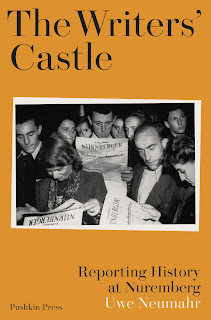

 A Trumpet of Sedition