Old Trafford’s 4–4: The Death Throes of a Giant Club

Sunday’s eight-goal draw between Manchester United and Aston Villa was billed as a classic. It was better understood as a symptom. A club that generates more than half a billion pounds a year now sits in the relegation zone, while its supporters protest against the owners who have bled it for more than two decades.

Manchester United, 20-time champions of England, went into the November international break in 18th place after drawing 4–4 with Aston Villa at Old Trafford on Sunday afternoon. The team has won once in ten league games and has gone eight league matches without a victory. It dropped into the bottom three on Saturday for the first time in 40 years, entering Sunday’s match in 19th place. The draw lifted United to 18th, with eight points from ten matches, its lowest position at that stage of a top-flight season since 1986–87, when the club stood 20th.

The match itself was a study in disintegration. Alysson scored for Villa after 59 seconds, and Nicolas Jackson added a second in the fourth minute. Bruno Fernandes converted a penalty in the 16th minute before Youri Tielemans equalised for United shortly before half-time. Within eight minutes of the restart, Villa led 4–2 after a John McGinn penalty and a goal from Leon Goretzka. Only stoppage-time goals from Joshua Zirkzee in the 92nd minute and Patrick Dorgu in the 96th rescued a point.

The sporting press has treated the comeback as a possible reprieve for manager Michael Carrick, who told reporters that he expected to remain in charge. In a testy exchange with a Sky Sports interviewer, he replied: “You’re telling me what you think, aren’t you?” Within weeks, however, he may become the latest in a long line of managers sacrificed to protect the people who actually own and run the club.

The real story was in the stands. Before kick-off, supporters released green-and-gold balloons, the colours associated with Newton Heath, the railway workers’ club from which United developed. They were answering a call from the supporters’ group The 1958 to protest against the Glazer family and minority co-owner Sir Jim Ratcliffe, and to boycott spending inside the stadium. A separate call had been made for a walkout in the 21st minute, marking 21 years of Glazer ownership, but the walkout did not materialise. The pre-match protest did. Supporters unfurled a banner declaring, “We don’t want a new stadium, we want the owners out,” and chanted against both the Glazers and Ratcliffe.

It was the second such protest in a week. At the Champions League match against Roma on Tuesday, fans threw green-and-gold balloons and tennis balls onto the pitch, briefly halting play, and police arrested three people. The owners can leave the ground. They cannot absent themselves from the crisis they have created.

A club turned into a financial instrument.

The decline of Manchester United cannot be explained by bad signings, a poor coach or a shortage of “winning mentality,” the explanations favoured by television pundits. It stems from the club’s transformation, over the past three decades, into a vehicle for accumulating private wealth.

In 2005, the Florida-based Glazer family bought United in a takeover valuing the club at approximately £790 million. The acquisition was structured as a leveraged buyout, with approximately £525 million of acquisition debt ultimately loaded onto the club. In effect, United was made responsible for financing its own purchase. Money that could otherwise have been invested in the team, stadium, workforce, or community was instead consumed by interest payments, financing costs, and shareholder dividends. 

When the Glazers looked for outside investment, they did not sell the club. In February 2024, Sir Jim Ratcliffe, the petrochemicals billionaire behind INEOS, completed a deal worth about £1.3 billion for an initial 25 per cent stake and gained control of football operations. Additional investment later increased INEOS’s stake to nearly 29 per cent. The Glazer family nevertheless remained the majority owner. Ratcliffe, a prominent Brexit supporter who moved his tax residence to Monaco in 2020, was portrayed in much of the media as a Mancunian saviour who would restore the club to its proper place. 

The opposite has happened. Ratcliffe’s arrival did not end Glazer ownership. It shored it up. The family retains majority control, while the INEOS administration has subjected United to sweeping cost reductions: jobs have been eliminated, staff benefits withdrawn and ticket prices increased. Even sections of the organised support that initially viewed Ratcliffe as a possible alternative to the Glazers are now protesting against both ownership factions.

Workers and supporters pay the bill.

The club’s accounts for the year ending 30 June 2026 tell the story. United reported record revenue of £677.6 million and an operating profit of £22.6 million. Yet it still recorded a net loss of £43 million, compared with a £33 million loss the previous year. This was the club’s seventh consecutive annual loss.

United’s broader debt burden, when historic borrowing, revolving credit and outstanding transfer payments are combined, has been reported at approximately £1.15 billion. This comprises around £578 million in historic debt, £200 million drawn on its revolving credit facility and approximately £375 million owed in outstanding transfer fees. The club borrowed a net additional £90 million after the end of the financial year while financing its summer recruitment programme. The £1.15 billion figure must therefore be understood as a composite debt total, rather than £1.15 billion in conventional bank loans.

The cost of balancing these books has fallen heavily on the club’s employees. Over the two years to 30 June 2026, United’s permanent workforce fell from 1,127 to 805, a reduction of 322 jobs, or 28.6 per cent. Staffing in the club’s media department fell by about 45 per cent, and in its commercial department by about 44 per cent. Administrative and related departments, including ticketing, lost 161 positions, while football operations, including scouting and academy coaching, lost another 60.

Earlier rounds of cuts closed the employee canteen at Old Trafford and ended free hot lunches for ordinary staff, replacing them with fruit at the stadium. At Carrington, non-playing staff were offered reduced soup and bread, while first-team players continued to receive full meals. Executives described such measures as necessary to restore financial stability. For cleaners, administrators, ticket-office staff, media workers, and other affected employees, they meant diminished conditions or lost livelihoods.

Supporters, many of them working people from Manchester and the surrounding towns, have been hit by repeated ticket-price increases. Meanwhile, United spent £191.7 million on summer player acquisitions, including agents’ fees and Premier League levies. The club also incurred compensation costs tied to managerial changes, including the departure of Ruben Amorim, contributing to its ongoing losses.

On top of this comes the plan to replace Old Trafford, home to the club since 1910, with a proposed 100,000-seat stadium nearby. Designed by Foster + Partners, the project has been presented as the centrepiece of a wider regeneration scheme. Its initial estimated construction cost is about £2 billion, although the final cost and financing arrangements remain unsettled. The club has already spent £63.5 million acquiring a 25-acre parcel of land for the development. 

The commercial purpose is clear: to increase revenue per match through greater capacity, premium seating, hospitality, sponsorship, naming rights and associated development. Whatever the final financing structure, supporters and employees have every reason to expect that the costs will be recouped through higher prices, increased commercialisation and further demands for “efficiency.”

The protests and their limits

The anger in the stands is genuine and justified. The documented grievances advanced by the 1958 and associated supporter groups include the ownership structure, rising debt, the demolition or abandonment of Old Trafford, ticket policies, declining standards and what they regard as the erosion of traditional match-going culture.

But the perspective that guides these protests cannot resolve the crisis. The demand is that the Glazers sell up and, increasingly, that Ratcliffe go too. Sell to whom? In the world of the Premier League, the only buyers with the billions required are other financial oligarchs, private-equity organisations or sovereign wealth funds such as Saudi Arabia’s Public Investment Fund, which controls Newcastle United. Each new owner is greeted as a potential liberator. Each has bought the club as an asset serving financial, commercial or geopolitical purposes.

The green and gold of Newton Heath has become a protest symbol, but its significance goes deeper than nostalgia. Workers associated with the Lancashire and Yorkshire Railway founded the club in 1878. Like dozens of English clubs, it grew out of the working-class communities created by the industrial towns. Those roots have been progressively severed by the transformation of football, accelerated by the founding of the Premier League in 1992, into a global entertainment industry dependent upon television rights, corporate sponsorship and speculative capital.

Balloon releases and spending boycotts express that anger, but they leave the underlying property relations untouched. The task is not to find a better billionaire. It is to connect the struggle of supporters with that of the workers whose jobs and conditions are being destroyed at United and throughout the economy.

A sport owned by the few

United’s fall is not an aberration. It is the most visible expression of what the profit system does to everything it touches. A game created and sustained by working people has been turned into a commodity, its clubs into tradable assets, and its supporters into revenue streams to be priced, divided, and squeezed.

The same logic that closes the staff canteen at Old Trafford closes hospitals, schools and factories across Britain. The same financial oligarchy that buys football clubs dominates the economy and dictates policy to governments, Labour and Conservative alike.

Sunday’s chaotic draw may buy Michael Carrick a few more weeks. It will not save Manchester United from its owners. Football can be returned to those who play and watch it only as part of a broader struggle to place society’s resources under the democratic control of the working class, organised to meet human need rather than private profit.

Sources

  1. ESPN match report and confirmed scoring chronology [espn.com]
  2. Aston Villa official match report [avfc.co.uk]
  3. Manchester United official match report [manutd.com]
  4. Sky Sports: Carrick expects to remain in charge [skysports.com]
  5. ESPN: ownership protest and failed 21st-minute walkout [espn.com]
  6. The People’s Person: The 1958 protest call and Roma arrests [thepeoplesperson.com]
  7. Manchester United official 2026 financial results [ir.manutd.com]
  8. Manchester United 2026 annual-report page [ir.manutd.com]
  9. Report on workforce reductions and combined debt [tvcnews.tv]
  10. The Guardian: closure of the Old Trafford staff canteen [theguardian.com]
  11. Place North West: £63.5 million stadium-land purchase [placenorthwest.co.uk]
  12. The Independent: the Glazer leveraged buyout and United’s debt [independent.co.uk]
  13. Sky Sports: Ratcliffe’s original minority investment [skysports.com]
  14. AFP report: Ratcliffe’s stake increased to nearly 29 per cent [news18.com]

1996: Reflections on the year that changed my life by Tony Adams with Ian Ridley was published by Floodlit Dreams in paperback, £11.99

Tony Adams, the ex-Arsenal and England footballer, has just turned 60 and published his third book. Adams, along with his writer Ian Ridley, has now produced what could be termed a trilogy. All books deal in one way or another with Adams previous addictions. In line with his new sobriety, Adams has turned down a big birthday; instead, he has opted for a night with twelve people who have played different roles in his road to recovery from alcoholism. It has been 30 years since he became sober.

Adams’ book is as brutally honest as the previous two. He talks bluntly about the carnage his addictions caused to his relationships and his body, saying, ‘I’m really proud that I’ve not pissed the bed for 30 years, guys,’ he says. ‘I’m incredibly proud.’

1996 can be written about in many ways: as a personal turning point, as a moment in football and popular culture, or as a year when broader political and social forces made themselves felt in private lives. When a year “changes your life,” that change is never simply biographical. It is the intersection of individual experience with wider historical forces. As Plekhanov argued over a century ago, individual action matters—but only in and through the context of social and economic development: the individual can “secure” already-ripened historical opportunities and thereby shape future links in the chain of events. This analysis should frame any reflective study of 1996.

Thirty years is a long time. Adams was both the captain of Arsenal and England. However, since he retired from the game, it has undergone a fundamental transformation. Football today is not merely a sport or cultural pastime; under capitalism, it has been transformed into a web of commodities, markets and class relations.

This transformation is not accidental but rooted in capitalism’s imperatives. Clubs, leagues and governing bodies are subsumed into capitalist enterprises competing for revenues, profit and market share. The World Cup and major tournaments are staged as vast commercial spectacles: broadcasting rights, sponsorship deals, and merchandising are central revenue sources, not the “joy of the game” FIFA and the leagues behave as commercial cartels that allocate monopoly rents and tax‑advantaged income while shifting costs and social harms onto the working class and public budgets.

Before I continue, I should add a full disclosure that I have been an Arsenal fan for well over fifty years. I have witnessed first-hand the rise of the Premier League (1992) and the full commercialisation of English football, which transformed Arsenal’s position in the social division of labour and urban life. What had been a locally rooted mass cultural institution—closely linked to the lives, rhythms, and neighbourhoods of working-class supporters—was restructured into a globalised commodity. The club was rationalised as a profit-making enterprise: broadcast rights, international marketing, sponsorship, corporate hospitality, and real estate strategies became central to its operations. This was not merely a change of “image” but of the material bases of the club’s existence: sources of revenue, ownership structures, investment in stadia and training, and the social composition of matchday spectators.

Football clubs are social institutions rooted in working-class communities, yet increasingly integrated into global capitalist markets. The club’s governance shifted toward shareholders and investors whose aim is capital appreciation rather than local communal provision. Decisions are subordinated to profitability and brand growth rather than the everyday needs of local working people.

Arsenal’s move from Highbury to the Emirates (2006) exemplified the monetisation of space—larger capacity for premium seats, corporate boxes, and sponsorship revenue. Across London, public funds and planning regimes have been repurposed to facilitate such projects; the same logic that turned Olympic infrastructure into public subsidy for private gain can be instructive (stadium costs and public subsidy). Rising ticket prices, corporate hospitality, and the retrofitting of stadia have pushed many traditional local supporters to the margins (my season tickets cost a basic £ 1,400 per season). What was once mass working-class attendance becomes a segmented market: tourists, international supporters buying TV subscriptions, and local middle-class consumers with higher disposable income.

Tony Adams is best known as one of England’s most prominent football captains. A one-club man for much of his career, he embodied the kind of working-class sporting hero that English football cultivated and commercially commodified from the 1980s onward. When Arsène Wenger arrived in 1996, he introduced continental training methods, dietary regimes and a more technical style—an adaptation to new competitive demands in a market increasingly valuing global broadcasting appeal and athletic optimisation. Adams’ captaincy during this transition represented a bridging function: he was the internal authority who mediated modernising reforms while defending squad cohesion against the depersonalising forces of commercialisation.

Adams built his reputation as a tough, disciplined central defender and long-serving captain whose leadership was central to his club’s identity. His personal story, as told in this third book, examines his leadership and public struggles with alcoholism. The book offers rich material for political and sociological study: how sport mediates class identity, how institutions respond to personal crisis, and how celebrity can both challenge and reinforce ruling-class culture.

Adams’ commitment—to club, teammates and fans—stands against the logic of treating players as commodities. The expansion of TV revenues and sponsorships produced new pressures: wage inflation among top players, increased speculation in the transfer market, and managerial decisions shaped as much by brand value as by sporting need. The commercial conversion of stadiums and the matchday experience—VIP boxes, renaming, and restricted access—illustrated how working‑class fans were being marginalised even as their devotion fuelled corporate profits. 

Adams’ emphasis on responsibility and accountability—on and off the pitch—can be seen as an assertion of the human, social relations that capitalism erodes. At moments when ownership and market logic threatened club traditions, his public leadership reaffirmed the club as a social collective rather than merely a business vehicle.

Adams’s public struggles with alcoholism and his later roles as a manager and pundit are widely known. Increasingly, similar pressures—financial precarity, commodified sport, celebrity culture and the expansion of online betting—have produced a new social pathology: gambling addiction among athletes, ex-players and the broader working class. The expansion of online gambling platforms, intrusive advertising and algorithmic “VIP” marketing has converted sport into a pipeline for extracting working-class wealth. Club identity has been repackaged as a global brand. Local histories and working-class memory are distilled into merchandise and heritage products, often stripped of their political content.

The expansion of revenue streams creates enormous wealth within football, but also deep social estrangement: local fans are priced out; the working-class connection is weakened even as clubs claim traditional roots. This contradiction generates instability—fan protests, supporter organisations, and occasional political backlash against corporate owners. The Premier League’s commercial boom coexists with growing popular resentment and declining local democratic control.

Mark Goldbridge and Gary Neville

One indicator of the enormous wealth in football is Gary Neville’s buyout of Mark Goldbridge’s media empire. The  purchase of an influential fan-media voice by a wealthy former player and businessman is not a neutral “business decision.” It is an expression of the relations of class and property that shape modern culture and politics. When Gary Neville — representing the interests and capital of a propertied layer — buys out Mark Goldbridge, a popular, independent-working-class–rooted commentator, what is at stake is not merely editorial direction but the social power to define what millions of working people see as “their” club, their grievances, and their possible responses.

Concentrated media ownership determines which viewpoints are amplified and which are marginalised. The consolidation of media in the hands of a few corporate and billionaire actors produces a press that serves elite interests rather than those of ordinary people (the concentration of media ownership is driven by profit and vertical integration). A takeover by Neville fits this pattern exactly: it substitutes the uncertain political and commercial independence of a grassroots voice for the resources, networks, and class position of a former elite insider. That transaction creates an immediate incentive to manage, sanitise and monetise fan sentiment rather than to foster independent working-class perspectives.

Tony Adams’ captaincy embodied the social cohesion and moral authority of a club rooted in its community—qualities under pressure from the 1990s’ turn to marketised, global football. His struggles—and the growing epidemic of gambling harm—are not merely private misfortunes. They are symptomatic of a society where sport and leisure are subordinated to corporate profit.

Football Writing Festival: Arsenal Special at the British Library

(This is a summary of the conversation between journalist Henry Winter and the author Nick Hornby. A full transcript and recording of the whole festival can be made available on request.)

Date Time: 2026-03-28 11:31:38

 Location: British Library

 Interviewee: Nick Hornby

Author Nick Hornby reflects on Arsenal fandom, football culture, and how Fever Pitch reframed football writing through human relationships and identity. Interviewer Henry Winter explores changes in stadium culture, player activism, commercialisation, and the global nature of club allegiance.

Introduction

1. Nick Hornby: Celebrated writer best known for Fever Pitch, he discusses how Arsenal became a constant in his life, the human dynamics behind football fandom, the evolution of fan culture from the 1970s to the Premier League era, and the tension between entertainment and trophies. He also touches on player activism, racism in sport, and the universality of his book across clubs and cultures.

2. Henry Winter: Football journalist and panel host guiding the conversation through Arsenal history, modern football media (including podcasts), stadium atmosphere changes, economics of fandom, player-community engagement, and comparisons of past versus present football quality. He frames questions that draw Hornby’s reflections on identity, culture, and the modern game.

 Key Points

1. Fever Pitch positioned football fandom as a lens on human relationships, offering a universal narrative beyond club rivalries.

2. Arsenal served as a lifelong constant for Hornby, providing reliability and identity amid personal change.

3. Stadium culture has shifted from volatile standing terraces to safer, commodified experiences, altering crowd dynamics and accessibility.

4. Modern players increasingly engage in activism and community work, reflecting a conscientious generational change.

5. Globalization of football detaches local identity from strictly local players; commitment to the shirt matters more than nationality.

6. Racism persists across leagues, but club cultures (including Arsenal’s) can mitigate its impact through values and leadership.

7. The entertainment-versus-trophies debate remains central to fandom; Hornby values both, noting how modern football quality and scheduling affect careers.

8. Football’s unscripted drama complements Hornby’s scripted literary world, highlighting sport’s unique emotional appeal.

Insights

1. Nick Hornby

   – Framed Fever Pitch as a human-interest narrative that helped non-fans (including women) understand male identity and fandom.

   – Arsenal provided a reliable anchor through life, distinguishing the club’s enduring presence from transient childhood pursuits.

   – Experienced and observed the 1970s/80s terrace culture, including volatility, policing, and the social dynamics of crowds.

   – Believes modern players have responsibilities to communities and appreciates the rise of athlete activism while cautioning against overhyping.

   – Argues that commitment to the shirt matters more than nationality; globalization can still produce deep fan-player bonds.

   – Acknowledges racism’s persistence and the importance of club values in confronting it.

   – Balances appreciation for entertainment with the desire for trophies; reflects on modern football’s intensity and player longevity.

2. Henry Winter

   – Highlights the evolution of football media (podcasts) and the breadth of Arsenal storytelling.

   – Discusses changes in stadium experience, pricing, and atmosphere, and the impact on younger fans’ access.

   – Probes player activism, community work, and club-led initiatives, positioning Arsenal as exemplary in engagement.

   – Raises the issue of social media-driven player followings and how star departures affect club visibility.

   – Frames debates about Premier League quality, scheduling, and their effect on player careers and performance.

 Chapters

 1. Henry Winter: What triggered Fever Pitch—love of Arsenal, a relationship, a particular game?

 Nick Hornby: The book emerged from defense mechanisms and a desire to explore human relationships through football; Arsenal was a constant that anchored his life and identity.

 Henry Winter: Notes the human-interest angle and how the book blended numbers/sport with personal dynamics.

 2. Henry Winter: How did your relationship dynamic manifest in your love for a constant like a football team?

 – Nick Hornby: Arsenal provided reliability; unlike childhood hobbies, football offered a lifelong path, connecting personal identity to a crowd and community.

 3. Henry Winter: Did you end up playing yourself?

 – Nick Hornby: Implies limited personal play; emphasizes spectating and the social aspects of being in crowds.

 4. Henry Winter: Did you send your old teacher a copy of the book?

 – Nick Hornby: Reflects on searching for companionship and crowd belonging; conversations at matches were often impersonal yet communal.

 5. Henry Winter: Is it about the crest on the front rather than the name on the back—are you Arsenal or football?

 – Nick Hornby: The intensity of feeling drew him in; the club’s symbolism mattered deeply regardless of individual players.

 6. Henry Winter: Did you analyze crowd behaviors and policing at the time?

 – Nick Hornby: Recalls chairman’s notes, policing issues, and a “jail cell” in the North Bank; shares anecdotes about being confined with opposition fans.

 7. Henry Winter: Liveliest away ground experiences?

– Nick Hornby: Suggests volatility at certain grounds; highlights the 70s/80s away-day culture and mates’ behavior.

 8. Henry Winter: Younger fans (18–24) are priced out—how has your and your son’s experience changed? Is standing safer now?

 – Nick Hornby: It’s safer; standing itself isn’t the issue—culture and context matter; modern stadiums changed dynamics from late 80s onward.

 9. Henry Winter: Thoughts on Arsenal’s stadium design, murals, and concourses?

 – Nick Hornby: Praises heritage elements but criticizes overpriced concourses; contrasts early days with fewer ads/amenities.

10. Henry Winter: Do kids follow players more than clubs? Impact of stars like Salah leaving?

 – Nick Hornby: Acknowledges player-driven social media dynamics; stresses instilling commitment to the shirt over star transience.

11. Henry Winter: Athlete activists—do you like this conscientious generation?

– Nick Hornby: Appreciates player engagement in community; supports responsibility of wealthy young players while avoiding overstatement.

12. Henry Winter: What’s it like meeting idols you grew up watching?

– Nick Hornby: Initially uncomfortable transitioning from fan to peer at signings; later accepted it; notes Fever Pitch’s cross-club resonance, even among foreign players seeking to understand English fan culture.

13. Henry Winter: Did Fever Pitch contribute to broader understanding of fandom?

 – Nick Hornby: Yes; aimed to articulate a universal fan-club relationship, avoiding tribal derision; helped non-fans understand male identity and passion.

14. Henry Winter: Trophies or entertainment—what matters more?

 – Nick Hornby: Values both; engages with debates on Premier League quality, scheduling, and the physical demands on modern players.

15. Henry Winter: No winter break, increased Champions League games—impact on careers?

– Nick Hornby: Improved pitches, boots, and nutrition help, but heavier schedules may shorten peak years; luck and care influence longevity.

16. Henry Winter: Young talent like “Max”—should he go to the World Cup?

 – Nick Hornby: World Cups aren’t for work experience; recognizes special talent but urges caution; balances club and national priorities.

17. Henry Winter: Arsenal title vs. England World Cup—which matters more?

 – Nick Hornby: Expresses hope and pragmatism; suggests World Cup ambitions face strong competition; leans toward club success while acknowledging national dreams.

18. Henry Winter: Comparing the Oscars to football awards—what’s better?

Nick Hornby: Celebrates the privilege of witnessing Arsenal regularly; sport provides unique, immersive joy akin to live arts.

19. Henry Winter: Do you appreciate football’s unscripted nature more as a writer?

Nick Hornby: Football’s unpredictability complements his scripted work; while “you couldn’t script that” is cliché, sport’s drama remains compelling.

20. Henry Winter: Thoughts on racism in sport and “black Arsenal” histories?

Nick Hornby: Racism persists across leagues; club culture can help; emphasizes that prejudice follows players and must be confronted systemically.

21. Audience Q: Any new superstitions like sugar mice or lint bunnies to influence results?

Nick Hornby: Jokes about trying new rituals; notes annual disappointment; remains open to playful superstitions.

22. Audience Q: When did you start supporting Arsenal, and how do you view fewer English players now?

Nick Hornby: Early attachment formed when squads were more English; argues proximity isn’t nationality—what matters is players’ commitment to the club and its values, not where they’re from.

Next Arrangements

– Tighten broad questions with specifics (seasons, matches, policies) to elicit concrete anecdotes and sharper contrasts between eras.

– Add targeted follow-ups on complex topics (e.g., “Which Arsenal initiative most impressed you and why?” “What stadium change most altered fan behavior?”) to deepen analysis and avoid generalities.

– Balance nostalgia with present-day detail using evidence-based comparisons (e.g., “1989 at Highbury versus a 2024 Emirates match—what single difference most changes the fan experience?”) for clear, informative takeaways.

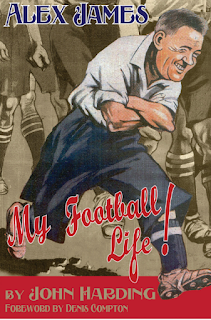
Alex James: Life Of A Football Legend, by John Harding, 16.99. Empire Publications 2024

The term “Arsenal legend” is used so frequently in the modern era that it can lose all its meaning or aura. But in the case of Alex James, it is an apt phrase. Even the legendary Matt Busby thought he was one of the all-time greats, and the great Liverpool manager Bill Shankly called him a “genius” and a “nightmare to play against”.

The first thing that comes to mind when reading this book is why bother reading about a player, no matter how good, who died nearly 74 years ago, and last played for Arsenal two years before Hitler invaded Poland.

From a footballing standpoint it is clear from even a cursory look at video footage of Alex James that he was an exceptional player and according to Ham & High Sport “In pantheon of Arsenal greats, he stands shoulder to shoulder – at the very least – with the likes of Dennis Bergkamp, Tony Adams, Frank McLintock and Joe Mercer.”[1]

People follow football teams for many different reasons. For me, I think the same way as Dennis Bergkamp: “When you start supporting a football club, you don’t support it because of the trophies, or a player, or history; you support it because you found yourself somewhere there — found a place where you belong.” While this is true in my case, I also fell in love with Arsenal because of its history.

My first season supporting Arsenal was the 1970/71 season. Many things attracted me to Arsenal. I mentioned its rich history, but what got me hooked was not only the atmosphere and the smell of fresh hot dogs, but Highbury was a thing of aesthetic beauty, so much so that its Art Deco design is still a listed building.

My first game, funny enough, was sitting in virtually the same seats as the Arsenal fan and writer Nick Hornby sat when his dad took him to his first game in the West Upper stand. The film Fever Pitch starring Colin Firth[2] Shows Hornby’s amazed look as he took in his first game. Another thing that attracted me was that Arsenal seemed to embody a classy way of doing things and embodied the mantra “ Play up and Play the Game”.[3]

It is to John Harding’s credit that he has reintroduced James to a modern readership. First published in 1988, this reissue in 2024 is updated with new stories and pictures. “Since the first release, I have added lots of new material and have changed my stance on James’ footballing role, Reprinting my book with new material, especially after leaving Highbury relatively recently in terms of the club’s history, seemed like a good opportunity to revisit his story – and to reintroduce him to a new generation of supporters, because we should not forget what Alex James meant to Arsenal.

“I am too young to have seen him play, but when I first started going to Arsenal back in the late 1950s, many people around me had seen him. “I grew up on stories about him, and he became a hero – James simply struck a chord with me. For me, Alex James was Highbury.”  The book is meticulously researched and is one of the best books on the history of  Arsenal Football Club. James was admired and deeply appreciated by his fellow professionals.

As a young boy, the great Tom Finney[4] Saw James play at Deepdale, Preston, saying  “James was the top star of the day, a genius. There wasn’t much about him physically, but he had sublime skills and the knack of letting the ball do the work. He wore the baggiest of baggy shorts, and his heavily gelled hair was parted down the centre. On the odd occasion when I was able to watch a game at Deepdale, sometimes sneaking under the turnstiles when the chap on duty was distracted, I was in awe of James. Preston were in the Second Division and the general standard of football was not the best, but here was a magic and a mystery about James that mesmerised me.”

While James and his fellow professionals’ lifestyle is a million light years away from the pampered multi-millionaires of today with their private jets, His lifestyle also set him apart from his fellow workers of his day.

As John Harding writes in his Oxford Dictionary of National Biography article, “James was a flashy, charismatic figure, easily identifiable on the field of play by his baggy shorts and flapping shirt and perfectly captured for posterity by the great sporting cartoonist of the inter-war years, Tom Webster (whose cartoon Harding uses for the cover of his updated  Book). Off the field, he was regularly in the news, usually demanding a higher wage or a transfer. James enjoyed the West End lifestyle available to a London-based player and was a regular habitué of fashionable cafés and bars. He was a prolific spender and a snappy dresser, but was unfortunate to be a sporting star at a time when footballers, though as well known as film stars, were paid a pittance by comparison.

He made strenuous efforts to cash in on his ‘image’: he was a sports demonstrator at Selfridges, he had regular columns in national newspapers, and he appeared in advertisements for cigarettes and sports goods. But when he retired in 1937, he had accumulated little, partly because he had no real business acumen. In 1938, he went to Poland to coach the Polish national side—a position he enjoyed but which came to an abrupt end when Germany invaded Poland in August 1939. During the war, James served as a gunner in the Royal Artillery’s maritime division stationed on the east coast. In 1947, he rejoined Arsenal as a reserve team coach, but he contracted cancer and, after a short illness, died on 1 June 1953 in the Royal Northern Hospital, Holloway, London. He was cremated at Golders Green crematorium.”[5]


[1] https://www.hamhigh.co.uk/news/21388151.remembering-arsenal-legend—alex-great/

[2] https://en.wikipedia.org/wiki/Fever_Pitch_(1997_film)

[3] https://exhibits.lib.byu.edu/wwi/influences/vitai.html

[4] https://en.wikipedia.org/wiki/Tom_Finney

[5] James, Alexander Wilson (1901–1953) John Harding doi-org.lonlib.idm.oclc.org/10.1093/ref:odnb/3414723-2004