Pip: A 244-page government report concludes that English football generates nine billion pounds a year and nearly every club loses money — and calls this a paradox. freerein61 has a different word for it.
Mara: The post is a Marxist reading of the Independent Football Regulator's State of the Game report, covering financialisation, ownership, labour, and what a regulator can and cannot do. Let's start with the report itself and what it actually reveals.
Bread, Circuses and Balance Sheets: The IFR's Report and Capitalist Football
Pip: The IFR presents its State of the Game report as sober, technocratic analysis — a neutral audit of English football's finances. The post's argument is that the document is actually something more uncomfortable: an accidental indictment of the system the regulator was built to protect.
Mara: The post frames it this way: "Its authors describe a 'paradox' at the heart of the sport: unprecedented wealth alongside systemic insolvency. A Marxist analysis shows there is no paradox at all. What the IFR calls a puzzle is simply capitalism's logic asserting itself with brutal clarity."
Pip: That reframe is the spine of the whole piece. If the wealth and the insolvency are not separate phenomena but two sides of the same process, then the regulator's toolkit — stress tests, action plans, enhanced oversight — is aimed at the wrong target entirely.
Mara: The numbers bear that out. Premier League revenue has grown thirty-fold since 1992, but costs have risen faster. Ninety-four per cent of clubs in the top five divisions lose money. The post notes that seventeen EFL and National League clubs would lose money even if they paid their players nothing — which rather undercuts the report's framing of wage inflation as the root cause.
Pip: So the disease is structural, and the regulator is prescribing paracetamol.
Mara: On financialisation specifically, the data are striking. Transfer factoring has increased fourteen-fold in four years. One point two billion pounds in future transfer receipts has already been sold. Interest payments have quadrupled. Five lenders control 93.6 per cent of the transfer finance market. The post reads this as fictitious capital in Marx's strict sense — value that does not yet exist, monetised and spent before it is earned.
Pip: Clubs selling tomorrow's income to survive today's arms race. The post is clear that this is not mismanagement; it is what the structure compels.
Mara: Ownership tells a similar story. Non-domestic owners control 75 per cent of Premier League revenue. North American capital controls nearly half the pyramid. The average indicative return across clubs is minus 41 per cent, yet capital keeps flowing in. The post argues this is not irrational — football offers soft power, speculative upside, and, as the IFR itself notes, exposure to money laundering through offshore structures and opaque sponsorship arrangements.
Pip: A loss-making investment that doubles as a geopolitical branding exercise and a conduit for surplus capital. The post also takes the regulator's own stated priorities as evidence of its limits — its first distribution goal is preserving the Premier League as the world's leading league, and the top club earns 605 times the revenue of the smallest National League side.
Mara: Engels described the capitalist state as the "ideal collective capitalist" — managing the system's common affairs to preserve it as a whole. The post applies that framework directly to the IFR: a regulator the Premier League endorsed, whose tools stop well short of challenging debt dependency, multi-club ownership, or the private model itself.
Pip: Fans get a voice, not a vote. Supporters must be "considered." The post's alternative — pooled broadcast income, debt caps, 50-plus-one ownership, community control of grounds — is framed not as utopian but as the minimum required to reverse what the report documents.
Mara: The closing argument is that the IFR has produced the most detailed evidence yet of football's transformation into a financial asset class, while its prescriptions aim only to make that asset class more orderly. The regulator can manage symptoms; it cannot cure the disease.
Pip: Which means the most damning thing about the report is not what it gets wrong — it's how much it gets right, and what it refuses to conclude.
Mara: The IFR's own data make the case that the post is arguing — the regulator just declines to follow it to its conclusion.
Pip: A 244-page document that describes the disease in forensic detail and then recommends better handwashing. The next episode will have more to say about who gets to ask the harder questions.
The Independent Football Regulator’s State of the Game report presents itself as a sober, technocratic assessment of English football’s financial health. In reality, it is an extraordinary document: a 244-page anatomy of a social institution hollowed out by capitalist irrationality—and an unwitting indictment of the very economic system the regulator exists to stabilise. Its authors describe a “paradox” at the heart of the sport: unprecedented wealth alongside systemic insolvency. A Marxist analysis shows there is no paradox at all. What the IFR calls a puzzle is simply capitalism’s logic asserting itself with brutal clarity.
English football today is the clearest example of competitive accumulation. Clubs are compelled to spend beyond their means—not because they are reckless or poorly managed, but because the industry’s structure leaves them little choice. Since 1992, Premier League revenue has grown thirty-fold, far outpacing the wider economy, while costs have risen even faster. Ninety-four per cent of clubs in the top five divisions lose money. This is not a departure from capitalist norms; it is their fulfilment. The IFR cannot acknowledge this, because doing so would mean admitting that the crisis is systemic, not accidental.
The report’s own data show how sport has been transformed into a financial asset class. Labour-power is converted into amortised capital, future transfer fees are sold off as fictitious capital, grounds and badges are pledged as collateral, and a handful of lenders extract value regardless of sporting outcomes. Football has become a site of financialisation, governed not by sporting logic but by the imperatives of debt, leverage and speculative investment. The IFR documents this process in forensic detail while refusing to confront its implications.
Ownership patterns point to the same reality: global capital, multi-club networks, and North American investment groups dominate the game. Returns are overwhelmingly negative, yet capital keeps flowing in—not for sporting reasons, but because football offers global reach, cultural legitimacy, and opportunities for speculation, soft power, and, as the report notes, money laundering.
The regulator’s role is not to challenge this system, but to preserve it. Its proposals amount to managerial tinkering that keeps the Premier League dominant and the pyramid intact, while leaving the underlying relations of ownership, finance, and exploitation untouched. Rather than resolve football’s contradictions, the IFR merely catalogues them, revealing the need for a fundamentally different model.
The so‑called paradox: wealth without stability
David Kogan’s foreword presents English football as both the world’s richest, most competitive league system and one on the verge of collapse. The figures are stark: clubs generated £9 billion in revenue last season, yet 94 per cent of those in the top five divisions lost money. No other major industry could report such figures without prompting immediate questions about systemic failure. Yet the IFR treats this as a managerial problem: poor governance, inadequate oversight, and clubs failing to “live within their means.” This is the ideological reflex of bourgeois regulation: to blame crises on individual actors’ behaviour rather than on the system’s structure.
A Marxist analysis begins from the opposite premise. When nearly every firm in an industry fails in the same way, the cause lies not in management but in the structure of accumulation. Marx explained long ago that competition forces capitalists to expand, invest and outspend their rivals to survive. The capitalist does not accumulate because he is greedy or irrational; the system compels him to. English football clearly illustrates this dynamic. Clubs spend beyond their means not because they are reckless, but because they have to. Falling behind in the competitive arms race risks relegation, lost broadcast income, collapsing commercial revenue and, ultimately, extinction.
The IFR’s own data confirm this. Since 1992, Premier League revenue has grown thirty-fold, far outpacing the wider economy, while costs have risen even faster. Wage bills, transfer amortisation, agent fees, stadium financing, and debt servicing have all increased alongside revenue. The report presents this as a failure of “financial management,” as if clubs could spend less without jeopardising their competitive position. But in a system driven by accumulation, restraint is punished. A club that refuses to overspend isn’t prudent; it gets relegated.
This is why the IFR cannot acknowledge the crisis’s real nature. To do so would mean admitting that the contradictions it describes are not deviations from normal capitalist functioning, but its inevitable outcome. The regulator must therefore frame the crisis as a technical problem—liquidity, governance, and risk—rather than a structural one. It must pretend that stress tests, action plans, and “enhanced oversight” can correct football’s financial instability, rather than fundamentally transforming ownership, finance, and distribution.
The report’s language reflects this ideological constraint. Kogan describes a “paradox”: unprecedented wealth alongside systemic insolvency, as though the two were unrelated phenomena that mysteriously coexist. But there is no paradox: wealth and insolvency are two sides of the same process. The more revenue the game generates, the more capital flows in. The more capital flows in, the sharper the competitive pressures become. As those pressures intensify, clubs must spend more, and their losses deepen. The IFR describes the symptoms while refusing to name the disease.
The Political Economy of Football’s Financialisation
To understand the IFR’s findings, we should place English football within the broader political economy of late capitalism. Over the past three decades, it has undergone the same transformation as other major sectors of the global economy: a shift from production to financialisation, from profits generated through activity to profits extracted through ownership, leverage and speculation. Once a commercial entertainment industry, football has become a financial asset class, governed less by sporting logic than by the imperatives of capital accumulation.
This transformation did not happen overnight. Football’s first metamorphosis—from a working-class pastime to a commercial commodity—came in the early twentieth century. Its second, from commodity to global media product, gathered pace with television and culminated in the Premier League’s 1992 reorganisation. But the decisive shift came after the 2008 financial crisis, when the collapse of productive investment across advanced capitalist economies pushed capital into new fields of speculation. With its global reach, predictable revenue streams and intense brand loyalty, football became an ideal arena for financial expansion.
Financialisation means that profit comes less from producing goods or services and more from manipulating financial instruments. In football, it turns every aspect of the sport into a tradable asset. Player contracts are amortised like industrial machinery; future transfer fees are sold as receivables; and stadiums, training grounds and even club badges are used as collateral. Multi-club ownership groups operate like private equity portfolios, moving players, revenues and liabilities across borders to maximise returns. Debt is no longer a temporary burden but a permanent operating condition.
The IFR’s own data show the scale of this transformation. Transfer factoring has increased fourteen-fold in four years, and £1.2 billion in future transfer receipts has already been monetised. Interest payments have quadrupled as borrowing costs have surged, while five lenders now control almost the entire transfer finance market. This is no marginal development; it is a structural reorganisation of the sport, driven by the dominance of finance capital.
Marx, Hilferding and Lenin all described how, once dominant, financial capital subordinates productive activity to its own logic. That logic now governs English football. Clubs borrow not to invest in long-term development, but to keep pace with the competitive arms race. They sell future transfer fees not out of prudence, but because the system compels them. Financialisation does not stabilise football; it destabilises it, creating fragility, dependency and exposure to shocks. Relegation clauses mean sporting failure can trigger creditor seizure, reducing clubs to shells through which capital circulates.
Why football? Because it offers what late capitalism craves: scarcity, global visibility, emotional attachment and cultural legitimacy. It is one of the few sectors where losses can be tolerated for years because the club retains symbolic value as an asset. As the IFR notes, the sector is also vulnerable to money laundering, offshore structures, and opaque sponsorship arrangements. Distressed clubs become conduits for capital flows unrelated to sport.
The IFR documents this transformation with forensic detail while refusing to confront its implications. It describes the symptoms of financialisation, debt dependency, factoring, and multi‑club networks, but treats them as technical problems rather than structural ones. It cannot admit that English football’s crisis is not a deviation from capitalist functioning but its fulfilment. To do so would be to question the very model the regulator exists to preserve.
From commodity to media product to financial instrument
Football’s first transformation from a working-class pastime into a commercial commodity occurred in the early 20th century, as clubs evolved from voluntary associations into businesses selling gate receipts, advertising space, and professional players’ labour-power. Its second transformation from commodity to media product followed the rise of television and culminated in the Premier League’s 1992 reorganisation. Broadcasting turned football into a mass-produced cultural product, shaped by scheduling, advertising, and global distribution. But the decisive shift came after the 2008 financial crisis, when football became a financial instrument.
This is not a metaphor; it is literal. Clubs borrow against future transfer fees. Contracts are amortised like industrial machinery. Clubs pledge grounds and badges as collateral. Revenues are securitised. Multi-club groups operate like private equity portfolios. Every component of the sport- labour, infrastructure, intellectual property, and future income- is converted into an asset that can be traded, leveraged, or used as security. The IFR’s data show the scale of this transformation with forensic clarity: transfer factoring has risen fourteen-fold in four years, £1.2 billion of future receipts have already been sold, interest payments have quadrupled as the cost of debt has surged, and five lenders control almost the entire market for transfer finance. This is not a marginal development; it is the sport’s structural reorganisation under the dominance of finance capital.
What Hilferding described in *Finance Capital*- the fusion of banking and industrial capital into a financial oligarchy that extracts value regardless of productive outcomes- is now evident on the balance sheets of English football clubs. Lenin’s analysis of how these oligarchies dominate entire sectors and turn them into instruments of speculation applies with almost uncanny precision. English football has become one of those sectors.
Financialisation means profit comes less from producing goods or services and more from manipulating financial instruments. In football, this shows up in the conversion of every aspect of the sport into tradable assets: player contracts become depreciating capital goods, transfer fees become receivables, stadiums become collateral, clubs become vehicles for debt-fuelled expansion, and multi-club networks become platforms for arbitrage, talent extraction, and regulatory evasion.
The consequences are profound. Financialisation does not stabilise football; it destabilises it, creating fragility, dependency and exposure to shocks. Relegation clauses mean sporting failure can trigger creditor seizure, while clubs become shells through which capital circulates. The IFR documents this fragility but cannot explain it, because doing so would require acknowledging that the instability is structural, not accidental.
Why football? Because it offers exactly what late capitalism craves: scarcity, global visibility, emotional attachment and cultural legitimacy. Few sectors can absorb years of losses while their core asset- the club- retains symbolic value. As the IFR itself notes, football is also vulnerable to money laundering, offshore structures and opaque sponsorship arrangements. Distressed clubs can become conduits for capital flows unrelated to sport.
Financialisation also helps explain why capital continues to flow into football despite negative returns. The IFR reports an average indicative return of minus 41 per cent across clubs, yet ownership is becoming more global, institutional and concentrated. This is not irrational; it reflects financial capital’s pursuit of control over assets it can leverage, securitise, or use to anchor broader commercial ecosystems. A Premier League club is more than a football team: it is a content engine, a data-harvesting platform, a global brand, a political instrument and a financial vehicle.
The IFR describes the symptoms of this transformation- debt dependency, factoring, and multi-club networks- but treats them as technical rather than structural problems. It cannot admit that English football’s crisis is not a deviation from capitalism but its fulfilment. Doing so would mean questioning the very model the regulator exists to preserve.
Why football?
Football is uniquely suited to financialisation because it possesses characteristics that make it a coveted prize for capital. Few industries offer such a potent combination of global reach, emotional intensity, predictable revenue, scarcity and cultural legitimacy. These features are not incidental; they are precisely what make football attractive to finance capital in an era of stagnation, falling productive investment and the search for new fields of extraction.
Its global reach is unmatched. The Premier League reaches hundreds of millions of homes, giving capital access to a ready-made global consumer base. In a world of saturated traditional markets, football offers immediate access to audiences on every continent. Its emotional connection is even more valuable. Football clubs command a level of brand loyalty that no commercial product can replicate. Supporters do not switch allegiances based on price or quality. Their loyalty is inherited, irrational and lifelong. For capital, this is ideal: a captive market whose consumption is driven by identity rather than choice.
Football also offers predictable revenue streams. Broadcast rights, sponsorships, merchandise, digital content and hospitality packages bring in recurring income that can be securitised, borrowed against and bundled into financial products. Predictability is the lifeblood of financialisation. Then there is scarcity. Only a handful of elite clubs exist, and there is just one Premier League. Scarcity drives valuations, intensifies competition among investors and ensures that even failing clubs retain symbolic and financial value.
Finally, football enjoys cultural legitimacy. It presents itself as tradition, community, and heritage, masking the extraction taking place beneath the surface. This legitimacy gives political cover to private equity firms, sovereign wealth funds, and multinational corporations. In a low-growth economy, football offers something rare: an asset class with global visibility and political utility. It serves as a vehicle for surplus capital, a platform for soft power, and, as the IFR itself notes, a conduit for money laundering through offshore structures, opaque transfers, and sponsorship. Football’s financialisation is no accident. It is structural, and the IFR merely catalogues its symptoms.
Financialisation as crisis
Financialisation does not stabilise football; it destabilises it. The IFR’s own data reveal a sport whose financial architecture has been reshaped around debt, leverage and speculative instruments. Debt dependency, transfer factoring, leveraged ownership and sprawling multi-club networks do not build resilience; they create fragility. They tie clubs to financial obligations that become more burdensome precisely when sporting performance declines. Relegation clauses now embedded in most Premier League loans mean sporting failure can trigger creditor seizure when a club is at its weakest. A bad season becomes not just a sporting setback but a financial catastrophe. Clubs stop being community institutions and become shells through which capital circulates.
Factoring shows this dynamic with brutal clarity. When a club sells future transfer receipts to raise cash now, it mortgages tomorrow’s income to cope with today’s pressures. This is fictitious capital in Marx’s strict sense: value that does not yet exist, monetised and traded as if it were already real. The IFR reports that factoring has increased fourteen-fold in four years, with £1.2 billion in future receipts already sold. This is not prudent financial management; it is a symptom of systemic desperation. Clubs are not planning for the future; they are consuming it.
Leveraged ownership compounds the instability. Owners buy clubs with borrowed money, load the debt onto the club, and extract returns through management fees, refinancing, and asset sales. Multi‑club networks extend this logic across borders, treating clubs as nodes in a financial ecosystem rather than as sporting entities. Players move to meet balance‑sheet needs rather than tactical ones. Revenues are shifted to optimise tax and regulatory arbitrage. The club becomes a financial vehicle first and a football team second.
The IFR’s report is, unintentionally, a catalogue of these contradictions. It describes a sport that generates enormous wealth but cannot sustain itself, because financial channels siphon that wealth away before it can stabilise the system. The crisis is not accidental; it is structural. Football’s financial instability is not caused by mismanagement, incompetence or isolated excess. It is the predictable result of reorganising the sport around the imperatives of financial capital. The regulator documents the symptoms but cannot name the cause. Doing so would mean acknowledging that English football’s crisis is not a deviation from capitalism but an expression of it and that no amount of technocratic oversight can resolve contradictions rooted in the system itself.
Labour as a cost, labour as an asset, labour as a battleground
The report’s treatment of labour is revealing. The report presents players almost exclusively as a cost, a liability to manage, rather than as the producers of the commodity behind the game’s enormous revenues. Wage bills have risen 33 per cent across the Premier League pyramid, 32 per cent in the Championship, 71 per cent in League One, and 63 per cent in League Two. Twenty clubs spend more than 80 per cent of their revenue on salaries. The regulator’s response is predictable: cost control, wage restraint, “responsible spending.” In other words, disciplining labour.
First, players are not simply workers; they are labour-power converted into financial assets. Modern football treats labour not just as a production cost but as a capitalised resource. Contracts are amortised like industrial machinery: depreciated over time, securitised, borrowed against and used as collateral in complex financial arrangements. Agent fees, now £584 million, are part of this same machinery, serving as transaction costs in a financialised market for labour-power. The doubling of amortisation to £2.6 billion is no accounting quirk; it marks the conversion of labour into fictitious capital: value that exists only on balance sheets, yet is traded and leveraged as if it were real.
This transformation is central to football’s financialisation: labour-power becomes a financial instrument, with its value fluctuating according to market conditions, performance metrics, and speculative expectations. The IFR describes this process without understanding it, treating amortisation as a technical matter rather than as a structural reorganisation of labour under finance capital.
Second, wage restraint is class struggle. The PFA’s successful challenge to salary caps in 2020, and its current High Court action, are not “governance friction.” They are organised workers resisting an attempt to fix their share of the surplus. The IFR cannot admit this because it would require acknowledging that labour has interests irreconcilable with capital. The regulator’s framework assumes harmony among stakeholders, owners, leagues, players, and fans, and treats conflict as a managerial problem. But wage restraint is not a governance issue. It is a matter of class power.
The report’s language exposes this ideological blind spot. It describes wage inflation as a “risk,” a “pressure,” and a “threat to sustainability.” Nowhere does the IFR consider that rising wages reflect labour’s bargaining strength in a sector where workers create enormous value. The regulator’s job is to protect clubs’ financial stability, not workers’ living standards or bargaining power. As a result, it frames wage growth as a pathology rather than as a sign of labour asserting itself.
Third, the category “player wages” masks profound stratification. A Premier League star earning £300,000 a week has little in common with a League Two professional on a precarious one-year deal. Yet the IFR treats “player wages” as a single category, obscuring class divisions across the labour force. The report focuses on elite wage inflation while overlooking the conditions most football workers face: academy staff, cleaners, stewards, groundskeepers, analysts, youth coaches, and hospitality workers. The analysis renders these workers invisible. The IFR’s framework counts their labour only where it intersects with financial risk.
This invisibility is ideological. It reflects the regulator’s assumption that players perform the “real” labour of football, and that the “real” costs are those that affect balance sheets. The thousands of workers who make football possible maintaining stadiums, training youth players, cleaning facilities, managing logistics, providing security, and running matchday operations are treated as background noise. Their exploitation goes unanalysed because it is not financialised.
The most devastating statistic is the one the IFR buries: seventeen EFL and National League clubs would lose money even if they paid their players nothing. That fact alone undermines the report’s central claim that wage inflation is the root problem. If clubs cannot break even without paying a single player, wages are not driving insolvency; the business model is. Ownership structure, reliance on debt, value extraction through financial channels, volatile revenue streams, and the competitive arms race drive the crisis.
But the IFR cannot say so. To do so would mean admitting that labour is not the problem; capital is. It would mean acknowledging that the financialisation of football has created a system that blames workers for a crisis caused by owners, lenders, and speculative investors. It would also mean recognising that wage restraint is not a solution but an attack on labour. The report thus treats labour as a cost to be controlled rather than a source of value. It documents the symptoms of exploitation but refuses to name the exploiters. It catalogues the contradictions in football’s labour market while defending the system that creates them. In doing so, it reveals regulation’s limits under capitalism: labour can be disciplined, but capital cannot be challenged.
Finance capital takes control.
The report’s most explosive revelations concern finance capital’s penetration into every pore of the sport. What the IFR documents, often without grasping its significance, is English football’s near-total subordination to the logic of financialisation. Transfer factoring has increased fourteen-fold in just four years. £1.2 billion in future transfer receipts has already been sold- income that does not yet exist, monetised and spent before a single pound has been earned. Interest payments have surged from £97 million to £455 million as the cost of debt has tripled. Five lenders control 93.6 per cent of transfer finance, with one lender alone controlling nearly half. This is not a competitive market. It is an oligopoly.
None of this is accidental. It is the predictable outcome of reorganising football according to the imperatives of finance capital. Hilferding, writing more than a century ago, described how banking and industrial capital fuse into a single financial oligarchy that extracts value regardless of productive outcomes. Lenin showed how such oligarchies dominate entire sectors, turning them into instruments of speculation. English football is now one of those sectors. The IFR’s data could have been lifted directly from Finance Capital or Imperialism.
Factoring future fees is fictitious capital in Marx’s strict sense: money raised today against value that does not yet exist. Clubs sell tomorrow’s transfer income to survive today’s pressures, mortgaging their future to remain competitive in the present. This is not prudent financial management. It is systemic desperation. The club consumes its future to survive its present.
The collateralisation of heritage assets is equally revealing. Grounds, badges, and training facilities, the physical and symbolic infrastructure of the people’s game, are increasingly pledged as security for loans. The IFR notes that 60 per cent of Premier League clubs have relegation‑triggered repayment clauses. This means sporting failure can trigger creditor seizure. A bad season is no longer merely a sporting setback; it is a financial catastrophe. The club’s identity, history and community assets become bargaining chips in negotiations with lenders.
Leveraged ownership compounds the instability. Owners acquire clubs with borrowed money, load the debt onto the club itself, and extract returns through refinancing, management fees and asset sales. Multi‑club networks extend this logic across borders, treating clubs as nodes in a financial ecosystem rather than as sporting institutions. Players move to meet balance‑sheet needs rather than tactical ones. Revenues are shifted to optimise tax and regulatory arbitrage. Clubs become shells through which capital circulates.
The IFR’s report is, unintentionally, a catalogue of these contradictions. It shows a sport that generates enormous wealth yet cannot sustain itself because financial channels siphon that wealth off before it can stabilise the system. The crisis is not accidental. It is structural. Football’s financial instability is not the result of mismanagement, incompetence or isolated excess. It is the predictable outcome of reorganising the sport according to the imperatives of financial capital.
The regulator documents the symptoms but cannot name the cause. To do so would be to acknowledge that English football’s crisis is not a deviation from capitalism but its expression and that no amount of technocratic oversight can resolve contradictions rooted in the system itself.
Ownership without roots, capital without loyalty
The IFR’s ownership data show a sport transformed into a global asset class. English football is no longer a national game but a marketplace for international capital. Non‑domestic owners now control 75 per cent of Premier League revenue. North American capital controls nearly half of the entire pyramid. Eighty‑five per cent of Premier League clubs belong to multi‑club or multi‑sport groups, integrated into sprawling corporate networks that treat football teams as interchangeable units within a global portfolio. This is not cosmopolitan modernisation. It is the sport’s financial colonisation.
The most striking fact is that returns are overwhelmingly negative. The IFR reports an average indicative return of minus 41 per cent across clubs, with only 21 of 76 making a positive return. Yet capital continues to flow in. The report cannot explain this. It treats negative returns as a puzzle, as though investors were behaving irrationally. But a Marxist analysis can. Capital does not enter football to earn conventional profits. It enters because football offers value extraction, political leverage, and speculative opportunity unavailable in the productive sectors of a low‑growth economy.
Football offers speculative opportunities. Promotion windfalls can transform a club’s valuation overnight. Leveraged buyouts let owners acquire clubs with borrowed money and load the debt onto the club. Asset stripping selling stadium land, training facilities, or intellectual property can generate returns even when the club loses money. The IFR notes that distressed clubs are particularly vulnerable: their financial weakness makes them easy targets for acquisition, refinancing and exploitation. The “community club” becomes a conduit through which capital passes, its heritage assets collateralised, its future income securitised, its identity commodified.
Football also offers soft power. Sovereign wealth funds, oligarchs, and politically connected investors use clubs to project influence, launder reputations, and embed themselves in Western cultural institutions. Ownership becomes a diplomatic tool. The club becomes a platform for geopolitical branding. The IFR acknowledges this obliquely, noting concerns about “suitability” and “integrity,” but it cannot confront the political reality: English football has become a theatre for state power.
Then there is the laundering of surplus capital. In a low‑growth economy, productive investment yields diminishing returns. Capital seeks outlets to move, disguise, or recycle money through complex financial structures. Football provides precisely this. As the IFR itself notes, the sport is exposed to money laundering through offshore ownership, opaque sponsorship deals, and transfer arrangements routed through tax havens. Transfers often involve multiple intermediaries, shell companies, and inflated valuations, providing ideal mechanisms for moving capital across borders. Sponsorship deals from offshore entities allow funds to enter clubs with minimal scrutiny. Distressed clubs, desperate for liquidity, are the easiest entry points.
Multi‑club ownership networks intensify these dynamics. They let capital move players, revenues, and liabilities across borders, exploiting regulatory differences and arbitrage opportunities. Clubs become nodes in a global financial ecosystem, with their sporting identity secondary to their role in the network. The IFR describes this trend but cannot analyse it. It treats multi‑club ownership as a governance challenge rather than a structural expression of financial imperialism.
The regulator’s data reveal a sport whose ownership model is not merely globalised but financialised. Clubs are not owned to win matches. They are owned to extract value, launder capital, project influence and anchor wider commercial ecosystems. The IFR catalogues these realities but cannot name them. To do so would be to admit that English football is no longer a sport governed by sporting logic but an asset class governed by the imperatives of global capital.
The regulator as the ideal collective capitalist
Engels described the capitalist state as the “ideal collective capitalist”: an institution that manages the bourgeoisie’s common affairs, sometimes against individual capitalists, to preserve the system as a whole. The IFR fits this description precisely. Its first goal is to protect the hierarchy. The report’s distribution aims begin with preserving the Premier League as the world’s leading league and the Championship as the leading second tier. Inequality is to be eased, not ended. The top club earns 605 times the revenue of the smallest National League club.
The industry welcomes the regulator. The Premier League endorsed the report and claims its own proposals already meet the IFR’s objectives. A regulator embraced by the dominant firms is not a regulator that threatens them. Its tools are mild: action plans, stress tests, risk assessments. No hard liquidity floors until 2028–2030. No limits on transfer‑finance exposure. No challenge to debt dependency, multi‑club ownership or the private model itself. Fans receive a voice, not power. Clubs must “consider” supporters’ views. The model allows no mutual ownership, 50+1, or public stakes. Supporters remain consultees, not owners. Even Kogan’s stated fear that the supply of owners and media money may dry up reveals the limits of the IFR’s worldview. The worry is that capital might stop flowing in. No one ever asks whether capital should run the game at all.
The IFR has produced the most detailed evidence yet of how English football has been transformed into a financial asset class. Its data, often presented with bureaucratic neutrality, amount to a devastating indictment of the system the regulator exists to preserve. But its prescriptions aim only to make the commodity sustainable, not to liberate the sport from the market. The IFR’s task is not to challenge capital’s domination of football but to ensure that domination continues in a more orderly, less visibly chaotic form.
A Marxist programme begins where the report ends. To reclaim football as a social institution rather than a financial instrument, we must dismantle the foundations of the current model. That means pooling broadcast income across the entire pyramid to end the grotesque inequality that makes competitive overspending inevitable. It means capping debt and banning factoring so clubs can’t mortgage their future to survive the present. It means supporter and worker ownership on a 50+1 basis or stronger, ensuring that those who produce and sustain the game control it. It also means public or community ownership of grounds, removing heritage assets from finance capital’s collateral chains. Finally, it means recognising all club workers—not only players—as producers of the game, with rights, protections, and democratic power.
These measures are not utopian. They are the minimum required to reverse the financialisation documented in the IFR’s own report. They would transform football from an asset class back into a public good. They would replace extraction with stewardship, speculation with solidarity, and debt dependency with democratic control. The regulator can manage symptoms. It cannot cure the disease. It can stabilise insolvency, not prevent it. It can discipline labour, not restrain capital. It can protect heritage assets as collateral, not as community property. It can preserve the hierarchy, not democratise it.
The IFR’s State of the Game is therefore more than a report. It is a mirror held up to a decaying system. It shows a sport that generates extraordinary wealth yet cannot sustain itself because financial channels siphon it off. It shows a regulator tasked with preserving a model that produces crisis. And it shows, unintentionally, that the only real alternative lies outside market logic. Football must be reclaimed as a social institution, not a financial instrument. Only then can the contradictions the IFR describes be resolved, not through technocratic oversight, but through democratic control, collective ownership and the abolition of football’s subordination to capital.
Bibliography
Marxist Theory and Political Economy
Marx, Karl. Capital: Volume I. London: Penguin Classics, 1990.
Marx, Karl. Capital: Volume III. London: Penguin Classics, 1991.
Marx, Karl. Grundrisse: Foundations of the Critique of Political Economy. London: Penguin Classics, 1993.
Engels, Friedrich. Socialism: Utopian and Scientific. Peking: Foreign Languages Press, 1975.
Engels, Friedrich. The Origin of the Family, Private Property and the State. London: Penguin Classics, 2010.
Hilferding, Rudolf. Finance Capital: A Study of the Latest Phase of Capitalist Development. London: Routledge, 1981.
Lenin, V. I. Imperialism: The Highest Stage of Capitalism. Peking: Foreign Languages Press, 1970.
Luxemburg, Rosa. The Accumulation of Capital. London: Routledge, 2003.
Harvey, David. The New Imperialism. Oxford: Oxford University Press, 2005.
Harvey, David. A Brief History of Neoliberalism. Oxford: Oxford University Press, 2007.
Lapavitsas, Costas. Profiting Without Producing: How Finance Exploits Us All. London: Verso, 2013.
Chesnais, François. Finance Capital Today. Leiden: Brill, 2016.
Football Governance, Economics and Financialisation
Szymanski, Stefan. Money and Football: A Soccernomics Guide. London: Bloomsbury, 2015.
Szymanski, Stefan & Kuypers, Tim. Winners and Losers: The Business Strategy of Football. London: Viking, 1999.
Kuper, Simon & Szymanski, Stefan. Soccernomics. London: HarperCollins, 2022.
Müller, Jan. “Multi‑Club Ownership and the Financialisation of Football.” Journal of Sport Economics 24(3), 2023.
Serby, Tom. “Regulating Football: The Limits of Governance Reform.” International Sports Law Journal, 2022.
Conn, David. The Fall of the House of FIFA. London: Yellow Jersey Press, 2017.
Chadwick, Simon & Widdop, Paul (eds.). The Geopolitical Economy of Sport. London: Routledge, 2023.
Reports, Regulatory Documents and Industry Data
Independent Football Regulator (IFR). State of the Game: Draft Report, 2026.
Department for Culture, Media and Sport (DCMS). Football Governance White Paper, 2023.
Premier League. Annual Report and Financial Statements, various years.
English Football League (EFL). Financial Sustainability Review, 2024.
UEFA. European Club Footballing Landscape Report, 2023–2026.
FIFA. Global Transfer Market Report, 2025.
Investigative Journalism and Contemporary Coverage
Conn, David. “English Football’s Debt Crisis Exposed.” The Guardian, 2024.
Ingle, Sean. “How Finance Capital Took Over Football.” The Guardian, 2025.
A recent Financial Times editorial, “Football will eclipse politics at this World Cup,” exemplifies the complacent, upper-middle-class liberalism that has long provided ideological cover for the abuses of global capitalism. Its main argument—that the 2026 World Cup’s “goals, talent and diversity are set to drown out controversy off the pitch”—is not just naïve; it’s a reactionary move to suppress public awareness amid the growing tensions of world capitalism, which are now affecting every aspect of social life, including sports.
The editorial board’s stance is based on a flawed and strongly ideological divide between “politics” and “the beautiful game.” The authors briefly admit that the tournament has been “tainted by events off the pitch,” mentioning the troubling scene of FIFA giving a “peace prize” to Donald Trump, the exorbitant ticket prices that make supporters pay nearly $7,000 just to watch their team, and the blatantly discriminatory visa policies excluding fans from non-European countries and even “a match referee from Somalia.” Despite these issues, they are dismissed as minor problems—mere background distractions that do not detract from the overall spectacle of goals and celebration.
This is a common ideological tactic of the bourgeois media. While the FT notes the symptoms, it avoids examining the underlying issue. The World Cup is not corrupted by politics; rather, it exposes itself as a large commercial and geopolitical venture, where football acts as a front for the interests of governments, corporations, and oligarchic elites.
The FT’s depoliticisation of sport is itself a political act.
The editorial’s claim that “World Cups are ultimately about what happens on the pitch” exemplifies ideological mystification. Because the World Cup is a worldwide media spectacle watched by billions, ruling classes aim to manipulate it. The FT’s suggestion to concentrate on “goals” and “serendipity” is not harmless; it urges the public to ignore the harsh realities of the global system.
The editorial downplays the extraordinary fact that “this is the first World Cup where a host nation is at war with one of the participating countries,” viewing Trump’s decision to deny the Iranian team overnight stay in the US as a minor curiosity instead of a stark example of how militarism and xenophobia are now openly influencing international sports.
The FT’s lack of coverage on the wider issues—the escalating US–Iran conflict, the growing trade war between the host countries, the global surge of authoritarian regimes, and the worsening crisis of global capitalism—is deliberate. It mirrors the class interests of the publication, which represents the financial oligarchy that benefits from commodifying sport and militarizing geopolitics.
The editorial celebrates the very inequalities it pretends to lament.
The FT criticizes the “extortionate pricing” of tickets but celebrates the expansion to 48 teams as a sign of “worldwide representation.” This presents a cynical contradiction. What does “representation’ truly mean when the working-class populations cannot afford to attend? When the editorial mentions that Curaçaoans, Cape Verdeans, Uzbeks, and Jordanians will “watch from home with pride,” it unintentionally exposes the class divide: the global poor may provide the players, but the stadiums are owned by the wealthy.
Likewise, the editorial highlights the “vibrancy of international cultures” that will be showcased as fans move between 16 North American cities—yet it concedes that only those “who can afford it” will be able to participate. This is not true diversity; it amounts to luxury multiculturalism catered to the wealthy.
The fetishisation of individual stars masks the structural rot.
The FT devotes significant space to Ronaldo, Messi, Mbappé, and Lamine Yamal, suggesting that the star power of individual players can compensate for corruption in the sport’s governance. This focus on personal charisma illustrates bourgeois ideology by transforming systemic issues into a spectacle of individual achievement. Additionally, the editorial characterises Roberto Lopes’ recruitment to Cape Verde via a ‘LinkedIn message’ as charming, disregarding its indication of the chaotic, unregulated, and exploitative global labour market that shapes modern football.
The World Cup cannot “eclipse politics” because it is a product of politics.
The FT’s conclusion that the tournament’s “enduring power” is rooted in its ability to “entertain” regardless of politics essentially accepts the logic of spectacle. It suggests that the audience should be kept distracted, pacified, and depoliticized by sport’s spectacle while the ruling elite pursues its predatory interests unnoticed. In reality, the opposite is true. The 2026 World Cup is not an escape from the global capitalist crisis but a vivid reflection of it. The militarized borders, corporate profiteering, sky-high ticket prices, geopolitical tensions, exploitation of migrant workers, and authoritarian displays by host governments are not external to the event—they are integral to its nature.
Claiming that football will “eclipse politics” demands the public accept a world that’s unequal, violent, and ruled by oligarchic interests. Socialists must reveal this falsehood, expose the material forces behind global sport, and insist that the working class—whose labor, passion, and creativity make football possible—should not be passive spectators in a spectacle that hides their exploitation.
Obituary for the Beautiful Game:
Once, football was a pastime of the working class, not just a game but a shared expression of solidarity and human creativity. Played in factory yards, slag heaps, crowded streets, and muddy fields, it only needed a ball, a small space, and the imagination of its players. That era has passed.
Today, what remains of “football” is a distorted imitation: a worldwide commodity, a tool for marketing, a pawn in geopolitics, a means to clean oligarchic wealth, and an entertainment designed to pacify a population losing political influence. The “beautiful game” has been embalmed, packaged, and sold to the public at a cost they can no longer bear. This isn’t an obituary for a sport that has merely evolved; it’s for a sport that has been completely extinguished.
The Expropriation of a Working‑Class Inheritance
Football originated among the industrial working class, whose labour established the very time and social environment for collective leisure. Clubs were established by railway workers, dockers, miners, and textile workers. The terraces served as the one space where the working class could emerge as a unified social force, expressing their collective voice and purpose. However, late capitalism has undermined this foundational aspect.
Stadiums have transformed into luxury zones, with even the cheapest tickets exceeding the financial reach of the original community that built the sport. As the FT editorial notes, tickets for the 2026 World Cup will start at nearly $7,000 before travel costs—an extraordinary figure a generation ago. This change has pushed the working class out of the stands, making room for corporate sponsors, tourists, and wealthier elites. The vibrant, spontaneous atmosphere has been replaced by curated fan experiences, and the organic culture of the game has been replaced by branded content. Overall, football has become privatized, financialized, and disconnected from its social roots.
The Oligarchic Capture of the Global Game
The modern football economy highlights the stark inequalities of today. Clubs serve as investment tools for petro-monarchies, hedge funds, and billionaire investors. FIFA and UEFA act as transnational corporations mainly focused on generating profit.
The World Cup, originally a showcase of international sporting spirit, has now transformed into a spectacle marred by corruption, authoritarianism, and geopolitical drama. The editorial highlights FIFA’s decision to give a “peace prize” to a sitting US president, a move so ridiculous it might be funny, if not for revealing the organisation’s complete submission to state influence.
Visa bans, militarised borders, and political vendettas now determine who can attend, participate, or even enter host countries. For example, a Somali referee was refused entry; entire national fan groups are excluded; and a nation participating in an event is prevented from staying overnight in the host country. These are no longer exceptions but reflect a broader world order where sport is manipulated to serve the interests of powerful nations. Football has evolved into a diplomatic tool, a means of propaganda, and a way to legitimize political agendas.
The Commodification of the Player
Players—originally local heroes developed through community clubs and youth initiatives—have transformed into commodities in the international market. Their bodies are traded like financial derivatives, and they are pushed to perform at higher levels to accommodate a growing number of matches designed to increase revenue.
The editorial emphasizes Ronaldo, Messi, Mbappé, and Yamal, yet this concentration on star players signals a decline in the sport. The fixation on superstars masks harder truths: the exhaustion, injuries, and exploitation faced by young players from Africa, South America, and Eastern Europe, who are trafficked through academies and often discarded if they fail to meet commercial expectations. The so-called “beautiful game” now functions as a labor market where human beings are reduced to mere brand assets.
The Spectacle as Social Pacification
The ruling class recognizes the political role of football. In a time marked by increasing inequality, declining living standards, and rising geopolitical tensions, sports serve as a pressure release. The editorial’s claim that “World Cups are ultimately about what happens on the pitch” is not just a statement but a demand: urging the masses to divert their attention from global crises and become absorbed in entertainment.
The World Cup is promoted as a celebration of “diversity,” “vibrancy,” and “international culture”—but only accessible to those who can afford it. The working class is left watching from home, passively absorbing the spectacle and cheering for a world they are becoming more excluded from. Football has shifted from a shared act of solidarity to a tool for distraction.
The Death of the Beautiful Game
What made football beautiful was not its commercial spectacle but its simplicity, accessibility, and universality. It was a game that belonged to everyone because it required almost nothing and reflected the creativity, spontaneity, and collective spirit of ordinary people. Under late capitalism, that world has been dismantled.
The “beautiful game” is not dead because people no longer love it, but because capitalism has consumed it. It was destroyed through privatisation, financialisation, militarised borders, oligarchic ownership, and the transformation of sport into a commodity, turning fans into consumers. What is left is a shell driven by marketing, broadcast rights, and geopolitical agendas.
However, the obituary concludes with a contradiction: while the game is considered dead, the desire that birthed it remains alive. The working class that originally invented football continues to exist, along with its ability to reshape the world—and the sport—on a new basis. The revival of the beautiful game will not originate from FIFA, billionaires, or corporate media, but from the same force that created it initially: the collective strength of the working class.
“Inside the stadium: a carefully curated spectacle of nationalism and corporate branding… Outside the stadium: the real Mexico.”
12 June 2026
The intense scenes outside Mexico City’s Estadio Azteca on the opening day of the 2026 World Cup exposed the fragile illusion of ‘unity” and “celebration” promoted by FIFA, the Mexican government, and corporate sponsors, who dominate every aspect of the event. The incident at Gate Eight—where striking CNTE teachers and the families of Mexico’s disappeared forced past heavily armed security—was not an isolated event but a reflection of deep social tensions that have long been overlooked. “The scenes outside the Azteca Stadium are the eruption of social contradictions that the 2026 World Cup’s corporate and governmental organizers have tried desperately to suppress.” The ruling class has failed.
A confrontation long in the making
For weeks, the CNTE teachers’ union warned they would confront the World Cup with their fight for wages, pensions, and democratic rights. Their slogan—sin solución, no rodará el balón (“without a solution, the ball will not roll”)—was a clear political statement, not just a rhetorical flourish. As some of the most militant members of the Mexican working class, the teachers have declined to accept the austerity measures imposed by the Sheinbaum government.
Their arrival at the Azteca was accompanied by another persistent force: the mothers of Mexico’s disappeared. For over a decade, these women have taken on the work the government refuses to do—searching for their children, uncovering mass graves, and challenging the military and political powers behind the disappearances. “These mothers have become their own investigators… because the same state that took their children is now deploying riot police with shields to defend FIFA’s branding.”
The symbolism is unmistakable. The Mexican government, which has long blocked justice for the 43 Ayotzinapa students missing since 2014, now deploys its repressive forces to protect FIFA’s commercial interests.
Inside and outside the stadium: two irreconcilable realities
The Azteca Stadium became a physical and political border separating two incompatible worlds.
Inside:
$2,500 tickets sold through “dynamic pricing”
corporate hospitality suites
FIFA executives projecting $11 billion in revenue
a nationalist spectacle choreographed for global television
Outside:
teachers fighting for pensions
mothers searching for their disappeared children
riot police with shields and batons
the working class confronting the violence of the state
The World Cup, far from uniting the nation, has exposed the depth of social inequality and the brutality required to maintain it.
The international dimension: a tournament under the shadow of repression
The 2026 World Cup marks the first time the United States, Mexico, and Canada co-host it. Rather than displaying “North American unity,” the event has exposed the common authoritarian direction of all three governments. In the U.S., ICE agents are present at every venue, transforming stadiums into militarised zones. Migrant workers—who often work in kitchens, cleaning, and security—face risks of detention and deportation, despite their essential roles in making the tournament happen.
In Mexico, the Sheinbaum administration has responded to the CNTE strike with the same disdain as previous governments. The report states that the government “refuses even to meet with striking teachers while dispatching security forces against them.” Canada, on the other hand, has increased intelligence sharing and border enforcement in collaboration with US agencies, ensuring the tournament is protected within a continental security framework. This repression is deliberate; it is the necessary response to a tournament whose profits rely on silencing working-class opposition.
Historical parallels: Argentina 1978 and the politics of spectacle
The comparison to the 1978 World Cup under the Argentine military regime is accurate. Back then, as now, the ruling class aimed to use football to conceal a legitimacy crisis. The stadium served as a venue where the government showcased unity while secretly repressing dissent beyond public view. “The 1978 comparison Uco made in his article is fitting.” Although Mexico is not a military dictatorship, it shares the same fundamental pattern: employing sport as a political tool to hide societal issues.
The World Cup as a battlefield of class interests
The events at Azteca Stadium highlight a key reality of the 2026 World Cup: it’s not about worldwide unity, but a contest between class forces. The workers outside—teachers, precarious labourers, mothers of the disappeared—align their interests with those inside, including stadium cooks threatened by ICE, cleaners working long shifts, and migrant workers who built the infrastructure under risky conditions.
The nationalist spectacle aims to divide them, but the class struggle brings them together. As the document states, “The game will continue, but the social contradictions erupting at Gate Eight will not be settled on a football field.”
The political task ahead
The protests at the Azteca serve as a warning: the ruling class will deploy every tool—police repression, nationalist propaganda, and corporate media—to protect their profits and silence dissent. However, the working class, both in Mexico and globally, is beginning to resist. The goal is to turn these spontaneous outbursts of anger into a deliberate political movement, grounded in a socialist program and focused on international worker solidarity. The World Cup has exposed a vital truth: the fight for justice for the disappeared, fair wages, democratic rights, and an end to state violence is intrinsically linked to the broader struggle against capitalism that creates these injustices. The protest at Gate Eight marks only the start.
(This is a summary of the conversation between journalist Henry Winter and the author Nick Hornby. A full transcript and recording of the whole festival can be made available on request.)
Date Time: 2026-03-28 11:31:38
Location: British Library
Interviewee: Nick Hornby
Author Nick Hornby reflects on Arsenal fandom, football culture, and how Fever Pitch reframed football writing through human relationships and identity. Interviewer Henry Winter explores changes in stadium culture, player activism, commercialisation, and the global nature of club allegiance.
Introduction
1. Nick Hornby: Celebrated writer best known for Fever Pitch, he discusses how Arsenal became a constant in his life, the human dynamics behind football fandom, the evolution of fan culture from the 1970s to the Premier League era, and the tension between entertainment and trophies. He also touches on player activism, racism in sport, and the universality of his book across clubs and cultures.
2. Henry Winter: Football journalist and panel host guiding the conversation through Arsenal history, modern football media (including podcasts), stadium atmosphere changes, economics of fandom, player-community engagement, and comparisons of past versus present football quality. He frames questions that draw Hornby’s reflections on identity, culture, and the modern game.
Key Points
1. Fever Pitch positioned football fandom as a lens on human relationships, offering a universal narrative beyond club rivalries.
2. Arsenal served as a lifelong constant for Hornby, providing reliability and identity amid personal change.
3. Stadium culture has shifted from volatile standing terraces to safer, commodified experiences, altering crowd dynamics and accessibility.
4. Modern players increasingly engage in activism and community work, reflecting a conscientious generational change.
5. Globalization of football detaches local identity from strictly local players; commitment to the shirt matters more than nationality.
6. Racism persists across leagues, but club cultures (including Arsenal’s) can mitigate its impact through values and leadership.
7. The entertainment-versus-trophies debate remains central to fandom; Hornby values both, noting how modern football quality and scheduling affect careers.
– Framed Fever Pitch as a human-interest narrative that helped non-fans (including women) understand male identity and fandom.
– Arsenal provided a reliable anchor through life, distinguishing the club’s enduring presence from transient childhood pursuits.
– Experienced and observed the 1970s/80s terrace culture, including volatility, policing, and the social dynamics of crowds.
– Believes modern players have responsibilities to communities and appreciates the rise of athlete activism while cautioning against overhyping.
– Argues that commitment to the shirt matters more than nationality; globalization can still produce deep fan-player bonds.
– Acknowledges racism’s persistence and the importance of club values in confronting it.
– Balances appreciation for entertainment with the desire for trophies; reflects on modern football’s intensity and player longevity.
2. Henry Winter
– Highlights the evolution of football media (podcasts) and the breadth of Arsenal storytelling.
– Discusses changes in stadium experience, pricing, and atmosphere, and the impact on younger fans’ access.
– Probes player activism, community work, and club-led initiatives, positioning Arsenal as exemplary in engagement.
– Raises the issue of social media-driven player followings and how star departures affect club visibility.
– Frames debates about Premier League quality, scheduling, and their effect on player careers and performance.
Chapters
1. Henry Winter: What triggered Fever Pitch—love of Arsenal, a relationship, a particular game?
Nick Hornby: The book emerged from defense mechanisms and a desire to explore human relationships through football; Arsenal was a constant that anchored his life and identity.
Henry Winter: Notes the human-interest angle and how the book blended numbers/sport with personal dynamics.
2. Henry Winter: How did your relationship dynamic manifest in your love for a constant like a football team?
– Nick Hornby: Arsenal provided reliability; unlike childhood hobbies, football offered a lifelong path, connecting personal identity to a crowd and community.
3. Henry Winter: Did you end up playing yourself?
– Nick Hornby: Implies limited personal play; emphasizes spectating and the social aspects of being in crowds.
4. Henry Winter: Did you send your old teacher a copy of the book?
– Nick Hornby: Reflects on searching for companionship and crowd belonging; conversations at matches were often impersonal yet communal.
5. Henry Winter: Is it about the crest on the front rather than the name on the back—are you Arsenal or football?
– Nick Hornby: The intensity of feeling drew him in; the club’s symbolism mattered deeply regardless of individual players.
6. Henry Winter: Did you analyze crowd behaviors and policing at the time?
– Nick Hornby: Recalls chairman’s notes, policing issues, and a “jail cell” in the North Bank; shares anecdotes about being confined with opposition fans.
7. Henry Winter: Liveliest away ground experiences?
– Nick Hornby: Suggests volatility at certain grounds; highlights the 70s/80s away-day culture and mates’ behavior.
8. Henry Winter: Younger fans (18–24) are priced out—how has your and your son’s experience changed? Is standing safer now?
– Nick Hornby: It’s safer; standing itself isn’t the issue—culture and context matter; modern stadiums changed dynamics from late 80s onward.
9. Henry Winter: Thoughts on Arsenal’s stadium design, murals, and concourses?
– Nick Hornby: Praises heritage elements but criticizes overpriced concourses; contrasts early days with fewer ads/amenities.
10. Henry Winter: Do kids follow players more than clubs? Impact of stars like Salah leaving?
– Nick Hornby: Acknowledges player-driven social media dynamics; stresses instilling commitment to the shirt over star transience.
11. Henry Winter: Athlete activists—do you like this conscientious generation?
– Nick Hornby: Appreciates player engagement in community; supports responsibility of wealthy young players while avoiding overstatement.
12. Henry Winter: What’s it like meeting idols you grew up watching?
– Nick Hornby: Initially uncomfortable transitioning from fan to peer at signings; later accepted it; notes Fever Pitch’s cross-club resonance, even among foreign players seeking to understand English fan culture.
13. Henry Winter: Did Fever Pitch contribute to broader understanding of fandom?
– Nick Hornby: Yes; aimed to articulate a universal fan-club relationship, avoiding tribal derision; helped non-fans understand male identity and passion.
14. Henry Winter: Trophies or entertainment—what matters more?
– Nick Hornby: Values both; engages with debates on Premier League quality, scheduling, and the physical demands on modern players.
15. Henry Winter: No winter break, increased Champions League games—impact on careers?
– Nick Hornby: Improved pitches, boots, and nutrition help, but heavier schedules may shorten peak years; luck and care influence longevity.
16. Henry Winter: Young talent like “Max”—should he go to the World Cup?
– Nick Hornby: World Cups aren’t for work experience; recognizes special talent but urges caution; balances club and national priorities.
17. Henry Winter: Arsenal title vs. England World Cup—which matters more?
– Nick Hornby: Expresses hope and pragmatism; suggests World Cup ambitions face strong competition; leans toward club success while acknowledging national dreams.
18. Henry Winter: Comparing the Oscars to football awards—what’s better?
Nick Hornby: Celebrates the privilege of witnessing Arsenal regularly; sport provides unique, immersive joy akin to live arts.
19. Henry Winter: Do you appreciate football’s unscripted nature more as a writer?
Nick Hornby: Football’s unpredictability complements his scripted work; while “you couldn’t script that” is cliché, sport’s drama remains compelling.
20. Henry Winter: Thoughts on racism in sport and “black Arsenal” histories?
Nick Hornby: Racism persists across leagues; club culture can help; emphasizes that prejudice follows players and must be confronted systemically.
21. Audience Q: Any new superstitions like sugar mice or lint bunnies to influence results?
Nick Hornby: Jokes about trying new rituals; notes annual disappointment; remains open to playful superstitions.
22. Audience Q: When did you start supporting Arsenal, and how do you view fewer English players now?
Nick Hornby: Early attachment formed when squads were more English; argues proximity isn’t nationality—what matters is players’ commitment to the club and its values, not where they’re from.
Next Arrangements
– Tighten broad questions with specifics (seasons, matches, policies) to elicit concrete anecdotes and sharper contrasts between eras.
– Add targeted follow-ups on complex topics (e.g., “Which Arsenal initiative most impressed you and why?” “What stadium change most altered fan behavior?”) to deepen analysis and avoid generalities.
– Balance nostalgia with present-day detail using evidence-based comparisons (e.g., “1989 at Highbury versus a 2024 Emirates match—what single difference most changes the fan experience?”) for clear, informative takeaways.
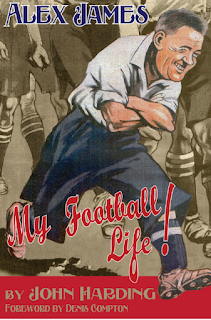
The term “Arsenal legend” is used so frequently in the modern era that it can lose all its meaning or aura. But in the case of Alex James, it is an apt phrase. Even the legendary Matt Busby thought he was one of the all-time greats, and the great Liverpool manager Bill Shankly called him a “genius” and a “nightmare to play against”.
The first thing that comes to mind when reading this book is why bother reading about a player, no matter how good, who died nearly 74 years ago, and last played for Arsenal two years before Hitler invaded Poland.
From a footballing standpoint it is clear from even a cursory look at video footage of Alex James that he was an exceptional player and according to Ham & High Sport “In pantheon of Arsenal greats, he stands shoulder to shoulder – at the very least – with the likes of Dennis Bergkamp, Tony Adams, Frank McLintock and Joe Mercer.”[1]
People follow football teams for many different reasons. For me, I think the same way as Dennis Bergkamp: “When you start supporting a football club, you don’t support it because of the trophies, or a player, or history; you support it because you found yourself somewhere there — found a place where you belong.” While this is true in my case, I also fell in love with Arsenal because of its history.
My first season supporting Arsenal was the 1970/71 season. Many things attracted me to Arsenal. I mentioned its rich history, but what got me hooked was not only the atmosphere and the smell of fresh hot dogs, but Highbury was a thing of aesthetic beauty, so much so that its Art Deco design is still a listed building.
My first game, funny enough, was sitting in virtually the same seats as the Arsenal fan and writer Nick Hornby sat when his dad took him to his first game in the West Upper stand. The film Fever Pitch starring Colin Firth[2] Shows Hornby’s amazed look as he took in his first game. Another thing that attracted me was that Arsenal seemed to embody a classy way of doing things and embodied the mantra “ Play up and Play the Game”.[3]
It is to John Harding’s credit that he has reintroduced James to a modern readership. First published in 1988, this reissue in 2024 is updated with new stories and pictures. “Since the first release, I have added lots of new material and have changed my stance on James’ footballing role, Reprinting my book with new material, especially after leaving Highbury relatively recently in terms of the club’s history, seemed like a good opportunity to revisit his story – and to reintroduce him to a new generation of supporters, because we should not forget what Alex James meant to Arsenal.
“I am too young to have seen him play, but when I first started going to Arsenal back in the late 1950s, many people around me had seen him. “I grew up on stories about him, and he became a hero – James simply struck a chord with me. For me, Alex James was Highbury.” The book is meticulously researched and is one of the best books on the history of Arsenal Football Club. James was admired and deeply appreciated by his fellow professionals.
As a young boy, the great Tom Finney[4] Saw James play at Deepdale, Preston, saying “James was the top star of the day, a genius. There wasn’t much about him physically, but he had sublime skills and the knack of letting the ball do the work. He wore the baggiest of baggy shorts, and his heavily gelled hair was parted down the centre. On the odd occasion when I was able to watch a game at Deepdale, sometimes sneaking under the turnstiles when the chap on duty was distracted, I was in awe of James. Preston were in the Second Division and the general standard of football was not the best, but here was a magic and a mystery about James that mesmerised me.”
While James and his fellow professionals’ lifestyle is a million light years away from the pampered multi-millionaires of today with their private jets, His lifestyle also set him apart from his fellow workers of his day.
As John Harding writes in his Oxford Dictionary of National Biography article, “James was a flashy, charismatic figure, easily identifiable on the field of play by his baggy shorts and flapping shirt and perfectly captured for posterity by the great sporting cartoonist of the inter-war years, Tom Webster (whose cartoon Harding uses for the cover of his updated Book). Off the field, he was regularly in the news, usually demanding a higher wage or a transfer. James enjoyed the West End lifestyle available to a London-based player and was a regular habitué of fashionable cafés and bars. He was a prolific spender and a snappy dresser, but was unfortunate to be a sporting star at a time when footballers, though as well known as film stars, were paid a pittance by comparison.
He made strenuous efforts to cash in on his ‘image’: he was a sports demonstrator at Selfridges, he had regular columns in national newspapers, and he appeared in advertisements for cigarettes and sports goods. But when he retired in 1937, he had accumulated little, partly because he had no real business acumen. In 1938, he went to Poland to coach the Polish national side—a position he enjoyed but which came to an abrupt end when Germany invaded Poland in August 1939. During the war, James served as a gunner in the Royal Artillery’s maritime division stationed on the east coast. In 1947, he rejoined Arsenal as a reserve team coach, but he contracted cancer and, after a short illness, died on 1 June 1953 in the Royal Northern Hospital, Holloway, London. He was cremated at Golders Green crematorium.”[5]